


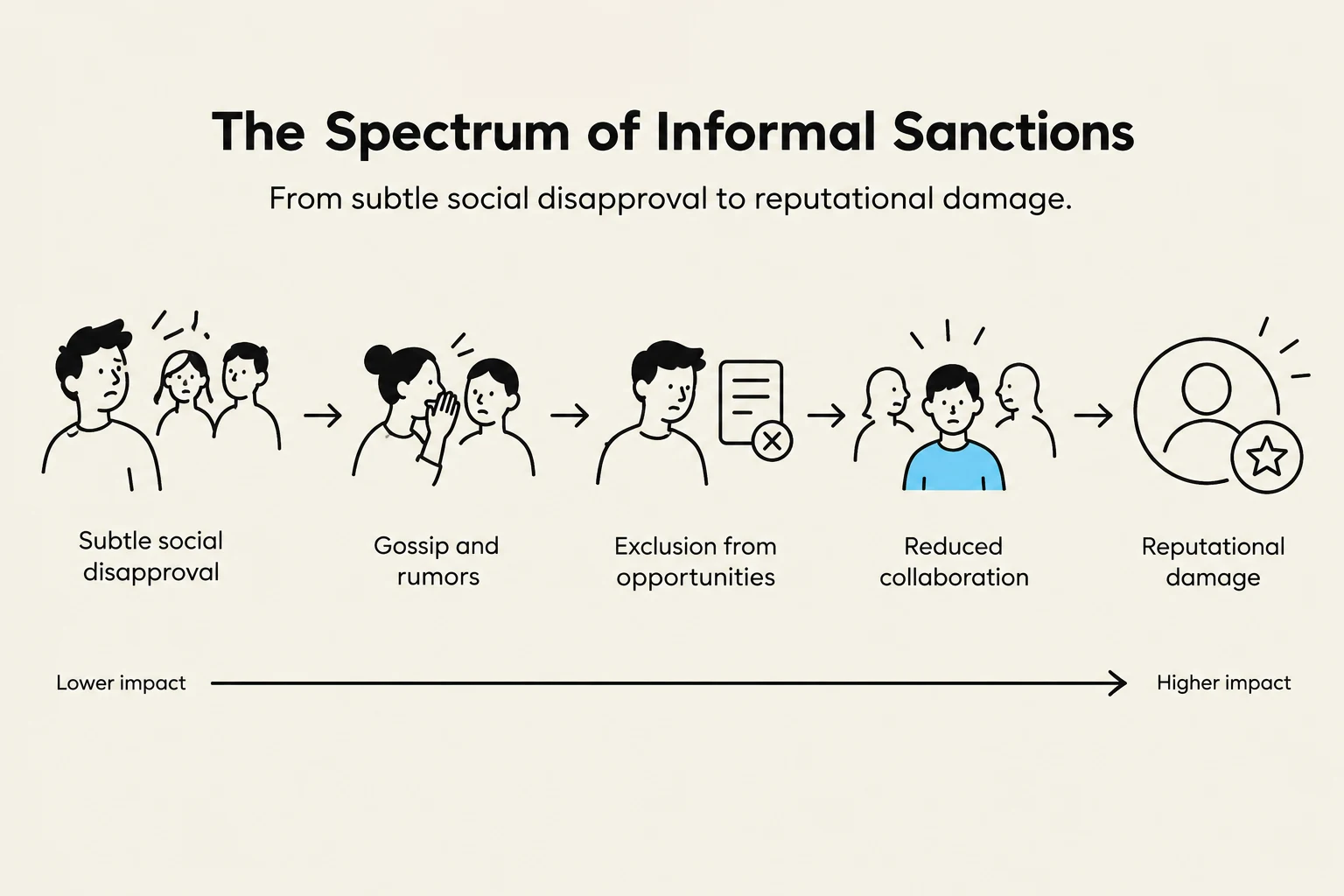
In the complex ecosystem of the criminal justice system, the courtroom is more than just a venue for legal arguments; it is a highly specialized social environment. While we often focus on the formal laws and statutes that govern legal proceedings, the daily operation of the court relies heavily on unwritten rules and social pressures. These social mechanisms are known as informal sanctions, and they play a vital role in how the courtroom work group functions.
Understanding the Courtroom Work Group
To understand how informal sanctions work, one must first understand the group they regulate. The courtroom work group is not a single entity but a collection of professionals who interact daily to process cases. This group typically includes judges, prosecutors, defense attorneys, and various court staff.
While these individuals often represent opposing interests—such as the prosecution seeking a conviction and the defense seeking an acquittal—they share a common goal: the efficient and orderly administration of justice. Because they work together repeatedly, they develop shared norms, expectations, and protocols. This interdependence creates a unique social structure where cooperation is often more practical than constant, high-conflict litigation.

The Role of Informal Sanctions
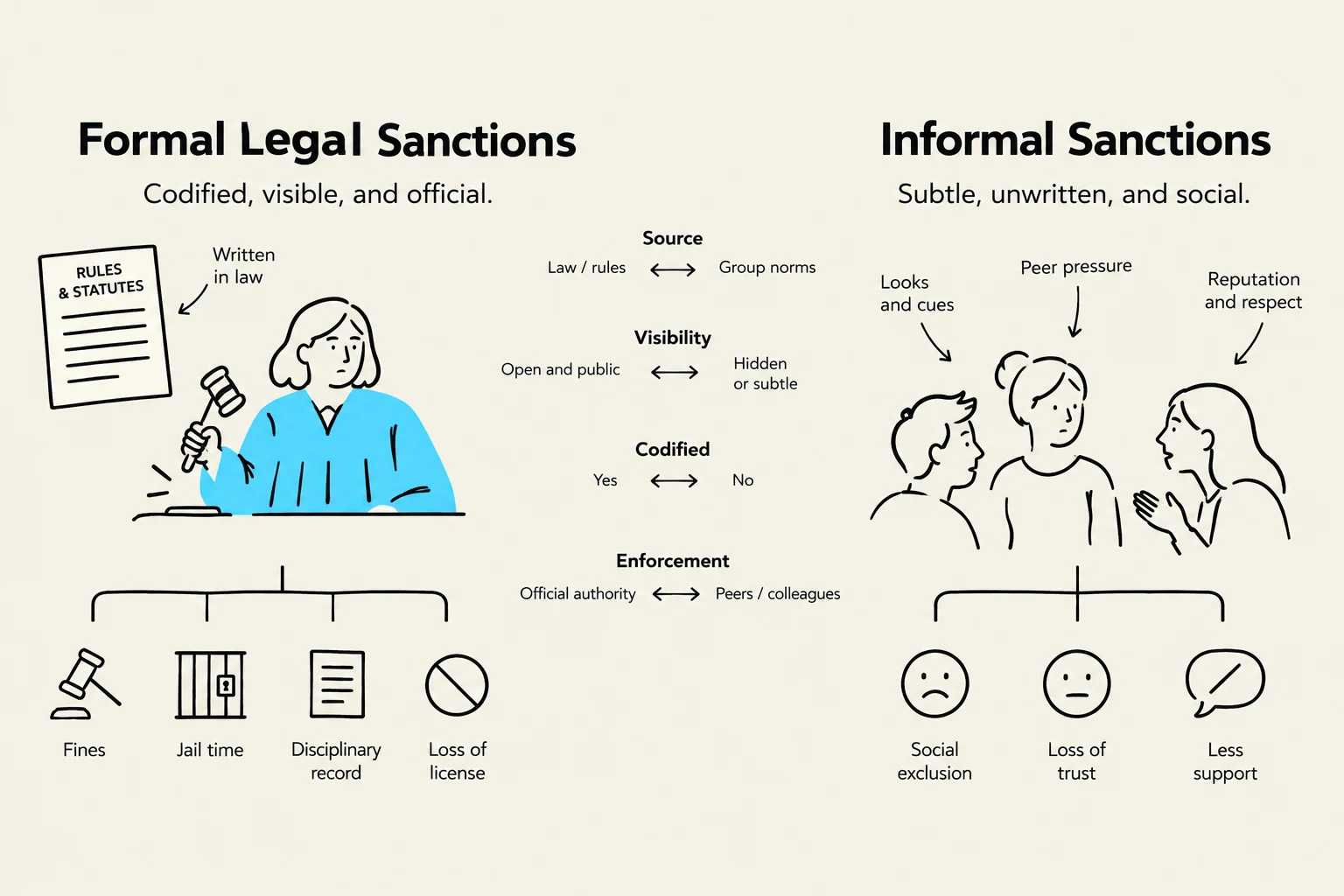
Unlike formal legal sanctions, which are codified in law and result in official penalties (such as fines or imprisonment), informal sanctions are unwritten social pressures. They are the "invisible hands" that guide professional conduct within the courtroom.
The primary purpose of these sanctions is to ensure that all members of the work group adhere to established protocols and norms. By enforcing these norms, informal sanctions facilitate the smooth operation of the judicial process and promote case disposition efficiency—the speed and effectiveness with which cases move through the system.
Keep reading for free.
Create an account to finish this reading and make it part of your study routine.
Continue reading freeAlready have an account? Log in
Updated