Inflammation Pathways and Pharmacological Interventions
This content discusses acute and chronic inflammation, the arachidonic acid pathway, and medications including NSAIDs, acetaminophen, and corticosteroids.
Inflammation is a fundamental biological response designed to protect the body from harm. Whether responding to a minor cut or a systemic infection, the immune system utilizes a complex cascade of chemical mediators to neutralize threats and initiate repair. However, when this response is poorly regulated—becoming too intense, too prolonged, or misdirected against the body's own tissues—it can transition from a protective mechanism to a source of significant pathology. Understanding the biochemical pathways of inflammation is essential for selecting the appropriate pharmacological intervention to manage pain, fever, and chronic disease.
Acute vs. Chronic Inflammation
Inflammation is broadly categorized by its duration and the specific cellular players involved.
Acute inflammation is characterized by a rapid onset and short duration. During this phase, neutrophils are the prominent white blood cells, acting as the first responders to injury or infection. If the stimulus is removed, the process can lead to complete resolution and tissue regeneration.
Chronic inflammation occurs when the inflammatory stimulus persists, or when the body fails to resolve the initial acute response. This state is characterized by the prominence of macrophages and lymphocytes. Unlike acute inflammation, chronic inflammation involves simultaneous tissue injury and attempts at repair. This ongoing cycle can lead to:
Fibrosis: The formation of thick, stiff scar tissue that replaces functional tissue, leading to a loss of organ function.
Granulomas: Specialized structures where macrophages organize around material that is difficult to eliminate (such as certain pathogens or foreign bodies) to "wall it off" and prevent further spread.
The Arachidonic Acid Pathway
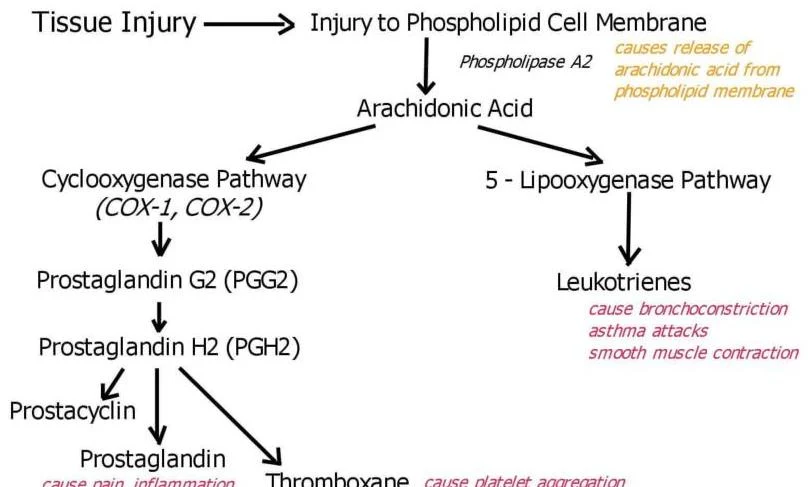
The biochemical foundation of the inflammatory response lies in the metabolism of membrane phospholipids. When a cell membrane is injured, the enzyme phospholipase A2 is activated, which releases arachidonic acid from the cell membrane. Once released, arachidonic acid is processed through two primary enzymatic routes: the Cyclooxygenase (COX) pathway and the Lipoxygenase (LOX) pathway.
This diagram illustrates the biochemical pathways involved in tissue injury, specifically the roles of arachidonic acid, cyclooxygenase, and lipoxygenase pathways in the production of prostaglandins and leukotrienes.
The COX Pathway
The COX pathway produces prostaglandins and thromboxane. Prostaglandins are responsible for mediating the classic signs of inflammation: pain, fever, and vasodilation. Thromboxane is involved in platelet aggregation. Within this pathway, two distinct enzymes play different roles:
COX1: This is considered "cytoprotective." It produces prostaglandins that maintain gastroprotection (by increasing mucus production and decreasing acid), support renal perfusion, and assist in platelet aggregation.
COX2: This enzyme is primarily associated with the "undesirable" inflammatory response, including pain, fever, and swelling.
The LOX Pathway
The LOX pathway converts arachidonic acid into leukotrienes. Leukotrienes are potent mediators that cause bronchoconstriction, smooth muscle contraction, and increased mucus secretion.
Clinical Alert: Asthma and NSAIDs
Because NSAIDs block the COX pathway, they can "shunt" arachidonic acid toward the LOX pathway. This increase in leukotriene production can trigger bronchoconstriction, potentially inducing asthma attacks in sensitive patients.
Pharmacological Interventions
Medications target these specific biochemical pathways to alleviate symptoms, but each comes with a unique profile of benefits and risks.
Non-selective NSAIDs
Non-selective Non-Steroidal Anti-Inflammatory Drugs (NSAIDs), such as Ibuprofen and Naproxen, inhibit both COX1 and COX2 enzymes. While they effectively reduce inflammation and pain (via COX2 inhibition), blocking COX1 removes the body's natural gastroprotection and renal safeguards.
Risks: Common side effects include GI irritation, ulceration, bleeding, renal impairment, and fluid retention.
Aspirin (ASA): Unlike other NSAIDs, Aspirin provides an irreversible anti-platelet effect. This makes it useful for preventing heart attacks and strokes, but it also means its effects last for several days.
Drug Interaction: Ibuprofen can act as an antagonist to Aspirin, preventing Aspirin from binding to COX1 and reducing its effectiveness for cardiovascular protection.
Critical Safety: Reye Syndrome
Aspirin should never be given to children or teenagers recovering from a viral infection. This can lead to Reye syndrome, a rare but life-threatening condition characterized by encephalopathy (brain dysfunction) and hepatopathy (liver damage).
Selective COX2 Inhibitors
Drugs like Celecoxib (Celebrex) were designed to target the "bad" COX2 enzyme while sparing the "good" COX1 enzyme. This approach aims to provide anti-inflammatory relief without the high risk of GI ulcers or bleeding associated with non-selective NSAIDs.
Black Box Warning: Despite their GI benefits, selective COX2 inhibitors carry a stringent safety warning due to an increased risk of cardiovascular events, such as heart attacks and strokes.
Acetaminophen
Acetaminophen is an antipyretic (fever reducer) and analgesic (pain reliever), but it is not an NSAID. It works primarily by inhibiting COX enzymes within the Central Nervous System (CNS), which stops pain and fever signals but lacks significant peripheral anti-inflammatory properties.
Toxicity: The primary danger of acetaminophen is hepatotoxicity (liver damage). The antidote for acetaminophen overdose is N-acetylcysteine (NAC).
Corticosteroids
Corticosteroids (e.g., Prednisone) are broad-spectrum, high-potency agents. Unlike NSAIDs, which only target the COX enzymes, corticosteroids enter cells to alter gene transcription, allowing them to suppress multiple inflammatory pathways, including the inhibition of phospholipase A2. This effectively shuts down the production of arachidonic acid at the source.
While highly effective, they carry significant risks, especially with long-term use:
Adrenal Suppression: Because the body relies on the HPA axis to produce natural cortisol, long-term exogenous steroid use causes the body to stop producing its own. Therefore, these medications must be tapered gradually to prevent adrenal crisis.
Cushing’s Syndrome: Overtreatment can lead to exaggerated cortisol effects, including weight gain in the trunk, "moon face," thin skin, and fatty lumps between the shoulders.
Other effects: Hyperglycemia, increased infection risk, fluid retention, and osteoporosis.
Summary of Clinical Application
Medication Type
Primary Target
Main Benefit
Major Risk/Side Effect
Non-selective NSAID
COX1 & COX2
Pain, Fever, Inflammation
GI ulcers, Renal impairment, Bleeding
Selective COX2 Inhibitor
COX2
Pain, Inflammation (GI sparing)
Cardiovascular risk (Heart attack/Stroke)
Acetaminophen
COX (CNS)
Pain, Fever
Hepatotoxicity (Liver damage)
Corticosteroids
Phospholipase A2 & Cytokines
Powerful, broad anti-inflammatory
Adrenal suppression, Cushing's, Infection
Keep reading for free.
Create an account to finish this reading and make it part of your study routine.