An overview of infectious diseases, including their causes, transmission, and prevention. It details sepsis, its stages, and diagnostic criteria (SIRS). Specific communicable diseases like influenza, pneumonia, tuberculosis, meningitis, STIs, and Lyme disease are discussed, along with emerging threats and antibiotic re
Infectious diseases are caused by various microbes, including bacteria and viruses. Understanding how these diseases behave is critical for both patient care and provider safety. Two key temporal concepts are essential for clinicians to grasp: the incubation period, which is the time from initial exposure to the development of the first symptoms, and the communicable period, which is the interval during which a patient is shedding or releasing infectious material and can potentially transmit the microbe to others.
The severity of an infection is not uniform; it depends on several interacting factors: the virulence (the ability of the microbe to cause disease), the dose (the amount of the microbe introduced), the route of entry into the body, and the host's own resistance.
Sepsis and Septic Shock
Sepsis is a life-threatening condition characterized by an abnormal and counterproductive immune response. Instead of simply fighting the infection, the body overreacts, secreting substances that cause damage to tissues and organs.
The progression of sepsis typically follows three distinct stages:
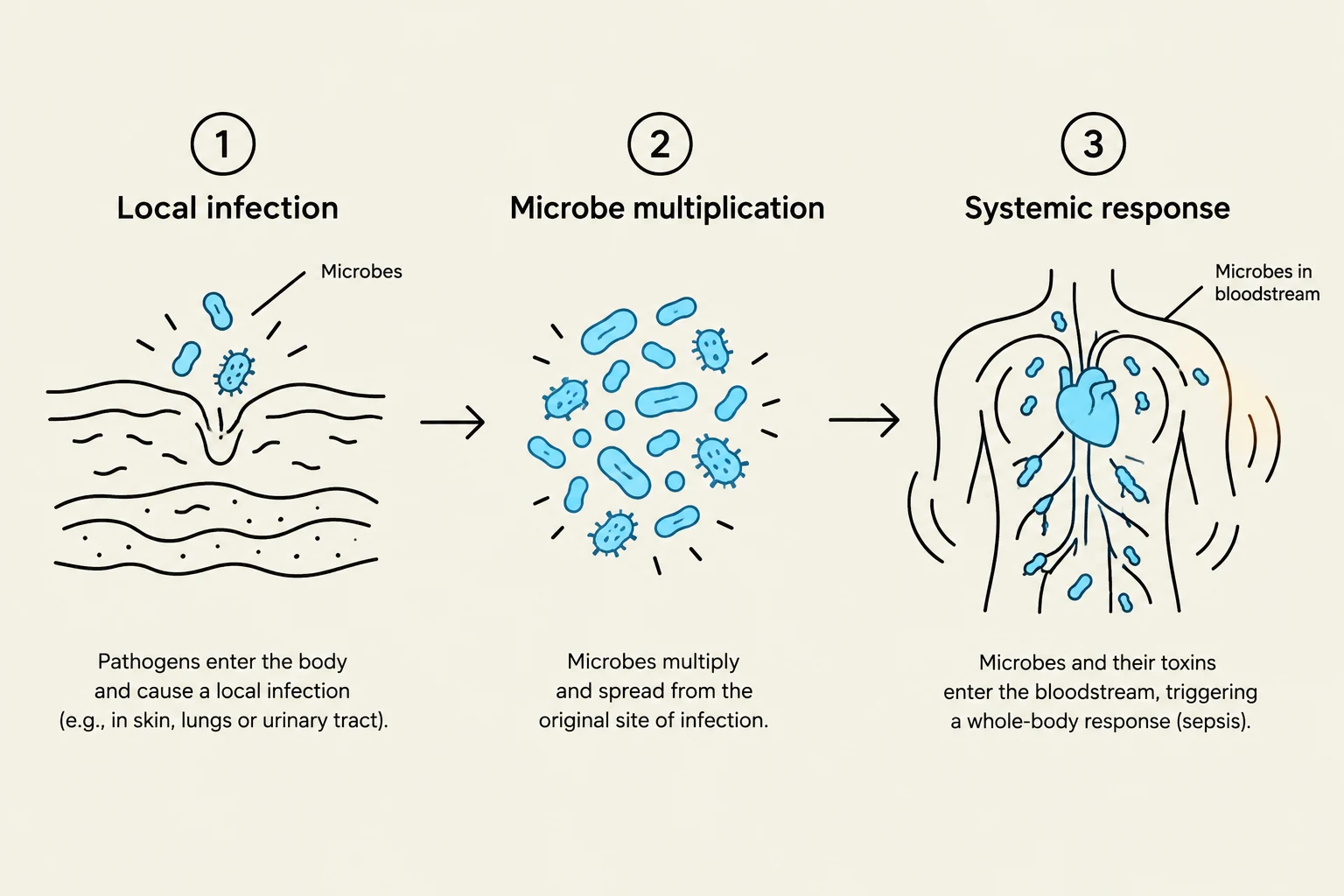
Infection/Local: Microbes multiply at the site of entry, and the body mounts a normal immune response, often including an increase in white blood cell production.
Sepsis/Systemic: The response becomes systemic. The body begins producing lactic acid and other chemicals, and the ability to produce white blood cells may become exhausted.
Septic Shock: This is the most severe stage. Lactic acid and other chemicals accumulate heavily in the bloodstream, leading to vasodilation and increased capillary permeability (leaky capillaries). This results in hypotension (low blood pressure) that does not respond to intravenous fluids.
This diagram illustrates the three stages of infection: local infection, microbe multiplication, and systemic response leading to sepsis.
Common sources of sepsis include the pulmonary system (such as pneumonia), the gastrointestinal tract, the genitourinary tract (such as kidney or prostate infections), and the skin (often via catheters, tracheostomies, or pressure sores).
Detecting Sepsis: SIRS Criteria
Clinicians use the Systemic Inflammatory Response Syndrome (SIRS) criteria to help identify patients who may be developing sepsis. If a patient has a suspected or confirmed infection, look for the following:
Temperature: <96.8∘F (36∘C) or >101∘F (38.3∘C)
Heart Rate: >90 bpm
Respiratory Rate: >20 breaths/min
Systolic Blood Pressure: <90 mmHg
Mental Status: New-onset or worsened altered mental status
Exam Tip: While the qSOFA (quick Sepsis-related Organ Failure Assessment) is similar to SIRS, it is used primarily to predict mortality and length of ICU stay rather than to confirm the presence of sepsis itself.
Selected Communicable Diseases
Many infectious diseases present with specific clinical "hallmarks" that can guide your assessment.
Respiratory Infections
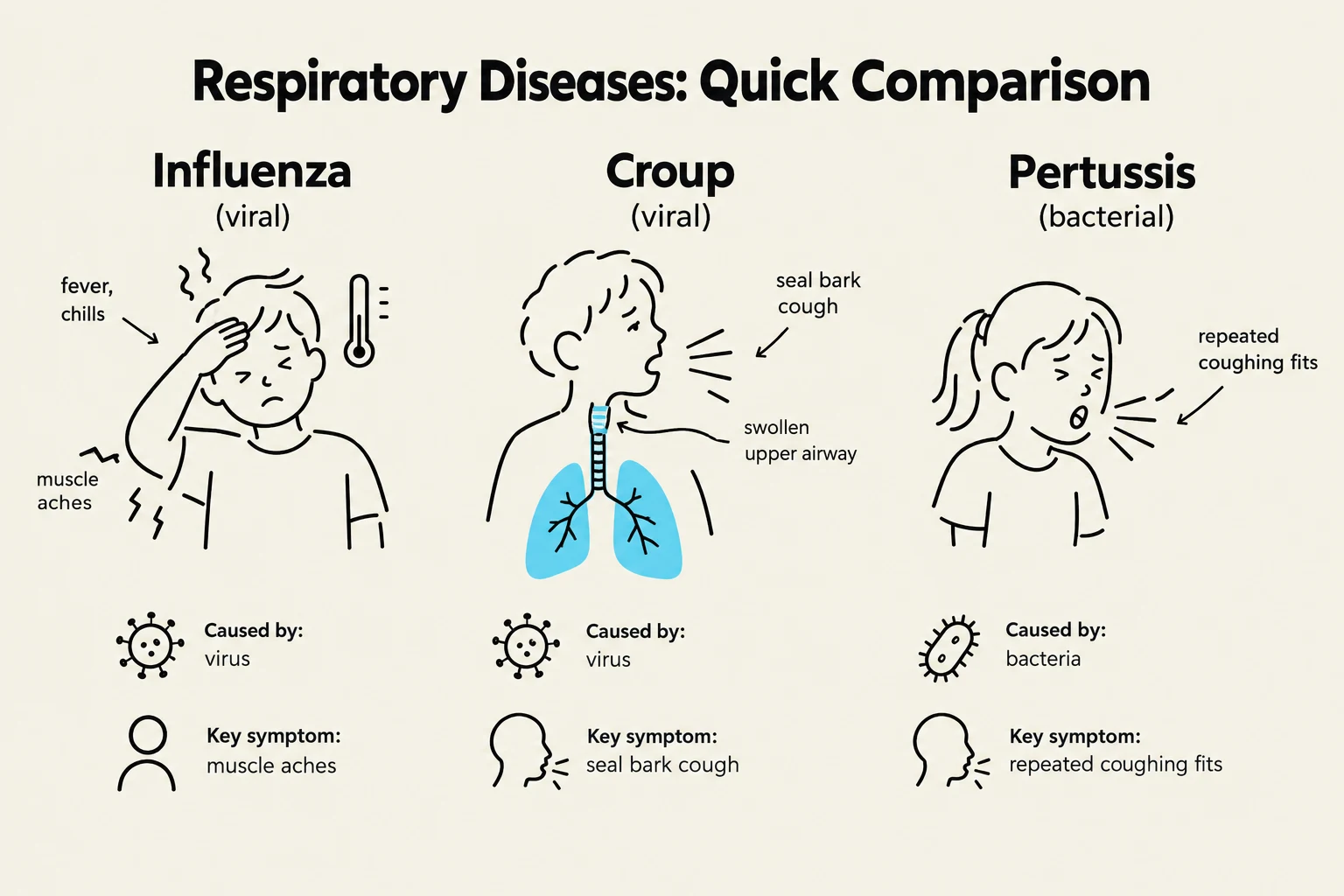
Influenza: A common viral illness spread by droplets or direct contact. It presents with fever, nonproductive cough, severe muscle aches, headache, and weakness.
Croup (Laryngotracheobronchitis): Caused by the human parainfluenza virus, this is most common in children aged 6 months to 3 years. It is characterized by inflammation of the larynx, trachea, and bronchi, often producing a distinctive "seal bark" cough that is frequently worse at night.
Pertussis (Whooping Cough): A bacterial infection caused by Bordetella pertussis. It begins like a typical upper respiratory infection but progresses into intense, uninterrupted coughing fits followed by a high-pitched "whooping" sound on inspiration.
Pneumonia: An infection that causes inflammation in the lungs. Symptoms include fever, chills, shortness of breath, tachypnea, and a productive cough. In elderly patients, altered mental status is a common sign.
Tuberculosis (TB): Caused by Mycobacterium tuberculosis and spread via airborne routes (coughing, singing, or sneezing). Key symptoms include a cough (initially dry, later producing purulent sputum), fever, night sweats, and weight loss.
A comparison of symptoms and causes for Influenza, Croup, and Pertussis.
Other Notable Infections
Meningitis: Inflammation of the meninges, often caused by Neisseria meningitidis. Symptoms include abrupt fever, severe headache, nausea, vomiting, photophobia (sensitivity to light), nuchal rigidity (stiff neck), and potentially a petechial rash.
Sexually Transmitted Infections (STIs): These can be viral (HIV, Hepatitis A/B/C, Herpes, HPV) or bacterial (Chlamydia, Gonorrhea, Syphilis). While not a frequent reason for 911 calls, complications like Pelvic Inflammatory Disease (PID) can cause severe lower abdominal pain.
Lyme Disease: Transmitted via tick bites. A hallmark sign is the appearance of erythema migrans, a rash that resembles a "bull's-eye".
Prevention and Emerging Threats
Standard Precautions and Antibiotic Resistance
To protect both the provider and the patient, healthcare workers must utilize Standard Precautions. This includes proper hand hygiene and the use of appropriate Personal Protective Equipment (PPE) based on the mode of transmission. For example, an N-95 respirator is required for airborne diseases like tuberculosis.
A growing concern in modern medicine is antibiotic resistance, where bacteria develop the ability to survive treatments that were once effective. This can lead to infections that are no longer treatable, making strict adherence to infection control protocols even more vital.
Emerging Diseases
The medical community must remain vigilant regarding emerging or newly recognized infectious diseases, such as HIV/AIDS, SARS, Ebola, MERS, and the Zika virus. During an outbreak, it is essential to remain calm and follow the specific recommendations provided by the CDC and local health departments.
Clinical Summary: When evaluating a patient with fever or signs of infection, always ask about recent travel history and vaccination status to help narrow down the potential cause.
Keep reading for free.
Create an account to finish this reading and make it part of your study routine.