An overview of the chain of infection, including infectious agents, reservoirs, portals of exit and entry, modes of transmission, and susceptible hosts. It also covers the stages of infection and clinical applications for prevention strategies.
In a healthcare environment, safety is a fundamental pillar of quality care. Infection Prevention and Control (IPAC) involves the practices and strategies used to prevent the transmission of infectious microorganisms, thereby protecting both patients and healthcare workers. Patients are particularly vulnerable due to factors such as lower resistance, increased exposure to pathogens, and the necessity of invasive procedures. Understanding how infections spread is the first step in breaking the cycle of disease.
The Chain of Infection
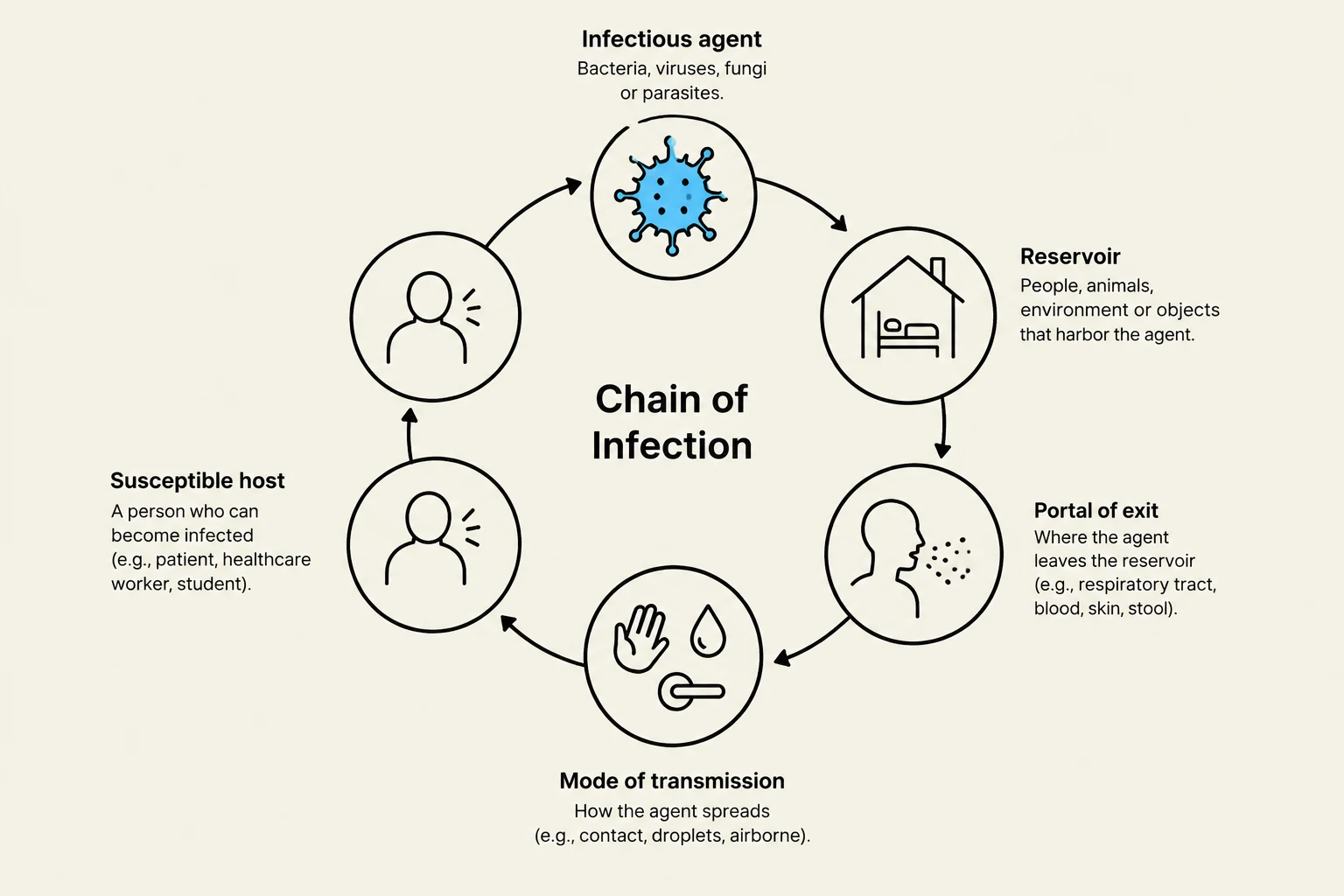
To prevent an infection, one must understand how it travels. The "Chain of Infection" is a model used to illustrate the sequence of events required for an infectious agent to move from a source to a new host. If any single link in this chain is broken, the spread of infection is halted.
The six essential links are:
Infectious Agent: The pathogen itself.
Reservoir: Where the pathogen lives and grows.
Portal of Exit: How the pathogen leaves the reservoir.
Mode of Transmission: How the pathogen travels.
Portal of Entry: How the pathogen enters the new host.
Susceptible Host: The person at risk of infection.
The chain of infection illustrates the progression of an infectious disease, starting with an infectious agent and moving through a reservoir, portal of exit, mode of transmission, susceptible host, and finally a portal of entry (implied).
1. Infectious Agents
Infectious agents are microorganisms that can cause disease, including bacteria, viruses, fungi, and protozoa (parasites). The potential for a microorganism to cause disease is not uniform; it depends on several critical factors: the number of organisms present, their virulence (strength/harmfulness), their ability to enter and survive within the host, and the susceptibility of the host.
2. Reservoirs: Where Pathogens Live
A reservoir is a place where a pathogen can survive and potentially multiply. For a reservoir to support a pathogen, it must provide essential elements such as food, water, appropriate temperature, appropriate pH, and specific oxygen levels.
Reservoirs are categorized into three main types:
Human Reservoirs: Many common diseases are transmitted person-to-person. A key concept here is the carrier—a person who harbors the pathogen but may not show symptoms. Carriers can be asymptomatic (never show symptoms), incubatory (contagious before illness starts), convalescent (contagious during recovery), or chronic (harboring the pathogen for months or years, such as Hepatitis B).
Animal Reservoirs: Some diseases are transmitted from animals to humans. This is known as a zoonosis. Examples include rabies (bats/dogs), anthrax (sheep), and West Nile encephalitis (birds).
Environmental Reservoirs: Non-living sources like soil, water, and plants can host pathogens. For example, many fungi thrive in soil.
3. Portals of Exit and Entry
The portal of exit is the path by which a pathogen leaves its reservoir. Common exit points include body openings (mouth, nose, rectum, vagina, urethra), breaks in the skin (cuts or wounds), or mucous membranes. Pathogens are often carried through blood, body fluids, excretions, and secretions.
Conversely, the portal of entry is how the pathogen enters a new host. Often, the entry portal is the same as the exit portal (e.g., the respiratory tract for influenza). However, some follow a "fecal-oral" route, where pathogens exit via feces and enter a new host through the mouth via contaminated hands or food.
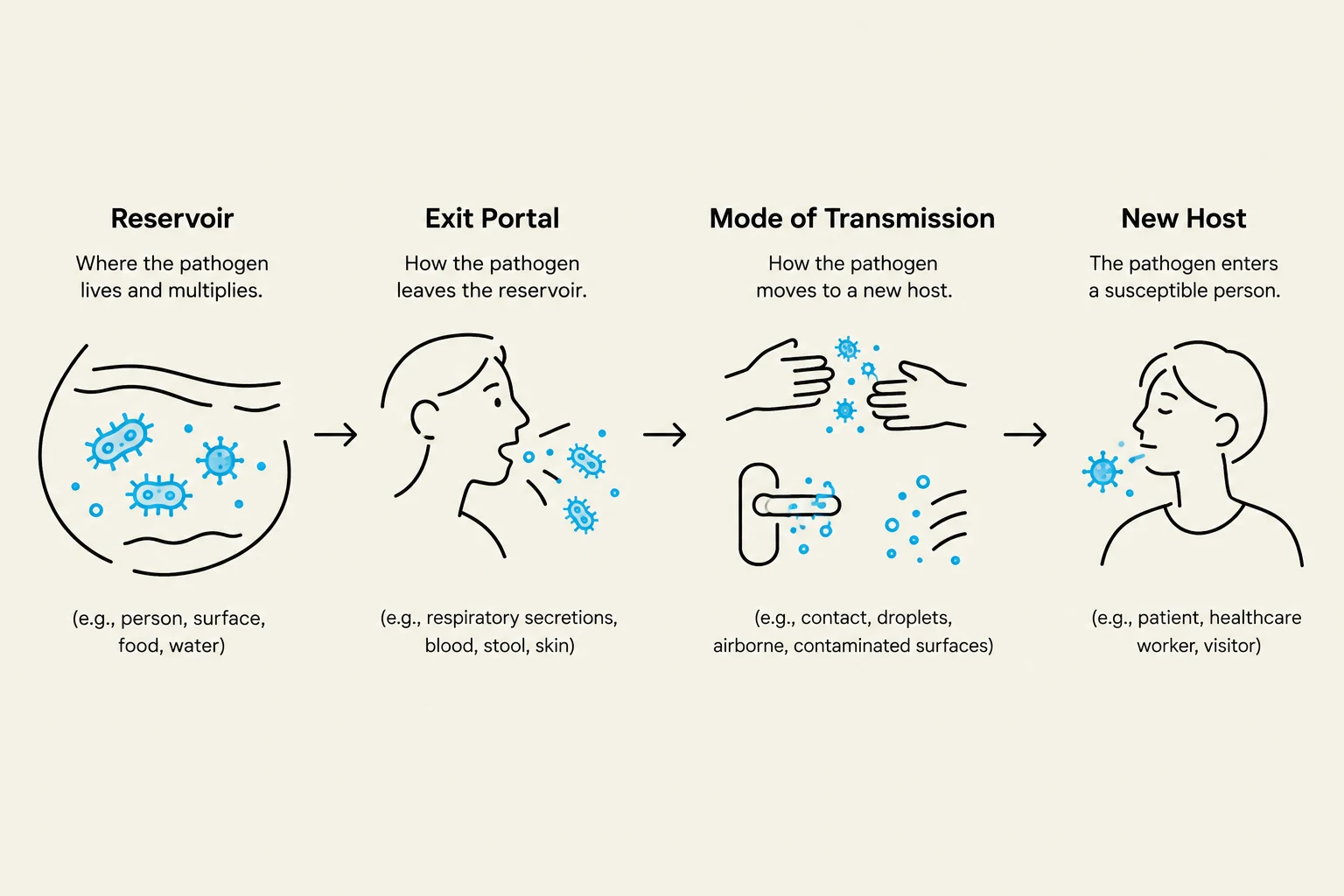
This diagram illustrates the chain of infection, showing how a pathogen moves from a reservoir through an exit portal, mode of transmission, and into a new host.
Modes of Transmission
Once a pathogen leaves its reservoir, it must travel to a new host. This movement is classified into several modes:
Direct Contact: Occurs through skin-to-skin contact, kissing, or sexual intercourse.
Droplet Transmission: Spread via relatively large, short-range aerosols produced by coughing, sneezing, or talking. These droplets typically travel only a few feet before falling to the ground.
Airborne Transmission: Occurs when infectious agents are carried by dust or tiny "droplet nuclei" that remain suspended in the air for long periods.
Vehicle Transmission: Indirect transmission via inanimate objects (fomites) such as food, water, blood, or medical tools like scalpels.
Vectorborne Transmission: Transmission via living intermediaries like mosquitoes, fleas, or ticks, which may mechanically carry the agent or support its growth.
The Susceptible Host
The final link in the chain is the susceptible host. A host's susceptibility is determined by a combination of genetics and non-specific defense factors.
Factors Increasing Resistance
Factors Increasing Susceptibility
Strong skin/mucous membranes
Malnutrition
Effective gastric acidity
Alcoholism
Robust immune response
Disease or therapies that impair immunity
Cilia in the respiratory tract
Genetic predisposition
Exam Tip: Remember that "Routine Practices" apply to all patients regardless of their infection status, whereas "Additional Precautions" are specific to known or suspected infections (Contact, Droplet, or Airborne).
The Infectious Process
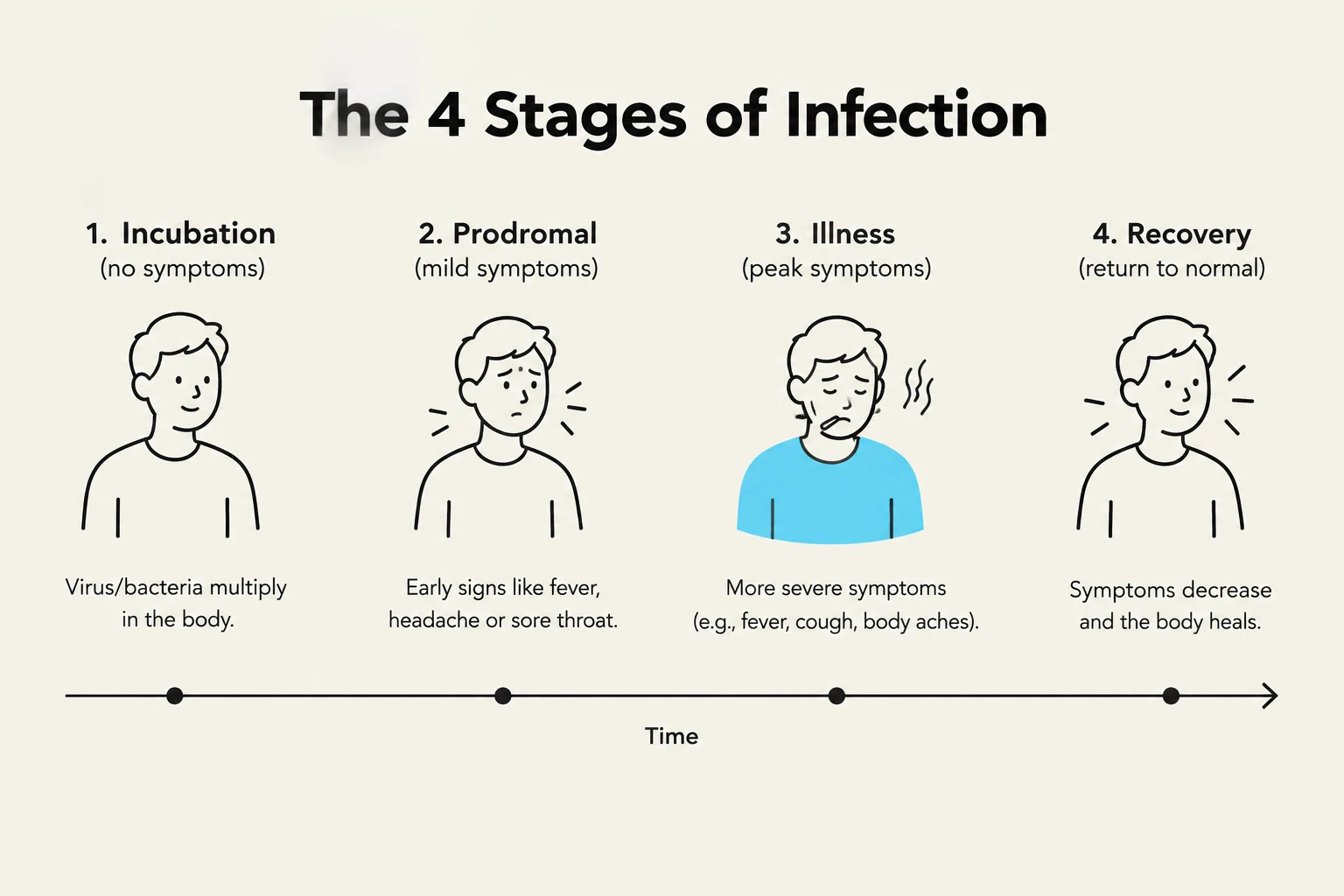
The course of an infection is not instantaneous; it progresses through distinct stages. The severity of the infection depends on the pathogenicity of the microorganism and the host's susceptibility.
Incubation Period: The pathogen enters the body and multiplies, but no symptoms are visible. The person may still be contagious during this time.
Prodromal Stage: Microorganisms grow rapidly. The person experiences early, mild, and non-specific symptoms like fatigue or low fever. This is often the most contagious stage because the person feels well enough to move around.
Illness Stage: Pathogens reach peak intensity. Severe and specific symptoms appear (e.g., a rash for chickenpox).
Convalescence: The body eliminates the pathogen and repairs tissue. Acute symptoms disappear as health returns to normal.
The 4 stages of infection: Incubation (no symptoms), Prodromal (mild symptoms), Illness (peak symptoms), and Recovery (return to normal).
Clinical Application: Prevention Strategies
To break the chain, healthcare providers use several key measures:
Hand Hygiene: The most important technique for infection control, including handwashing and the use of antiseptic rubs.
Medical Asepsis: Also known as "clean technique," this focuses on reducing the number of organisms and preventing their transfer.
Personal Protective Equipment (PPE): Using gloves, masks, caps, and eyewear based on the risk of splash or the specific transmission route (Contact, Droplet, or Airborne).
Environmental Control: Regular disinfection of high-touch surfaces, safe sharps disposal, and proper equipment reprocessing.
By understanding these principles, healthcare professionals can effectively interrupt the transmission of disease and maintain a safe environment for care.
Keep reading for free.
Create an account to finish this reading and make it part of your study routine.