


An indwelling urinary catheter, commonly referred to as a Foley catheter, is a medical device used to drain urine from the bladder when a patient is unable to void naturally. While these devices are essential for many clinical scenarios—such as managing urinary retention, monitoring precise output, or assisting during surgery—they carry significant risks, most notably infection and physical trauma. For nursing professionals, the priority is to maintain a functional, sterile, and unobstructed system while vigilantly monitoring the patient for signs of complications.
Preventing Catheter-Associated Urinary Tract Infections (CAUTI)
The most significant risk associated with indwelling catheters is the development of a Catheter-Associated Urinary Tract Infection (CAUTI). Preventing these infections requires strict adherence to aseptic principles and specific maintenance protocols.
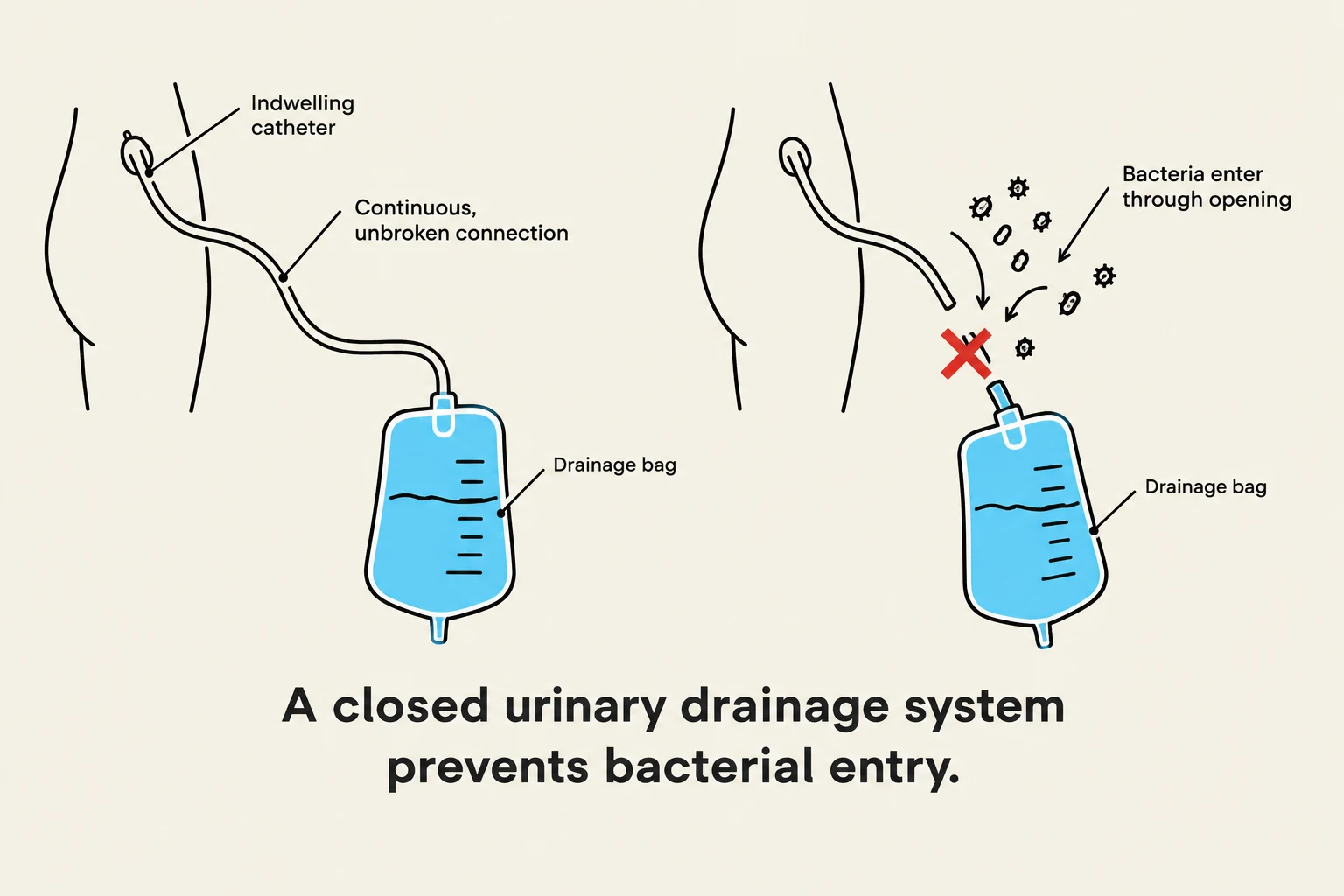
The single most important measure to prevent CAUTI is maintaining a closed urinary drainage system. Breaking the seal of the system by disconnecting the catheter from the drainage bag introduces bacteria directly into the urinary tract.
Other essential nursing interventions for infection prevention include:
- Perineal Care: Perform thorough perineal care with every shift to reduce the microbial load near the insertion site.
- Aseptic Technique: Use aseptic techniques whenever handling the catheter or the drainage system.
- Securing the Device: Ensure the catheter is properly secured to the patient's leg to prevent tugging, which can cause mucosal trauma and increase infection risk.
Keep reading for free.
Create an account to finish this reading and make it part of your study routine.
Continue reading freeAlready have an account? Log in
Updated