


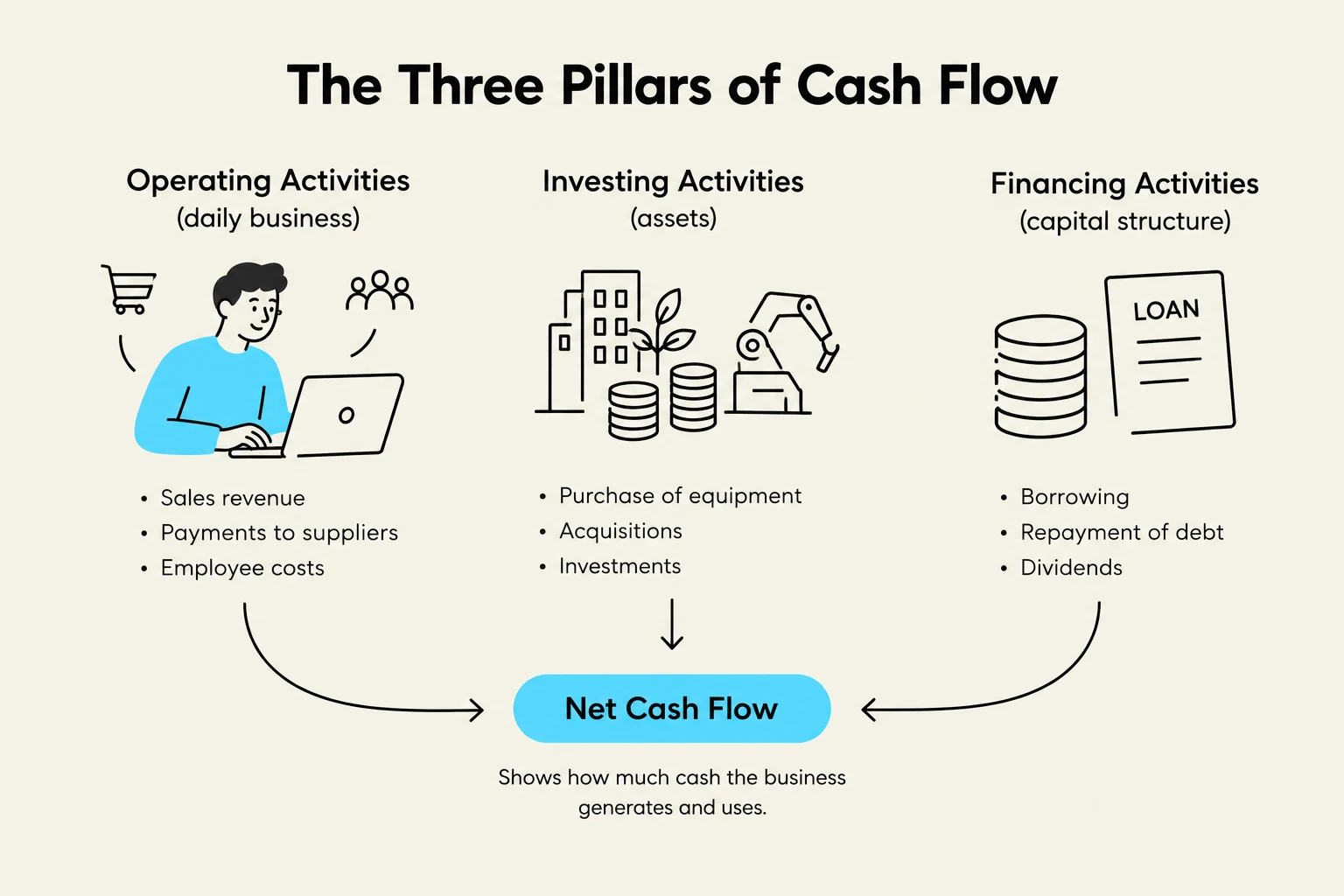
In the world of business, there is a fundamental difference between being "profitable" and being "liquid." A company might report massive profits on paper, yet still go bankrupt because it lacks the actual cash to pay its employees or suppliers. To navigate this distinction, managers and investors rely on two critical financial documents: the Income Statement and the Cash Flow Statement. While the former measures performance over a period, the latter tracks the physical movement of money.
The Income Statement: Measuring Performance
The Income Statement, often called the statement of earnings, is designed to show a firm's "bottom line". It summarizes the revenues, costs, and expenses incurred during a specific period of time to determine whether the company has achieved a profit or suffered a loss.
Revenue and Sales
The starting point of any income statement is revenue. Revenue represents the total value received from goods sold, services rendered, and other financial sources, such as rent received. It is important to note that while most revenue is derived from sales, the two terms are not synonymous; a company might earn revenue from interest or rental income that does not stem from its primary sales activities.
Cost of Goods Sold (COGS)
To understand how much it costs to actually generate that revenue, we look at the Cost of Goods Sold (COGS). This is a measurement of the direct costs associated with the merchandise sold or the raw materials and supplies used to produce items for resale.
By subtracting COGS from net sales, a business calculates its Gross Profit (or gross margin), which represents the money earned specifically from buying and selling merchandise before other overheads are considered.

Keep reading for free.
Create an account to finish this reading and make it part of your study routine.
Continue reading freeAlready have an account? Log in
Updated