


When we think about why some nations prosper while others struggle, we often look at resources, geography, or culture. However, a more fundamental driver lies in the "rules of the game." In social science, these rules are known as institutions. It is important to distinguish between an organization and an institution: while a court is an organization, the rules that dictate how that court operates independently and how it enforces the law are the institutions.
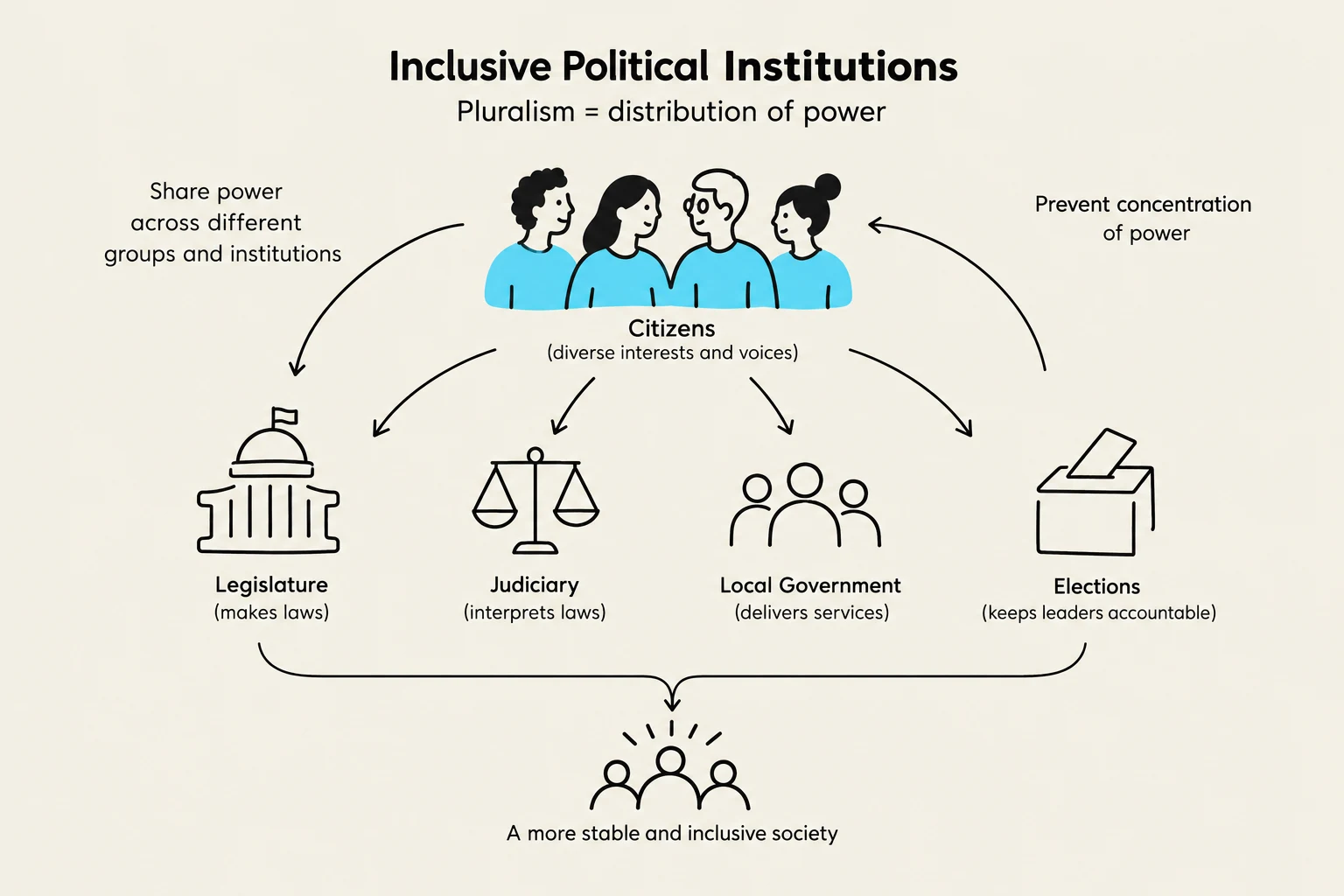
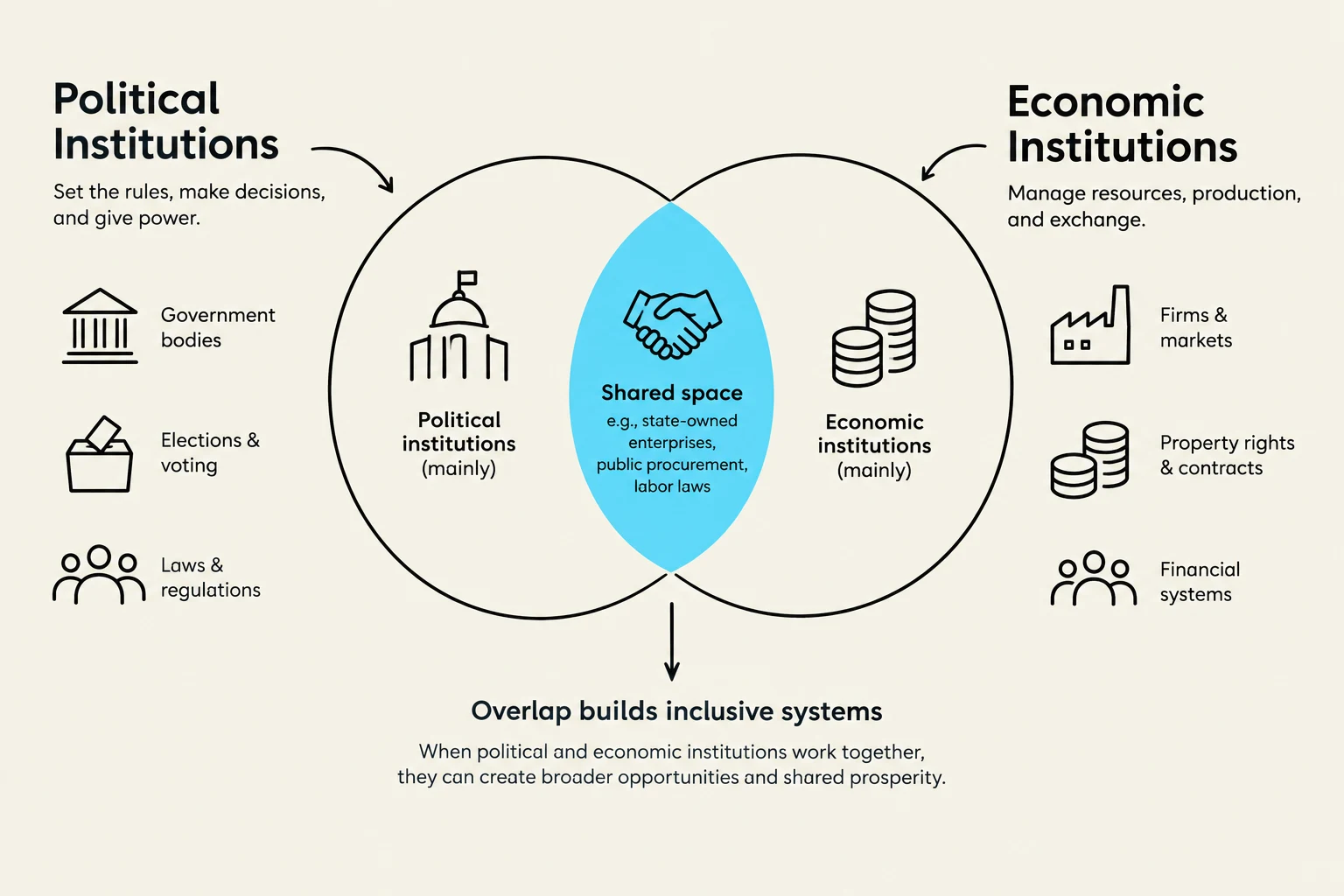
Institutions are the invisible frameworks that organize how we make decisions and how we interact with one another. They are generally categorized into two distinct types: inclusive and extractive. These categories apply to both the economic and political dimensions of a society, and the interplay between them determines the long-term stability and wealth of a nation.
Economic Institutions: Participation vs. Extraction
Economic institutions determine how a society manages its resources, distributes wealth, and encourages or discourages innovation. The distinction lies in whether the system is designed to spread opportunity or to funnel wealth toward a specific group.
Inclusive Economic Institutions
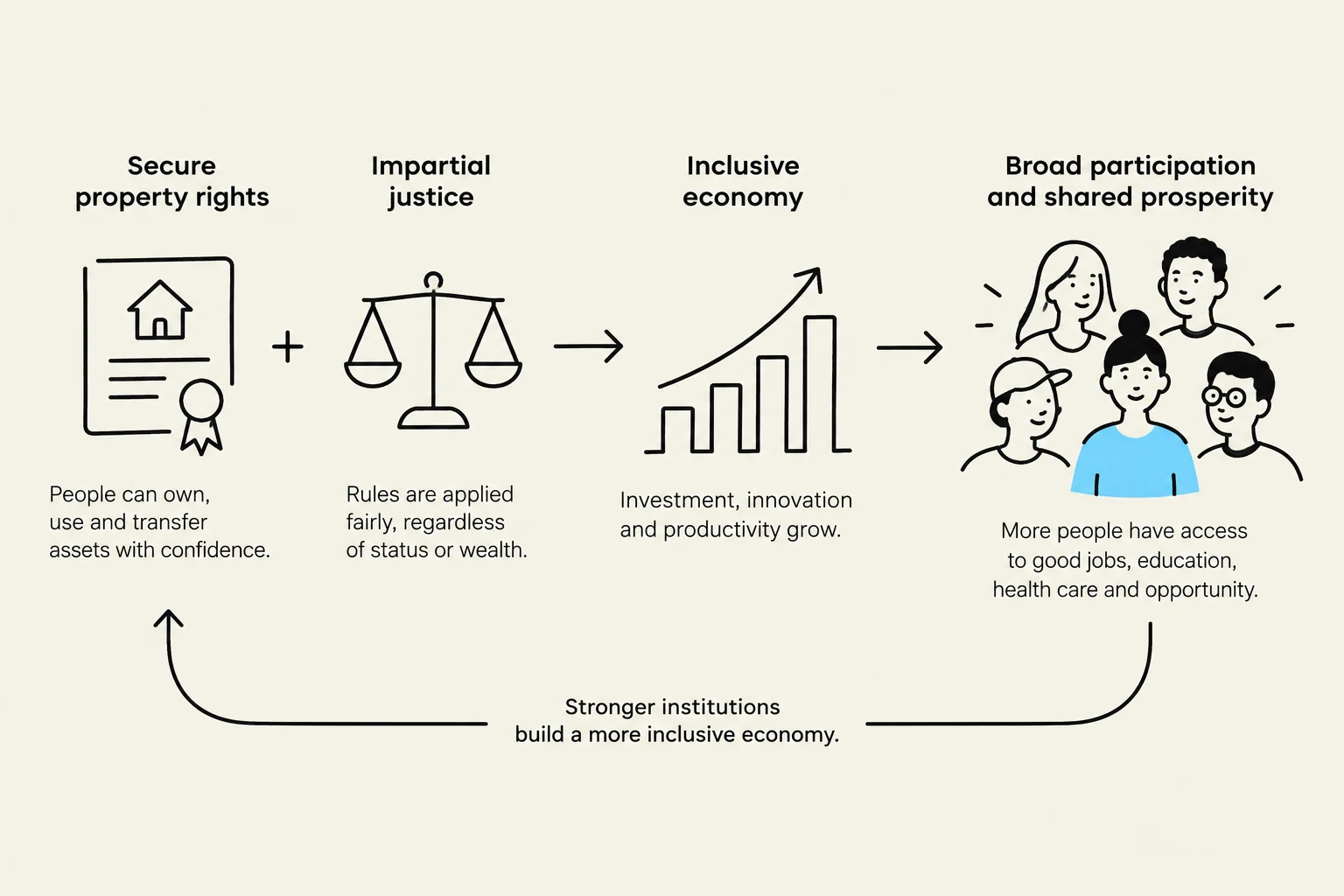
Inclusive economic institutions are designed to allow and encourage broad segments of the population to participate in economic life. A common misconception is that "inclusion" implies everyone earns the same income; this is incorrect. Rather, inclusion means that opportunities and legal protections are not reserved exclusively for a small elite.
Key characteristics of inclusive economic systems include:
- Secure Property Rights: Ensuring that individuals can own assets without fear of arbitrary seizure.
- Enforcement of Contracts: Providing a reliable way for parties to fulfill agreements, which is essential for long-term investment.
- Impartial Justice: A legal system that applies the law equally to all citizens, regardless of their status.
- Open Competition: Providing the freedom to start businesses, choose an occupation, and develop new skills.
Keep reading for free.
Create an account to finish this reading and make it part of your study routine.
Continue reading freeAlready have an account? Log in
Updated