A review of hypertension definitions, blood pressure measurement, lifestyle modifications including dietary goals for sodium and potassium intake, and pharmacological management strategies. It details medication categories such as ACE inhibitors, ARBs, calcium channel blockers, and diuretics, along with their mechanism
Hypertension, or high blood pressure, is a critical cardiovascular risk factor that significantly increases the likelihood of developing atherosclerotic cardiovascular disease (ASCVD), including stroke, myocardial infarction (MI), and peripheral artery disease (PAD). Effective management requires a multi-faceted approach involving accurate clinical diagnosis, lifestyle modifications, and targeted pharmacological therapy to mitigate long-term health consequences.
Clinical Assessment and Diagnosis
Accurate diagnosis of hypertension is not based on a single measurement. To ensure clinical accuracy and avoid misdiagnosis due to "white coat hypertension" or transient stress, clinicians should obtain 2 to 3 readings on 2 to 3 separate occasions.
During physical assessment, blood pressure is measured using a sphygmomanometer and a stethoscope. The stethoscope bell or diaphragm must be placed specifically over the brachial artery to listen for Korotkoff sounds.
Blood Pressure Classification
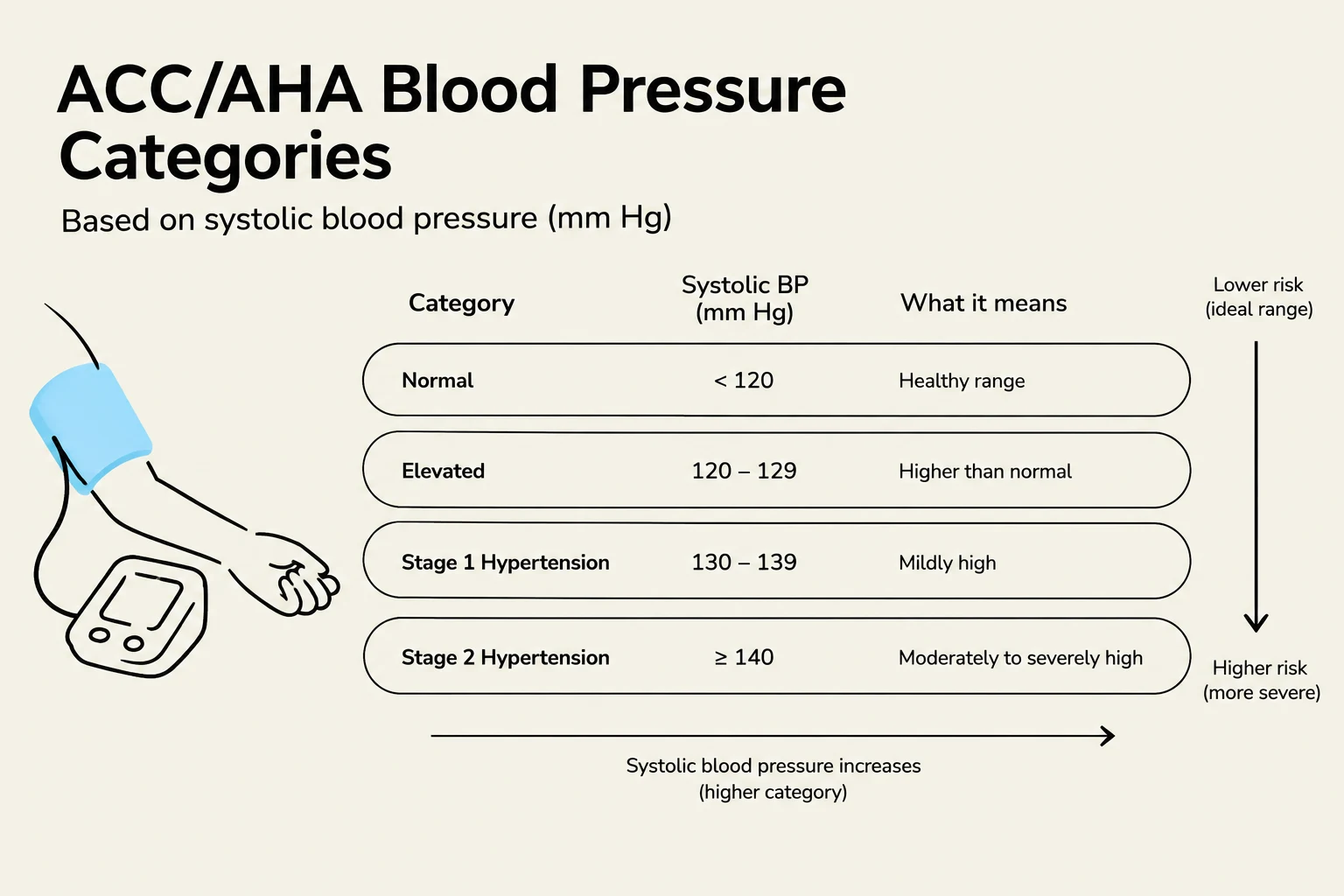
According to the ACC/AHA guidelines, hypertension is categorized into stages based on systolic and diastolic thresholds:
Stage 1 Hypertension: Systolic pressure between 130−139 mmHg and/or a diastolic pressure between 80−89 mmHg.
Exam Tip: Remember that hypertension is diagnosed if either the systolic or the diastolic value meets the threshold for a specific stage.
This chart outlines the ACC/AHA blood pressure categories based on systolic blood pressure readings in mm Hg, indicating the associated risk levels.
Non-Pharmacological Management: Dietary Goals
Lifestyle modification is a cornerstone of hypertension management. Two of the most impactful dietary adjustments involve the regulation of electrolytes, specifically sodium and potassium.
Sodium (Na) Intake
Excessive sodium intake is a major contributor to fluid retention and increased blood pressure. For general management, sodium intake should be limited to <2300 mg/day. However, for select populations, a more aggressive goal of <1500 mg/day is recommended.
Potassium Intake
In contrast to sodium, increasing potassium intake can help counteract the effects of sodium and promote vasodilation. Patients should aim for a daily potassium intake between 3500−5000 mg/day.
This diagram illustrates how sodium intake can lead to increased plasma sodium concentration and water retention, resulting in increased fluid volume. It also shows how potassium supports sodium excretion and helps balance fluid and blood pressure, leading to balanced sodium and potassium levels.
Pharmacological Management
When lifestyle modifications are insufficient, pharmacological intervention is required. Most antihypertensive medications target the Renin-Angiotensin-Aldosterone System (RAAS) or influence vascular tone and fluid volume.
The Role of Renin
A central player in blood pressure regulation is renin, an enzyme released from the kidneys in response to decreased blood flow or low sodium levels. Renin initiates a cascade that ultimately leads to the production of Angiotensin II, a potent vasoconstrictor.
Medication Categories
Pharmacological agents are classified by their specific mechanism of action within these physiological pathways:
1. ACE Inhibitors
Angiotensin-Converting Enzyme (ACE) inhibitors prevent the conversion of Angiotensin I into the active vasoconstrictor Angiotensin II.
Examples: Lisinopril, enalapril, and benazepril.
2. Angiotensin II Receptor Blockers (ARBs)
Rather than preventing the production of Angiotensin II, ARBs allow the hormone to be produced but block it from binding to its receptors on the blood vessels. This prevents the vasoconstrictive effect.
Examples: Losartan, valsartan, and olmesartan.
3. Calcium Channel Blockers (CCBs)
CCBs inhibit the signaling through calcium channels in the smooth muscle cells of the blood vessels. By preventing calcium from entering these cells, the vessels cannot contract as strongly, promoting vasodilation and lowering pressure.
Examples: Amlodipine, diltiazem, and verapamil.
4. Diuretics
Diuretics work primarily by increasing the excretion of sodium and water through the urine, thereby reducing the total fluid volume circulating in the bloodstream.
Examples: Hydrochlorothiazide (HCTZ), chlorthalidone, furosemide, and spironolactone.
Clinical Summary Table for Quick Review
Category
Mechanism
Common Examples
ACE Inhibitor
Inhibits conversion of Angiotensin I to II
Lisinopril, Enalapril
ARB
Blocks Angiotensin II receptor binding
Losartan, Valsartan
CCB
Promotes vasodilation via calcium inhibition
Amlodipine, Verapamil
Diuretic
Increases urine output/reduces fluid volume
HCTZ, Furosemide
Keep reading for free.
Create an account to finish this reading and make it part of your study routine.