


How do we make sense of the world around us? While we often think of "seeing" or "hearing" as single, unified experiences, they are actually the result of complex biological processes. The human sensory systems are specialized pathways designed to convert physical energy from the environment—such as vibrations in the air or chemicals in food—into neural impulses that the brain can interpret. This process of turning physical stimuli into psychological experience is the core of psychophysics.
In this article, we will explore how we hear, taste, smell, feel, and maintain our balance by tracing the journey from stimulus to brain.
The Auditory System: Translating Sound
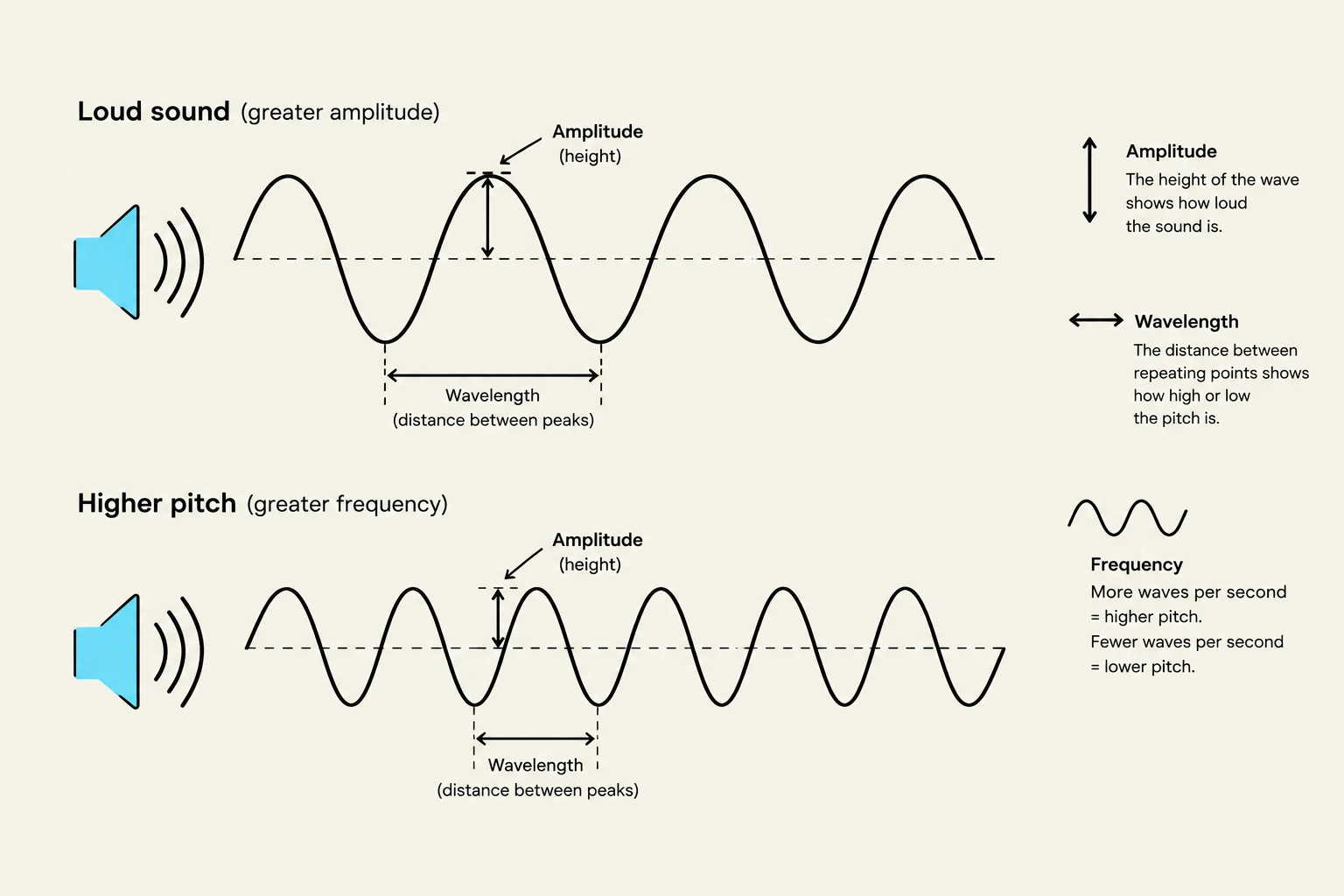
Hearing begins with sound waves, which are essentially vibrations of molecules traveling through a medium like air. These waves possess specific physical characteristics that our brain interprets as distinct qualities:
- Amplitude: The height of the wave, which we perceive as loudness.
- Wavelength/Frequency: The distance between wave peaks. Frequency is measured in Hertz (Hz), or cycles per second. We perceive frequency as pitch; as the frequency increases, the pitch rises.
- Purity: The complexity of the wave, which determines timbre (the unique quality of a sound, such as the difference between a piano and a flute).
The Pathway of Hearing
The transformation from air vibration to neural signal occurs in three main stages:
- The External Ear: The pinna (the visible part of the ear) collects sound waves and funnels them into the ear canal.
- The Middle Ear: Sound waves hit the eardrum, causing the ossicles—three tiny bones known as the hammer, anvil, and stirrup—to vibrate. These bones amplify the changes in air pressure.
- The Inner Ear: The stirrup pushes against the oval window of the cochlea, a fluid-filled, coiled structure. This movement creates waves in the cochlear fluid, which stimulate the basilar membrane. Sitting atop this membrane are hair cells, our auditory receptors.

Keep reading for free.
Create an account to finish this reading and make it part of your study routine.
Continue reading freeAlready have an account? Log in
Updated