An overview of the human body's integrated systems, including homeostasis, support and movement, control and coordination, life support, information processing, fluid regulation, metabolism, adaptation to environments, and reproduction.
The human body is a marvel of biological engineering, functioning as a "living machine" composed of integrated systems that work in concert to sustain life. While we often study anatomy—the study of the body's structure—in isolation, true understanding requires a grasp of physiology: the study of how those structures function through dynamic chemical and physical processes. From the microscopic movement of ions across a cell membrane to the macroscopic coordination of a sprinting athlete, the body operates through a complex hierarchy of cells, tissues, organs, and systems.
Homeostasis and Dynamic Equilibrium
At the heart of all physiological activity is homeostasis, the process by which the body maintains a state of dynamic equilibrium. This does not mean the body is static; rather, it is a constant state of adjustment to keep internal conditions—such as temperature, pH, and fluid concentration—within a narrow, life-sustaining range.
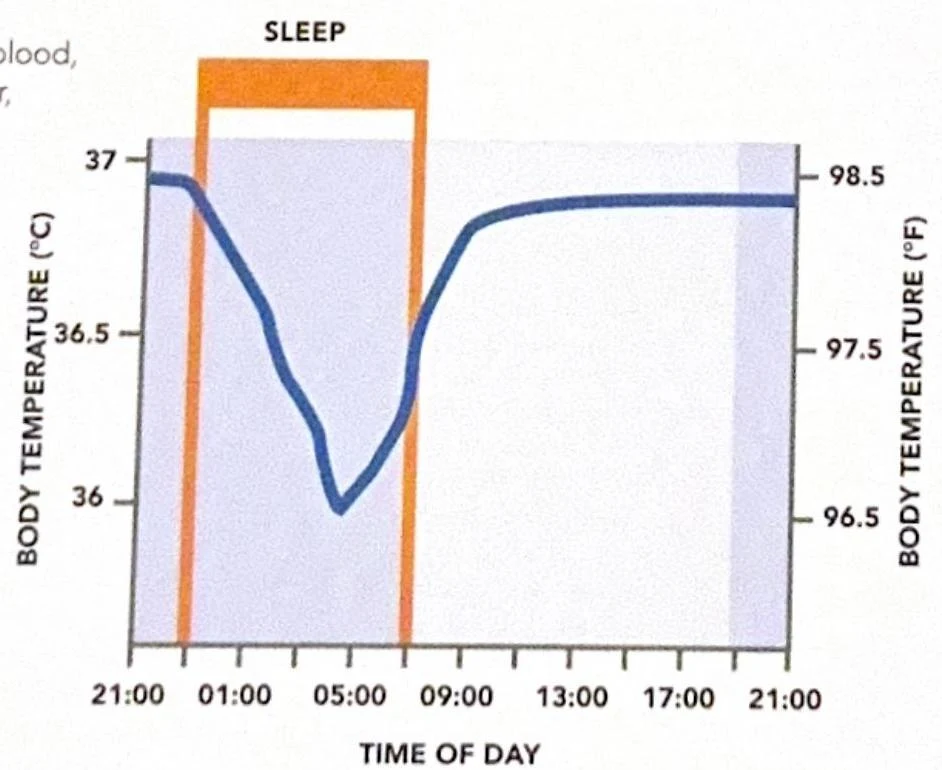
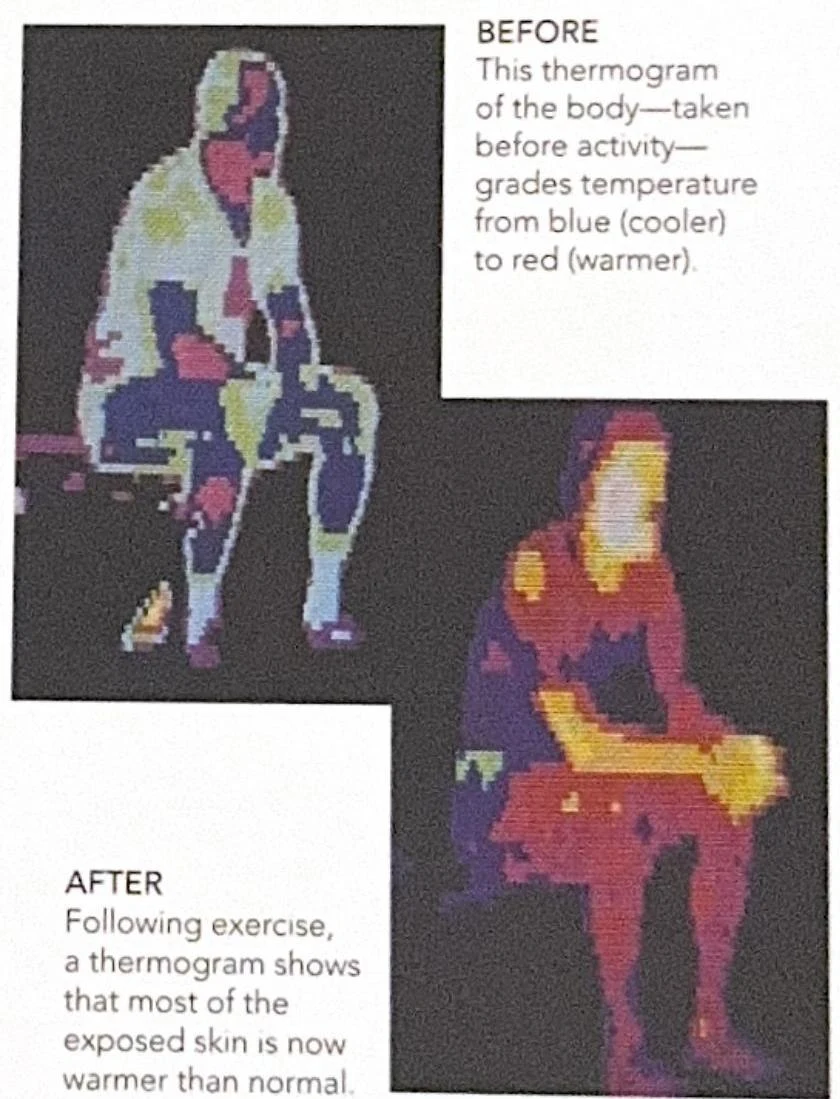
The body uses various feedback mechanisms to achieve this. For example, if your core temperature rises, the body initiates sweating to facilitate cooling; if it drops, shivering generates heat.
This graph illustrates the typical diurnal variation in human body temperature, showing a decrease during sleep hours.
This thermogram illustrates body temperature changes before and after exercise, with blue indicating cooler temperatures and red indicating warmer temperatures.
Exam Tip: Remember that homeostasis is dynamic, not static. The body is constantly making small corrections to prevent large, dangerous deviations from the set point.
Core Physiological Systems
The body is organized into specialized systems that perform specific roles, yet no system operates in a vacuum.
Support, Movement, and Structure
The skeletal system provides the structural framework for the body and serves as a storage site for essential minerals like calcium. The muscular system works alongside the skeleton to enable movement. These systems are heavily influenced by external forces, such as gravity. While our bones and joints are adapted to Earth's gravity (g force), environments with zero gravity (weightlessness) can lead to muscle deterioration, joint weakness, and bone mineral loss.
An anatomical illustration of the human muscular system showing skeletal, smooth, and cardiac muscle types. This is useful for illustrating human anatomy, biology, or physiological systems.
A scanning electron micrograph showing the cross sections of muscle fibers and a blood vessel. This is useful for illustrating the muscular system, tissue structure, and circulatory integration.
Control and Coordination
The body relies on two primary communication networks:
The Nervous System: Uses rapid electrical impulses to provide immediate responses to stimuli. This includes the proprioceptive sense, which allows the brain to understand body position and maintain posture through sensory feedback from muscles and joints.
The Endocrine System: Uses hormones for slower, more long-lasting chemical communication.
An anatomical diagram of the human endocrine system showing various glands and organs within a body silhouette. This is useful for illustrating human biology, endocrinology, and the distribution of hormone producing organs.
Life Support, Protection, and Nourishment
Cardiovascular & Respiratory: The respiratory system facilitates gas exchange (absorbing O2 and removing CO2), while the cardiovascular system pumps this oxygenated, nutrient-rich blood through a network of arteries, veins, and capillaries.
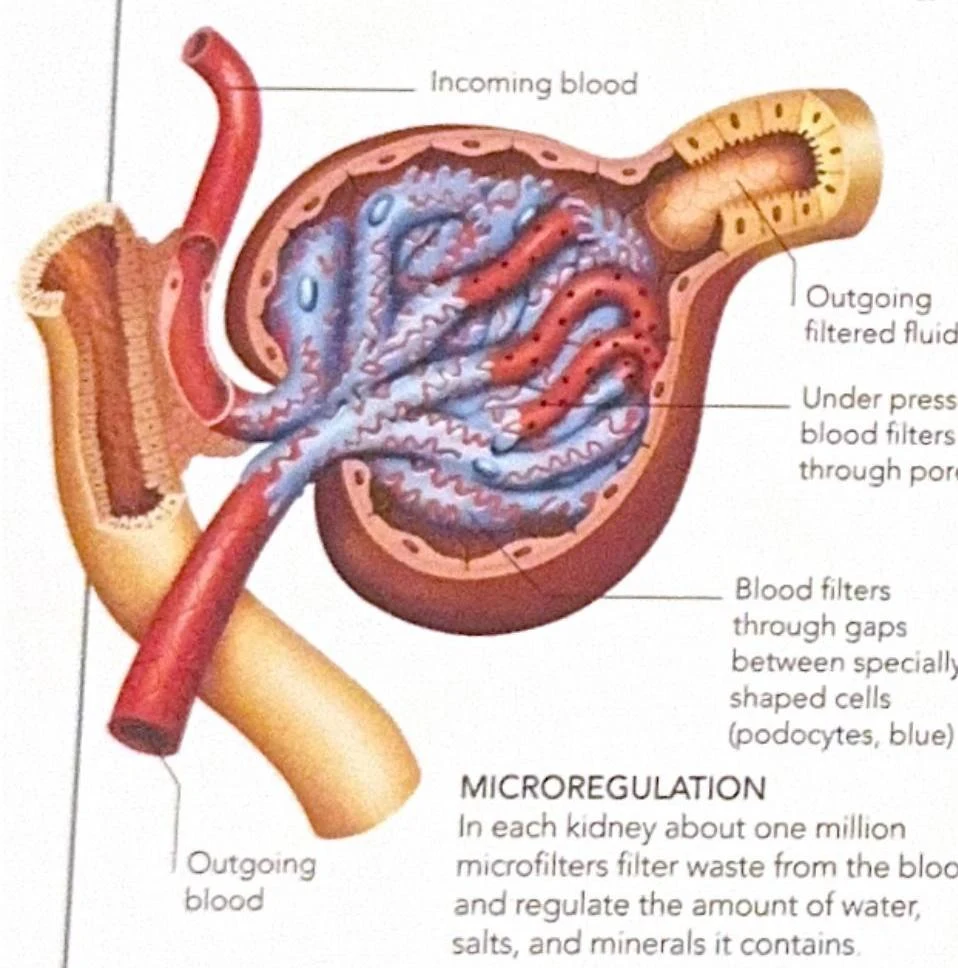
Digestive & Urinary: The digestive tract processes nutrients, while the urinary system (specifically the kidneys) eliminates metabolic waste and regulates the balance of water, salts, and minerals.
Lymphatic & Immune: This system provides physical and chemical defenses against disease and uses lymph fluid to distribute white blood cells and nutrients.
Diagram illustrating the process of microcirculation within a nephron, showing incoming blood, filtration through specialized cells (podocytes), and outgoing filtered fluid and blood.
Information Processing and Circadian Rhythms
The body functions much like a computer. Sensory inputs are gathered, the brain acts as the "CPU" to evaluate the information, and motor or chemical outputs are generated.
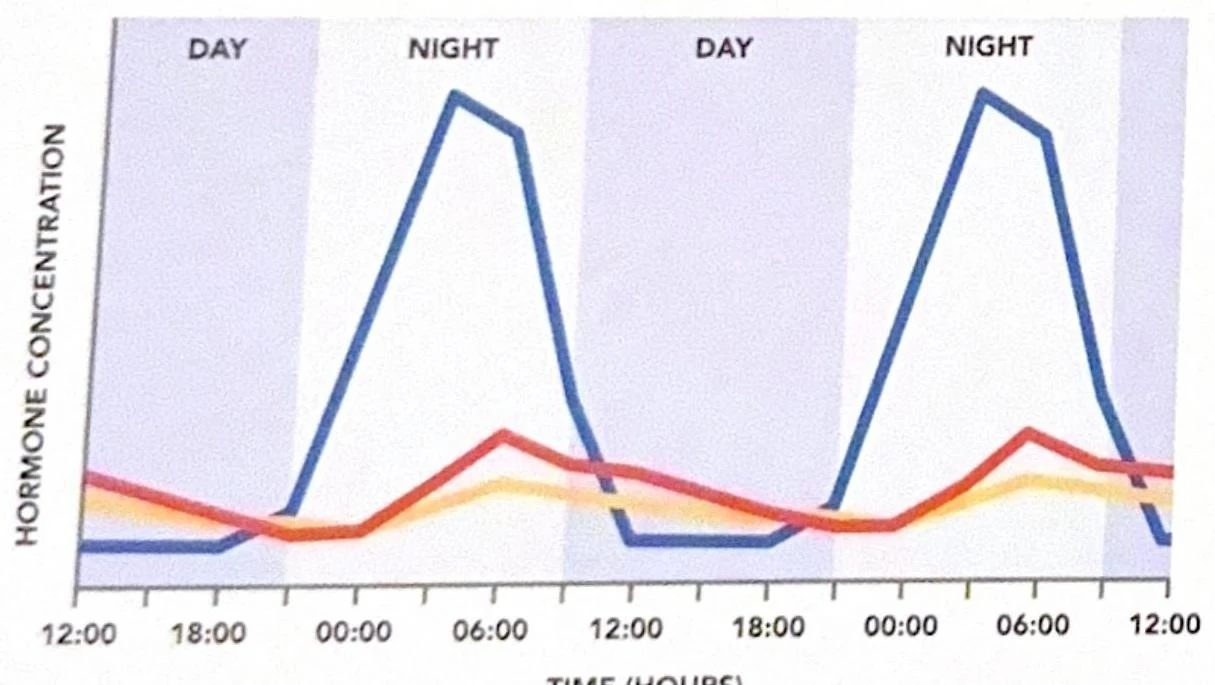
A critical aspect of this processing is the regulation of circadian rhythms—the 24-hour internal cycles that govern sleep and wakefulness. The suprachiasmatic nucleus in the brain acts as the body's master clock, regulating the release of melatonin from the pineal gland. Disruptions to this cycle, such as sleep deprivation or genetic disorders like Smith-Magenis Syndrome, can lead to severe cognitive and emotional issues.
A graph showing the concentration of hormones over a 24-hour period, with distinct peaks during nighttime hours for one hormone.
This graph illustrates the diurnal variation in hormone concentration over a 24-hour period, distinguishing between day and night cycles.
Fluid Compartments and Regulation
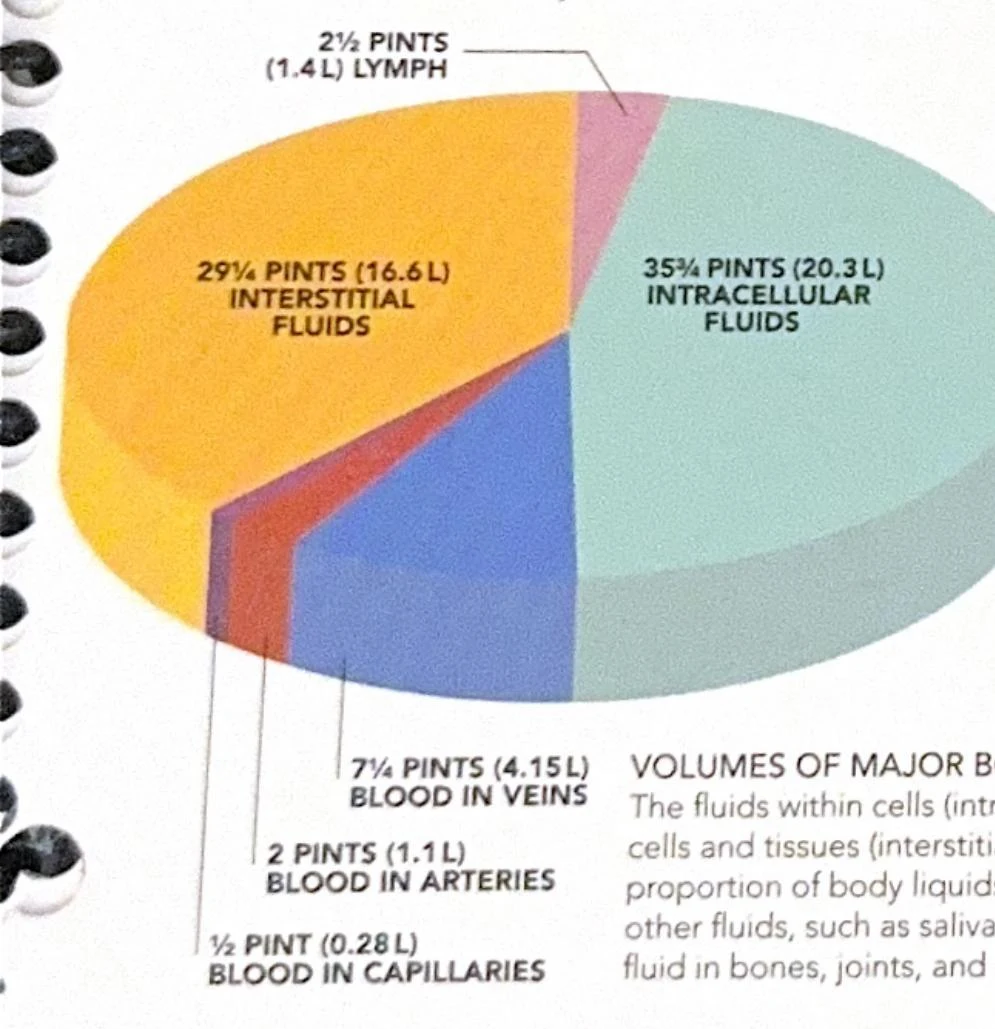
Water is the essential solvent and transport medium of the body. It is distributed into two primary compartments:
Intracellular Fluid: The fluid contained within the cells.
Extracellular Fluid: The fluid outside the cells, which includes blood plasma, interstitial fluid (surrounding cells), lymph, and transcellular fluids.
The body maintains balance by recycling fluids, such as converting plasma into lymph.
This pie chart illustrates the distribution of body fluids, including intracellular fluids, interstitial fluids, lymph, and blood in veins, arteries, and capillaries.
The Dangers of Dehydration
Dehydration occurs when water output (primarily through urine) exceeds intake. This is not just a loss of water, but also a loss of essential salts and minerals like sodium, which are vital for nerve signaling.
Weight Loss (%)
Physiological Effects
1–2%
Thirst, dry mouth, fatigue, reduced urine output
3–4%
Dizziness, muscle weakness, rise in core temperature
5–6%
Severe headaches, muscle cramps, risk of hyperthermia
> 6%
Confusion, hallucinations, collapse, and unconsciousness
Metabolism and Energy Production
To maintain vital functions, the body must constantly produce energy through metabolism. When dietary glucose (the primary energy source) is unavailable, the body follows a specific hierarchy of fuel utilization:
Glucose: Readily available from carbohydrates, but blood levels last less than an hour.
Glycogen: The body breaks down stored "animal starch" in the liver and muscles via a process called glycogenolysis.
Fats (Lipids): Once glycogen is depleted, the body metabolizes adipose tissue into energy-yielding products like ketones and glycerol.
Proteins: In cases of prolonged starvation, the body breaks down muscle tissue to derive amino acids, which the liver converts into glucose through gluconeogenesis.
Student Pitfall: Students often confuse glycogenolysis (breaking down glycogen) with gluconeogenesis (creating new glucose from non-carbohydrate sources like proteins).
Adaptation to Extreme Environments
The human body is highly adaptable, but extreme deviations from the norm can be fatal.
Temperature: Failure of thermoregulation can lead to hypothermia (dangerously low temperature) or hyperthermia (dangerously high temperature, such as heatstroke).
Altitude: At high altitudes (above 8,000 ft), oxygen levels drop. The body adapts by releasing the hormone erythropoietin, which stimulates the bone marrow to produce more red blood cells to enhance oxygen transport.
Pressure: While water-based tissues resist compression well, air-filled spaces (like lungs) are vulnerable to pressure changes during diving.
Reproduction and Development
The reproductive system is essential for the continuation of the species, though it differs significantly between sexes in structure and function. In males, the system includes the testes and scrotum, while in females, it includes the uterus, ovaries, and fallopian tubes. Modern medical science, such as in-vitro fertilization (IVF) and gene therapy, now allows for greater control over the genetic inheritance passed to the next generation.
Keep reading for free.
Create an account to finish this reading and make it part of your study routine.