


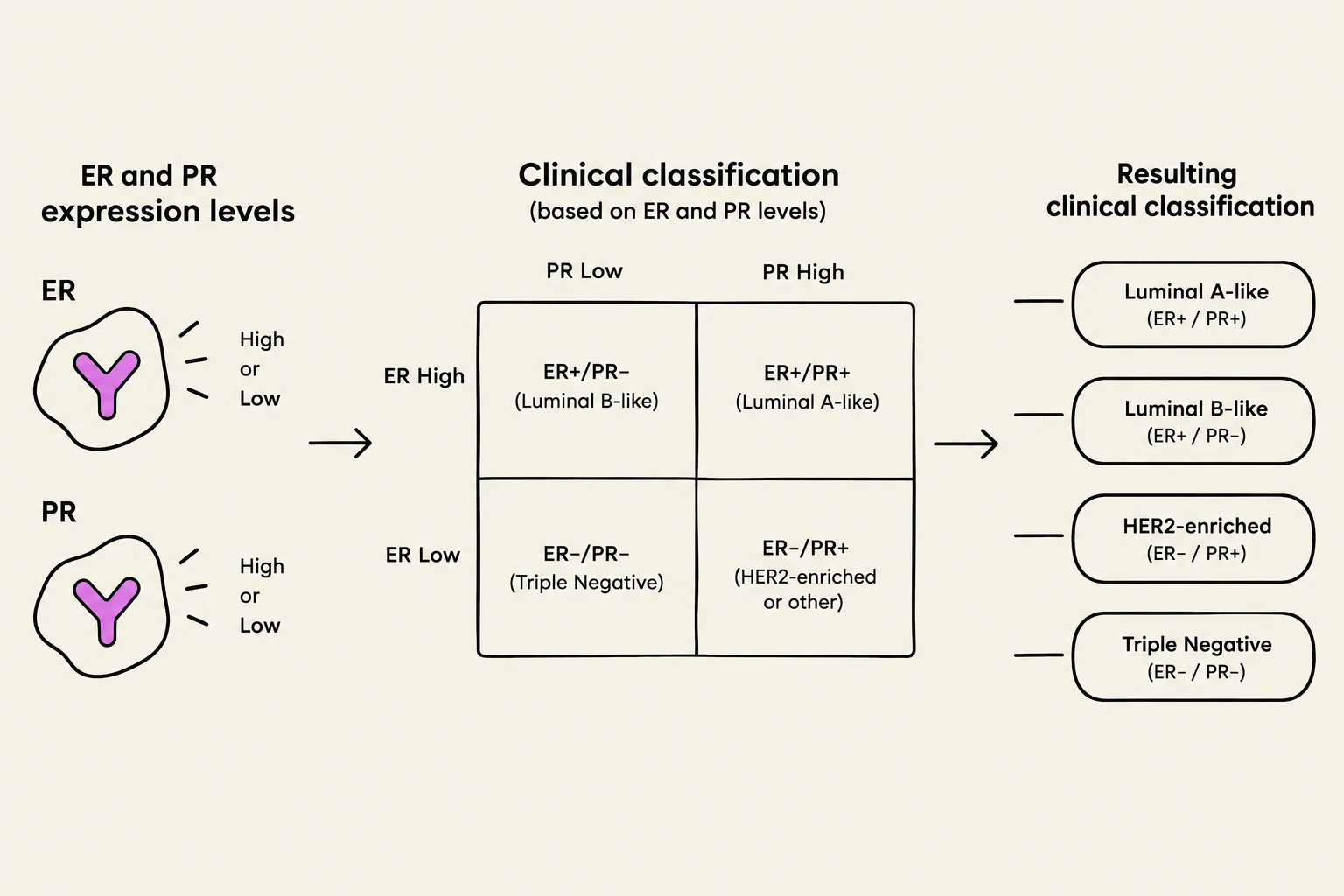
In the management of invasive breast cancer, determining the hormone receptor status of a tumor is a fundamental step in tailoring systemic therapy. Hormone receptor-positive (HR+) tumors are characterized by the presence of estrogen receptors (ER), progesterone receptors (PR), or both. This biomarker profile serves as a primary indicator of whether a patient is likely to benefit from endocrine therapies, which aim to block the action of these hormones or reduce their production [[1,2]].
Hormone Receptor-Positive (HR+) Tumors
A tumor is classified as hormone receptor-positive when the cancer cells express receptors that respond to steroid hormones [[1,2]]. This status is not a binary "yes/no" in terms of clinical nuance, but rather a spectrum of expression that guides oncologists in selecting the most effective adjuvant or metastatic treatment strategies [[1,2]].
Clinical Pearl: The presence of these receptors is a prerequisite for the use of standard endocrine therapies. Without receptor expression, these drugs will have no biological target to act upon.

Estrogen Receptor (ER) Testing
The most critical biomarker in this context is the Estrogen Receptor. Through immunohistochemistry (IHC) staining, pathologists determine the percentage of tumor cells that exhibit nuclear staining [[1,2]].
ER Status and the "Low-Positive" Subgroup
Tumors are generally classified as ER+ if they exhibit between 1% and 100% ER expression [[1,2]]. However, the magnitude of expression matters:
- High ER Expression: Strongly associated with a greater clinical benefit from endocrine therapy [[1,2]].
- ER-Low-Positive (1%–10%): While these patients have lower expression levels, clinical discussions regarding the potential benefits of endocrine therapy should still occur [[1,2]].
Keep reading for free.
Create an account to finish this reading and make it part of your study routine.
Continue reading freeAlready have an account? Log in
Updated