


The female reproductive system is a complex, highly coordinated biological machine designed to produce gametes, facilitate fertilization, and support the development of a new life. At the heart of this system is a delicate interplay of hormones that regulate the ovaries and the uterus in a rhythmic cycle. Understanding these processes requires looking at two interconnected phenomena: the development of the egg (oogenesis) and the cyclical changes in the uterine lining (the menstrual cycle).
Oogenesis and Folliculogenesis
Oogenesis is the process of egg (oocyte) development that begins long before a woman's first period. Unlike males, who produce sperm continuously, a female's supply of oocytes is established during fetal development.
During the fetal stage, primordial germ cells migrate to the developing ovaries to become oogonia. These oogonia undergo mitotic division to become primary oocytes. However, the process is not a simple linear progression; many of these cells undergo atresia, a natural process of degeneration and absorption. By birth, the initial millions of follicles are reduced to approximately 1 million. This atresia continues through childhood, leaving only about 300,000 primary oocytes by the time puberty is reached.
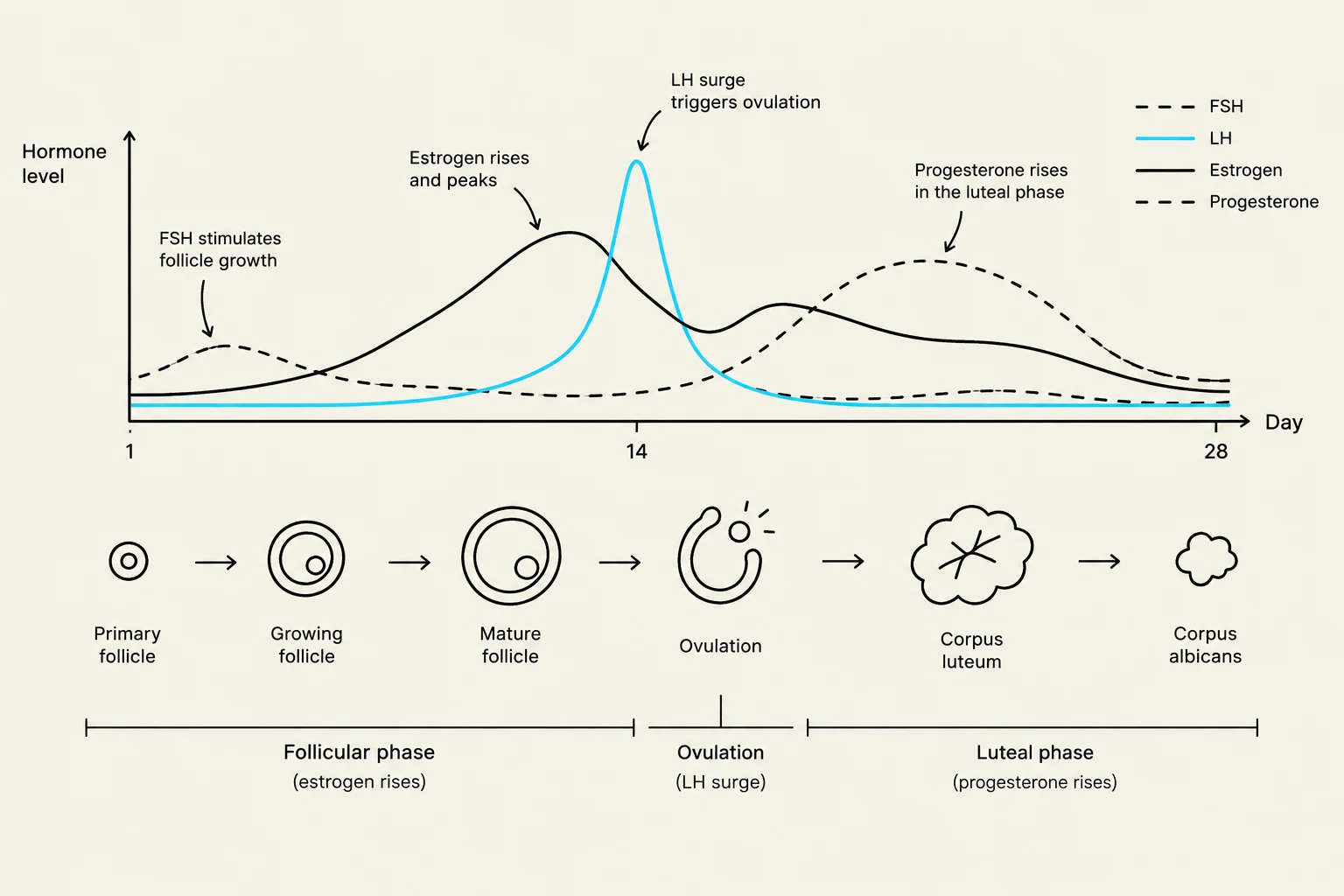
Once puberty begins, the hypothalamus releases Gonadotropin-releasing hormone (GnRH), which stimulates the anterior pituitary to secrete two critical hormones: Follicle-Stimulating Hormone (FSH) and Luteinizing Hormone (LH).
- FSH stimulates the growth and maturation of ovarian follicles.
- LH is essential for the final maturation of the dominant follicle and triggers ovulation.
As follicles mature, they progress from primordial to primary, secondary, and finally tertiary follicles. A mature tertiary follicle is known as a Graafian follicle. These follicles contain granulosa cells and theca cells; the theca cells produce androgens, which the granulosa cells convert into estrogen (specifically estradiol).
Keep reading for free.
Create an account to finish this reading and make it part of your study routine.
Continue reading freeAlready have an account? Log in
Updated