


Plant pathology is the scientific study of diseases in plants caused by pathogens and environmental factors. While the concept of plant disease is ancient—with records of wheat rust in Egypt dating back to 2000 BC—the scientific understanding of why plants get sick has undergone a massive transformation. We have moved from attributing crop failures to the wrath of gods to understanding the complex molecular and microbial interactions that drive infection.
Distinguishing Symptoms from Signs
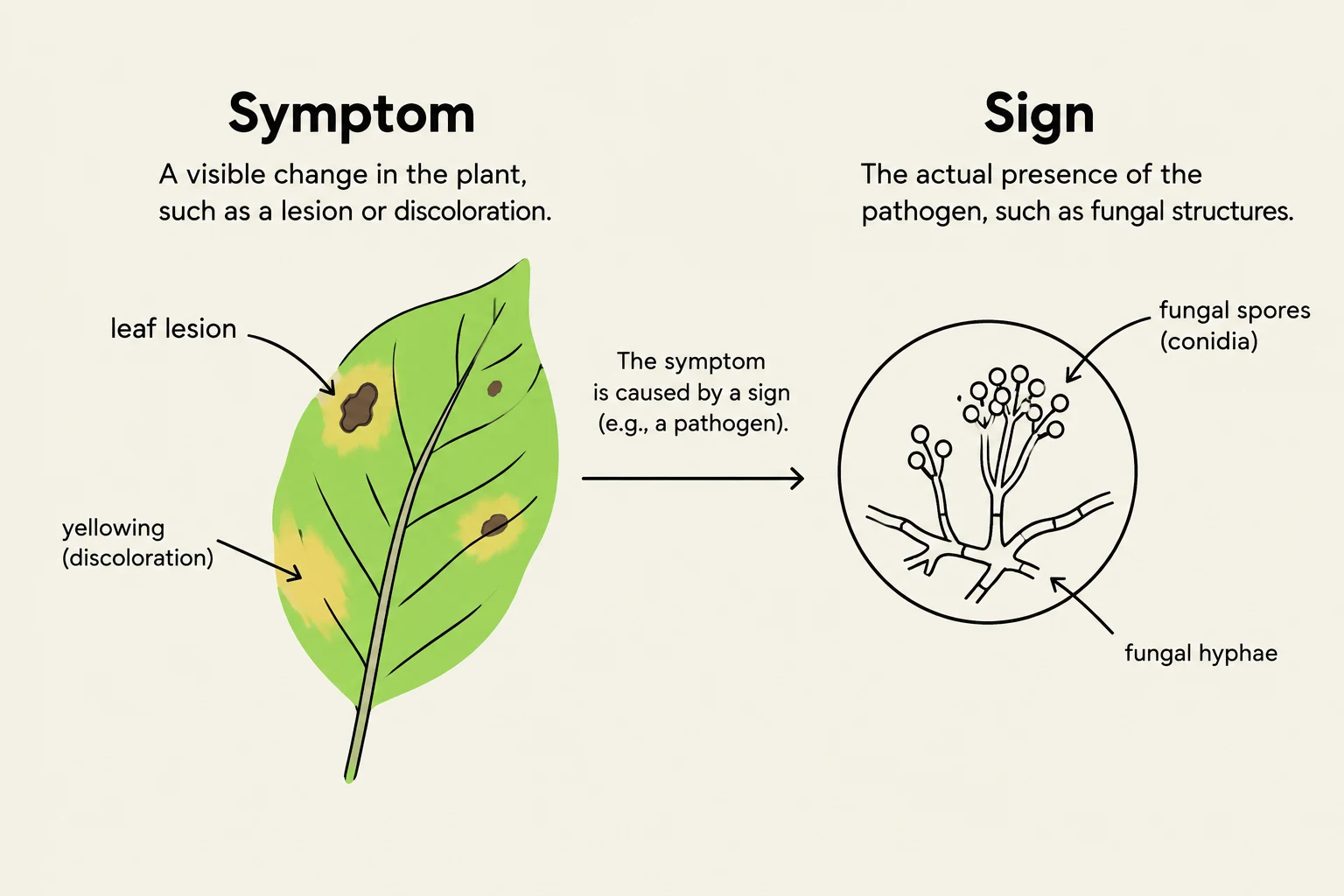
One of the first hurdles for a student of plant pathology is correctly identifying what they are seeing on a diseased specimen. It is common to use these terms interchangeably in casual conversation, but in science, they represent two distinct observations.
- Symptom: This is the plant's own physiological response to the infection. It is how the host "reacts" to being attacked. Examples include wilting, stunting, chlorosis (yellowing), lesions, or rot.
- Sign: This is the physical presence of the pathogen itself or its reproductive structures. If you see fungal spores, mycelium, or bacterial ooze, you are looking at a sign.
Exam Tip: If a question asks you to identify a "sign," look for the pathogen's body (like white fuzzy growth on a potato). If it asks for a "symptom," look for the damage to the plant tissue (like shrunken or discolored leaves).
The Evolution of Disease Theory
For much of human history, plant diseases were viewed through a supernatural lens. In ancient Rome, farmers worshipped the goddess Robigo to protect their grain from rust; they even held the Robigalia festival, sacrificing red animals to appease her and prevent "rusting" of the crops. Even as late as the 16th century, disease was often linked to "noxious vapors" or cosmic factors.
Keep reading for free.
Create an account to finish this reading and make it part of your study routine.
Continue reading freeAlready have an account? Log in
Updated