


The liver is a metabolic powerhouse, performing up to 500 unique functions, including protein synthesis, detoxification, and bile production. However, when the liver's structural integrity is compromised—most notably through cirrhosis—the entire circulatory system can be disrupted. Cirrhosis is the late-stage scarring of the liver where chronic inflammation leads to the replacement of functional tissue with fibrotic scar tissue. This scarring alters the liver's vascular architecture, leading to two primary drivers of clinical complications: impaired synthesis of blood clotting factors and the development of portal hypertension.
The Risk of Hemorrhage: Clotting Factor Deficiency
One of the most immediate dangers of hepatic failure is an increased risk of bleeding. The liver is responsible for producing both vitamin K-dependent and vitamin K-independent clotting factors.
The mechanism of bleeding in liver disease is often a "double hit":
- Direct Impairment: The damaged hepatocytes can no longer synthesize sufficient quantities of clotting proteins.
- Malabsorption: Because the liver is responsible for synthesizing bile salts from cholesterol, hepatic failure leads to inadequate bile production. Without bile, the body cannot effectively emulsify and absorb fats in the small intestine, which in turn prevents the absorption of fat-soluble vitamins, specifically Vitamin K. This deficiency further cripples the liver's ability to produce clotting factors.
Exam Tip: If a question asks why a patient with liver failure has a prolonged prothrombin time (PT/INR), consider both the lack of protein synthesis and the lack of Vitamin K absorption due to bile salt deficiency.
Portal Hypertension and Portosystemic Shunts
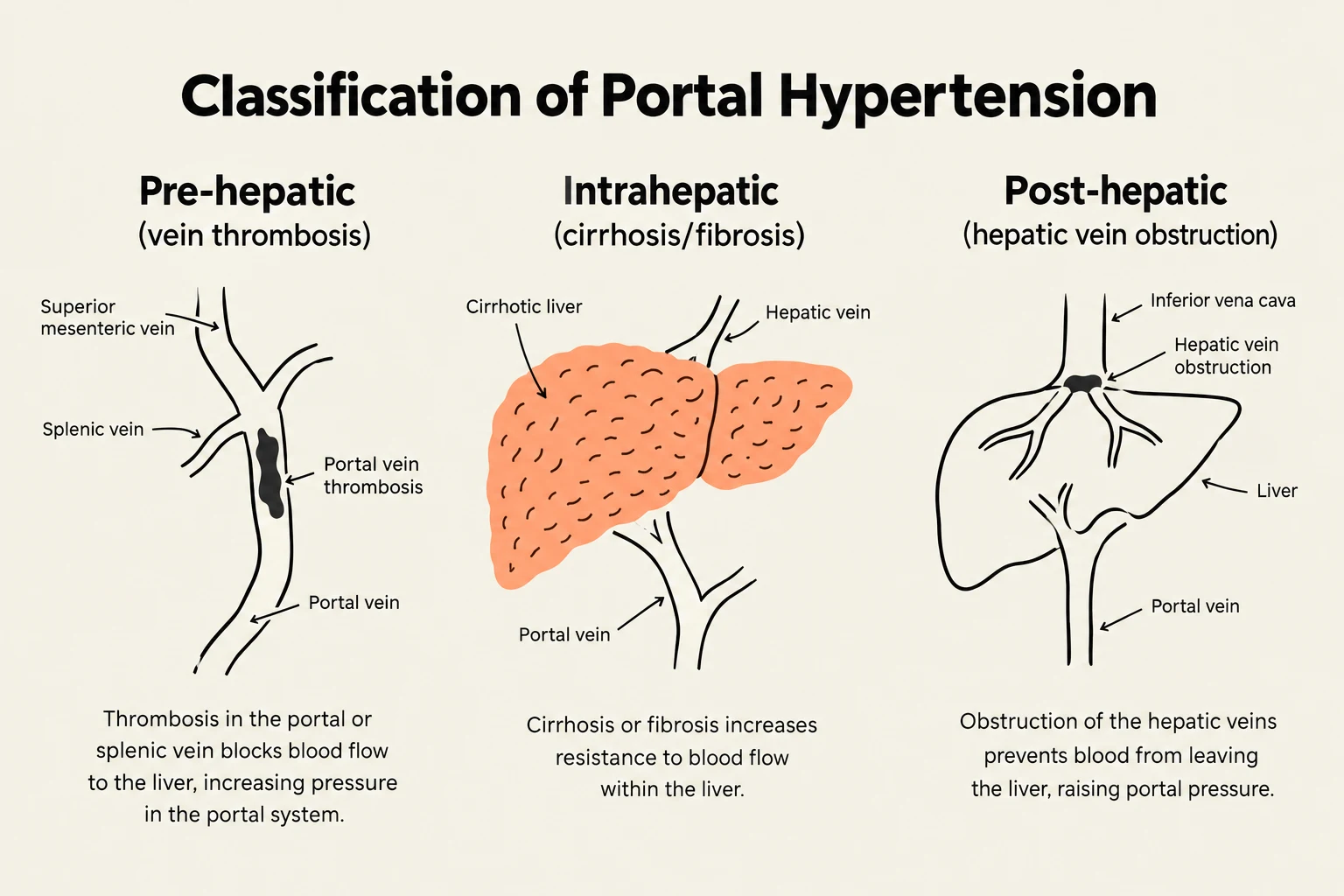
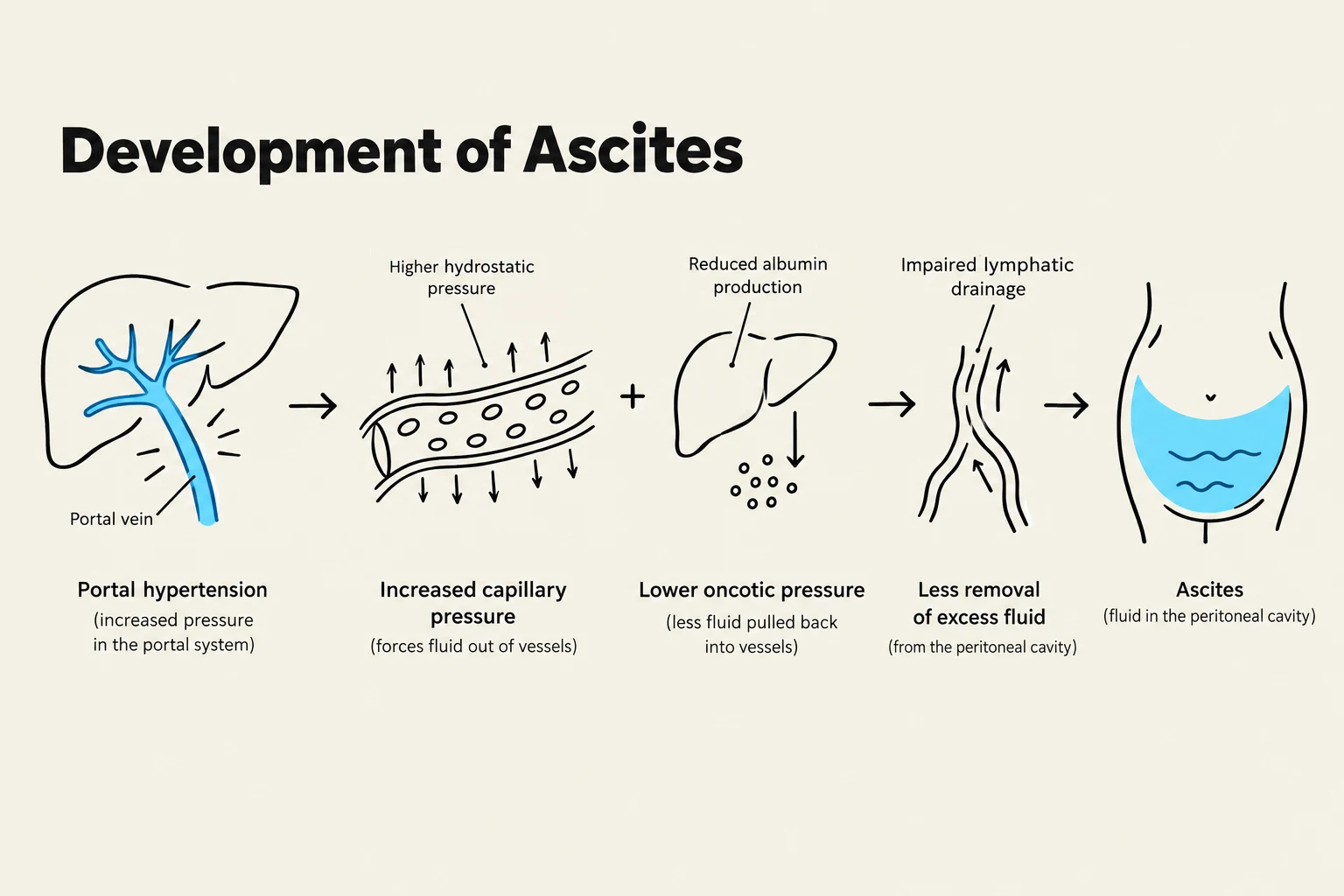
Portal hypertension is defined as abnormally high blood pressure within the portal venous system caused by resistance to blood flow. This resistance can be categorized by where the obstruction occurs:
Keep reading for free.
Create an account to finish this reading and make it part of your study routine.
Continue reading freeAlready have an account? Log in
Updated