This content explains hematopoiesis, the process of blood cell production in the body. It details the locations of blood cell formation, the hierarchy of stem cells, and the role of chemical messengers called poietins in regulating cell production.
Blood is much more than just a red liquid flowing through our veins; it is a complex tissue composed of various cellular elements suspended in a liquid matrix. The continuous production and replenishment of these cells is a vital biological necessity, as blood cells have finite lifespans and must be constantly replaced to maintain homeostasis. This essential manufacturing process is known as hematopoiesis.
Understanding Hematopoiesis
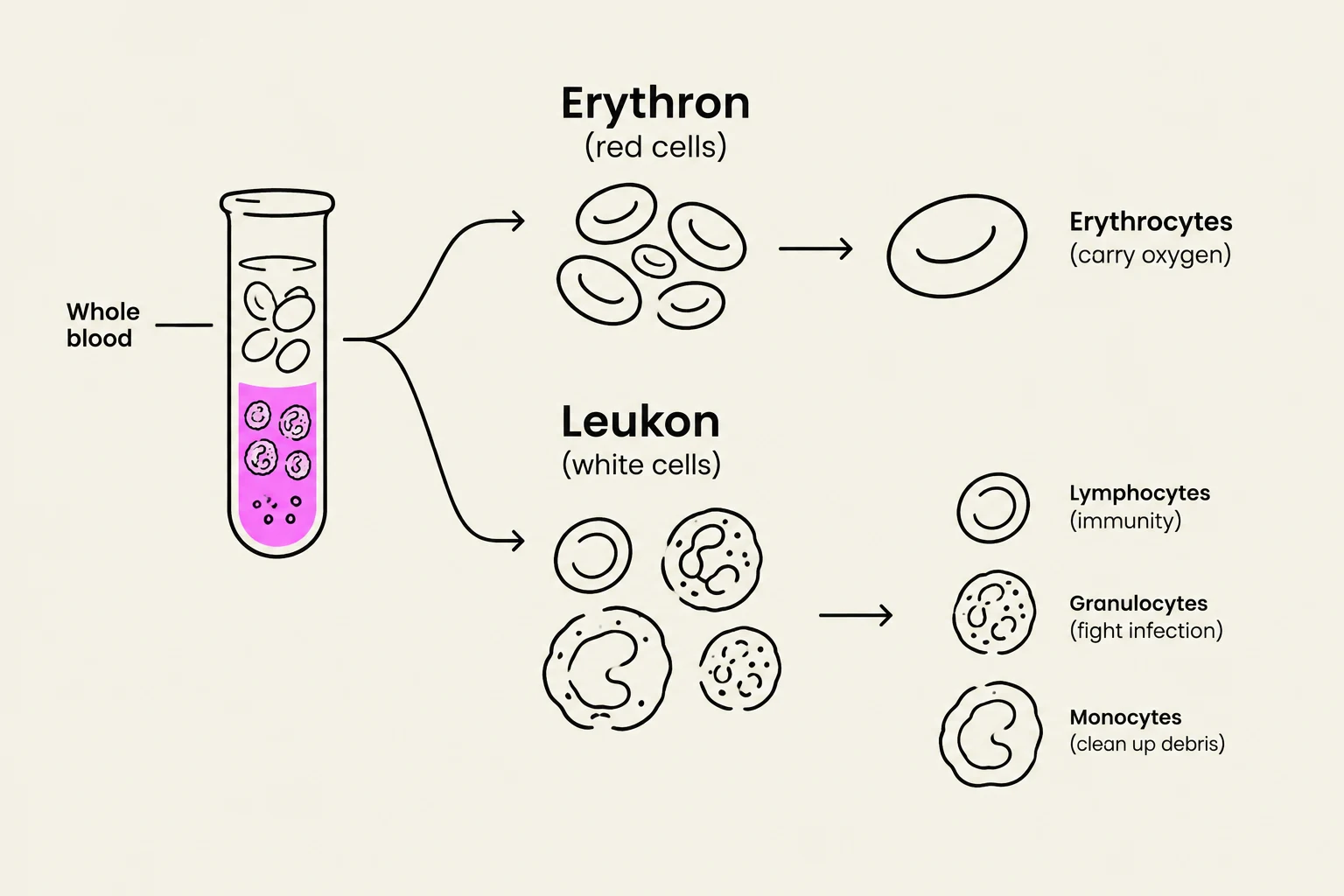
Hematopoiesis refers to the process of making all the blood cells in the body. To understand how this works, it is helpful to categorize the resulting blood components into two functional groups:
The Erythron: This refers to the collection of red blood cells (erythrocytes) circulating throughout the body.
The Leukon: This refers to the collection of white blood cells (leukocytes) throughout the body.
In addition to these cellular components, blood also contains a liquid portion (the plasma).
Diagram illustrating the components of whole blood, differentiating between erythrocytes (red blood cells) responsible for oxygen transport and various types of leukocytes (white blood cells) involved in immunity, such as lymphocytes, granulocytes, and monocytes.
Where Blood Cells are Made
In a healthy adult, the primary site for blood cell production is the bone marrow. This process occurring within the bone marrow is called medullary hematopoiesis.
Medullary Hematopoiesis and Bone Marrow Components
The bone marrow is not just a simple container; it is a complex environment consisting of a matrix of fatty cells, reticulum cells, fibrils, vessels, sinusoids, and various blood cells, along with specialized cells like osteoblasts and osteoclasts.
As an adult, hematopoiesis is most active in the ends of long bones and in flat bones. Within the marrow, we distinguish between two types of tissue:
Red Marrow: This is the active tissue responsible for blood cell production.
Yellow Marrow: This consists of central fatty material and is considered inactive in terms of blood production.
Extramedullary Hematopoiesis
While medullary hematopoiesis is the standard, blood cells can sometimes be produced outside of the bone marrow in organs such as the liver and spleen. This process is known as extramedullary hematopoiesis and is generally considered an abnormal condition.
The Hierarchy of Stem Cells
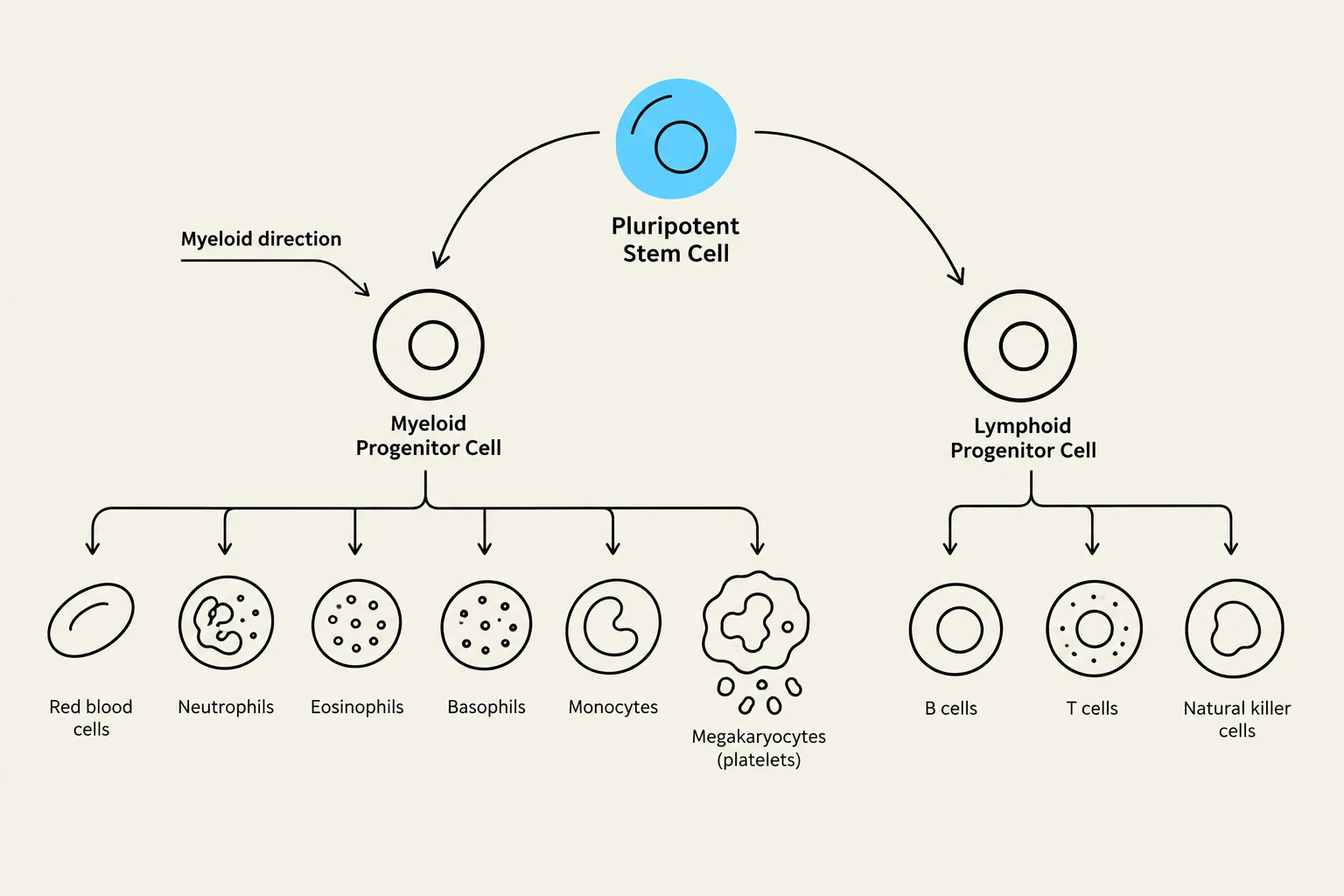
All blood cells in the body originate from a single, remarkable cell type: the pluripotent stem cell. These cells live within the bone marrow and possess the unique ability to become "anything" depending on the signals they receive from the body.
When a pluripotent stem cell receives a signal to divide, it undergoes a specific process:
The cell divides to create two identical cells.
One cell remains in the marrow to maintain the stable population of stem cells.
The other cell matures into a multipotent stem cell.
Diagram illustrating the differentiation of pluripotent stem cells into various blood cell types, including myeloid and lymphoid lineages.
The Two Pathways of Multipotent Cells
Once a cell has reached the multipotent stage, its developmental path is determined by specific stimuli, such as hormones and growth factors. There are two primary directions a multipotent cell can take:
Myeloid Direction: This pathway leads to the production of erythrocytes (RBCs), thrombocytes (platelets), monocytes, and granulocytes (which include all white blood cells except lymphocytes).
Lymphoid Direction (Lymphopoiesis): This pathway leads specifically to the development of lymphocytes.
Exam Tip: Remember that "granulocytes" include most white blood cells, but they are distinguished from "lymphocytes" by their developmental pathway (Myeloid vs. Lymphoid).
The Role of "Poietins"
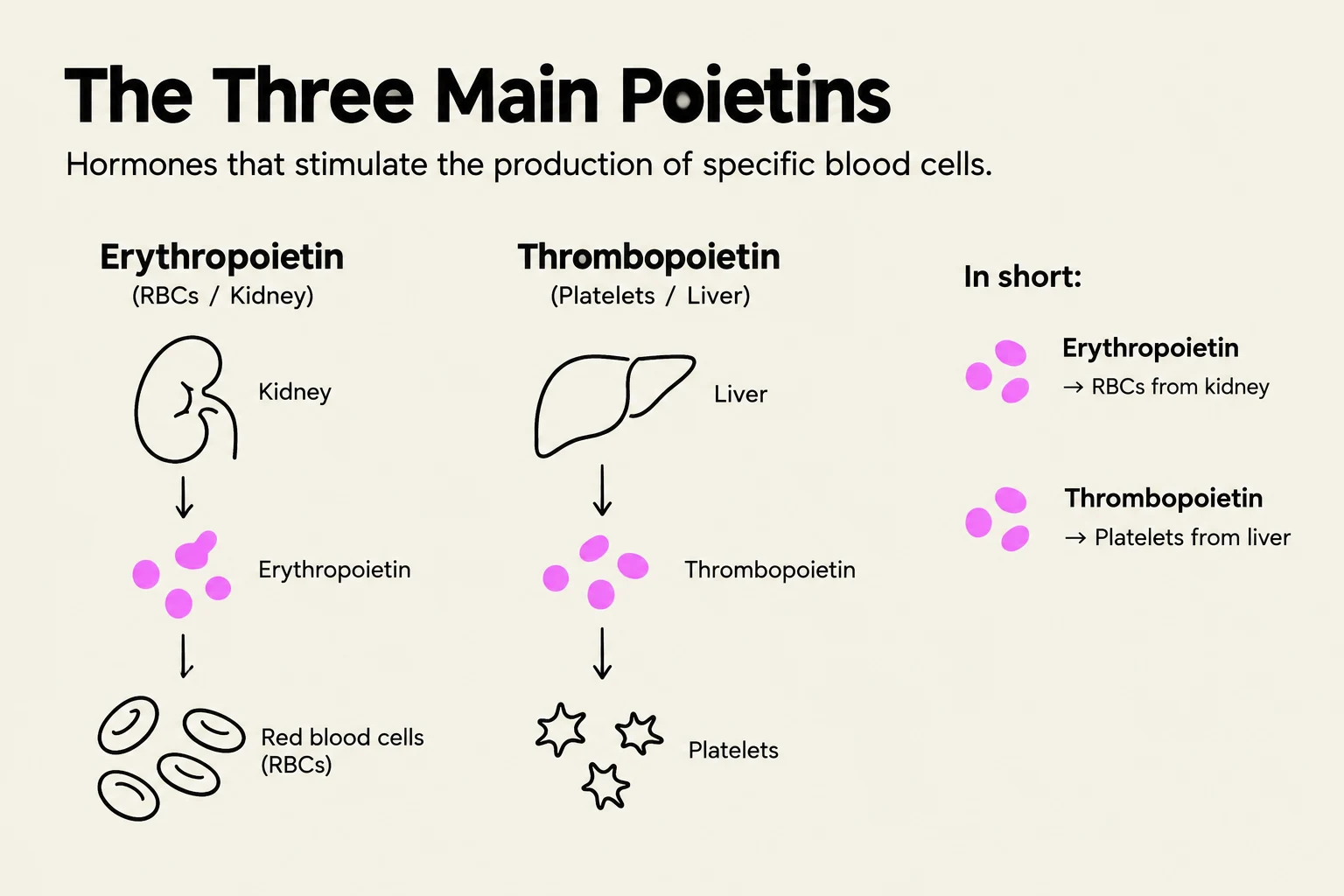
The body directs the production of specific cells through chemical messengers called poietins. These are hormones or factors that act as signals to the marrow stem cells. They can increase the number of cell divisions or shorten the maturation time, allowing the body to produce more cells more quickly.
Common poietins include:
Erythropoietin: A hormone produced in the kidney in response to low oxygen levels; it stimulates erythropoiesis (RBC production).
Thrombopoietin: A glycoprotein hormone produced mostly in the liver; it stimulates thrombopoiesis (platelet production).
Leukopoietin: A collection of factors (including enzymes and colony-stimulating factors) that stimulate leukopoiesis (WBC production).
This diagram illustrates the roles of Erythropoietin and Thrombopoietin, hormones that stimulate the production of red blood cells and platelets, respectively. Erythropoietin is produced in the kidneys and stimulates red blood cell production, while Thrombopoietin is produced in the liver and stimulates platelet production.
In a healthy individual, the population of these cells in the bone marrow remains consistent. Because the marrow is so complex, clinicians often require a bone marrow biopsy to accurately assess the health and activity of the hematopoiesis process.
Keep reading for free.
Create an account to finish this reading and make it part of your study routine.