


Blood is a complex, dynamic tissue essential for transporting oxygen, defending the body against infection, and facilitating clotting. To maintain the constant demand for these functions, the body relies on a continuous process of cell production known as hematopoiesis. Understanding how these cells are born, how they mature, and how their production is regulated is fundamental to diagnosing various forms of anemia and other hematological disorders.
Hematopoiesis: The Foundation of Blood Production
Hematopoiesis refers to the continuous production and release of blood cells into the circulation. This process is driven by self-renewing hematopoietic stem cells (HSC) located within the bone marrow. These stem cells are remarkable because they can proliferate and differentiate into multiple different lineages to replenish the body's supply of cells.
Every single day, the hematopoietic process produces approximately:
- 200 billion red blood cells
- 10 billion white blood cells
- 400 billion platelets
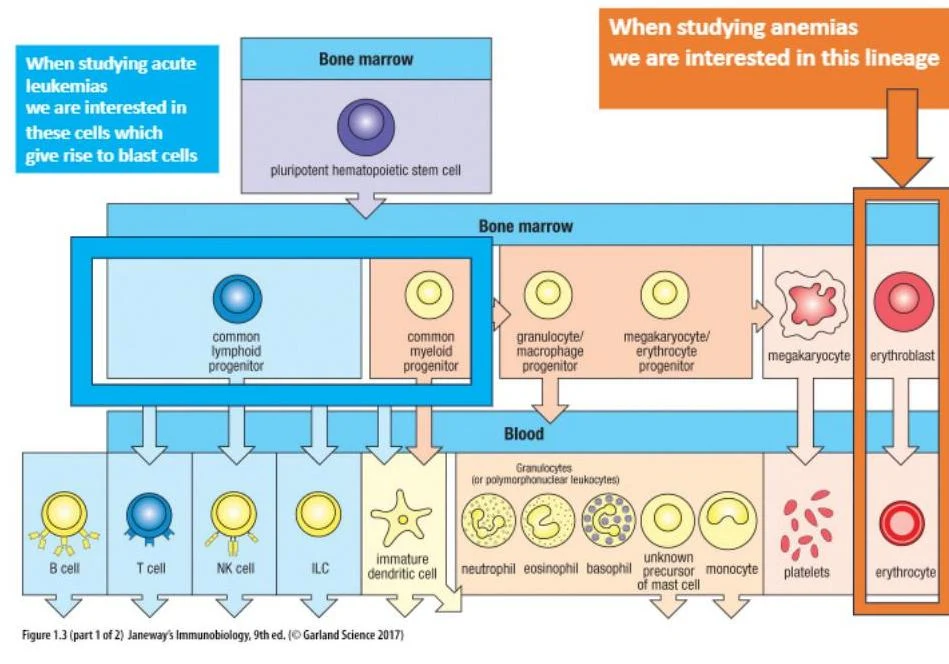
All blood cells originate from these HSCs, which are also referred to as hemocytoblasts. From these master cells, the body can produce leukocytes (white blood cells) for immunity, thrombocytes (platelets) for clotting, and erythrocytes (red blood cells) for oxygen transport.
Erythropoiesis: The Development of Red Blood Cells
Erythropoiesis is the specific subset of hematopoiesis dedicated to the formation of red blood cells (RBCs). This specialized process occurs in the red bone marrow and follows a highly regulated sequence of maturation.
The Stages of Maturation
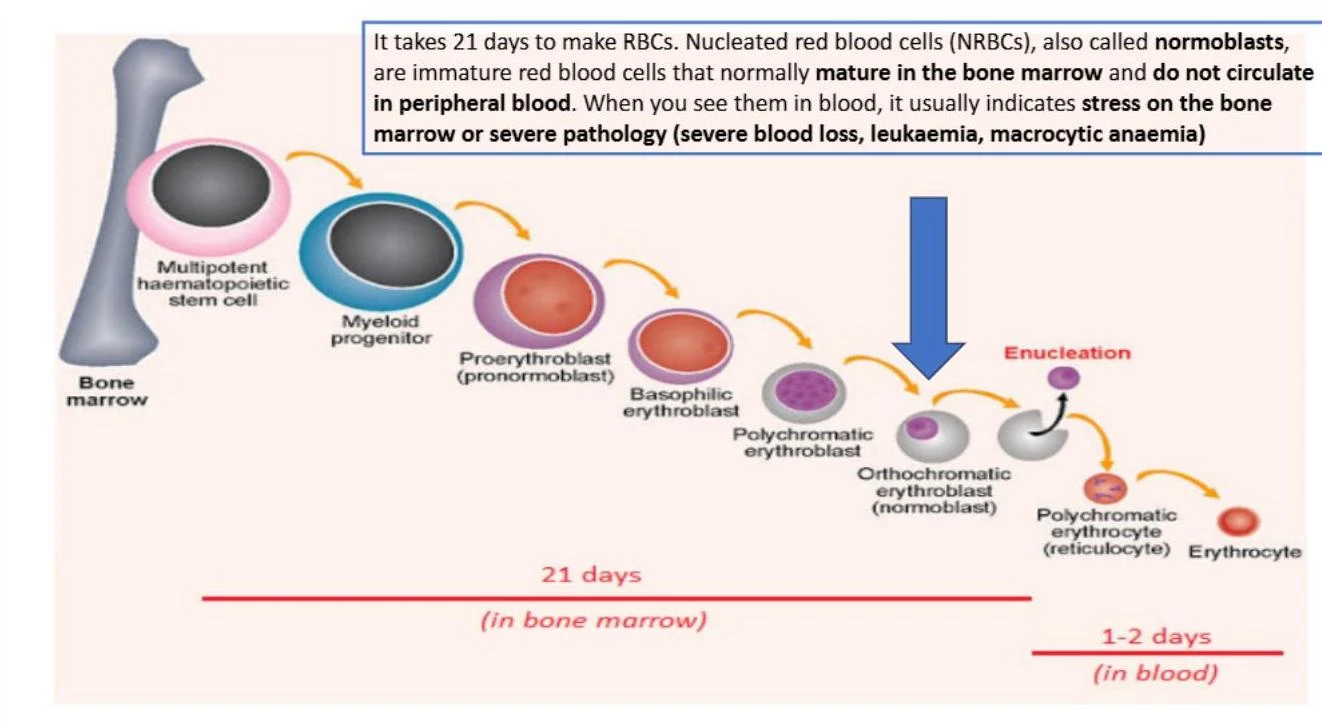
The journey from a stem cell to a functional erythrocyte takes approximately 21 days. The progression follows this general pathway:
Keep reading for free.
Create an account to finish this reading and make it part of your study routine.
Continue reading freeAlready have an account? Log in
Updated