An overview of the hematologic system, including hematopoiesis, hemostasis, and the pathophysiology of blood clots. It covers types of thromboembolic events, risk factors, comorbidities, and nursing care and management strategies.
The hematologic system is a complex network responsible for transporting oxygen, defending the body against infection, and maintaining the integrity of blood vessels through clotting mechanisms. When these processes function correctly, the body maintains homeostasis; however, when they are disrupted, clients may face life-threatening complications ranging from excessive bleeding (hemorrhage) to dangerous blockages (thromboembolism).
The Foundations of Hematology
At the core of hematology is hematopoiesis, the continuous process of producing and regulating blood cells. This production ensures that the body has a steady supply of specialized cells to perform vital functions within the circulatory system, which consists of arteries, veins, and capillaries.
The blood is composed of several critical cellular components:
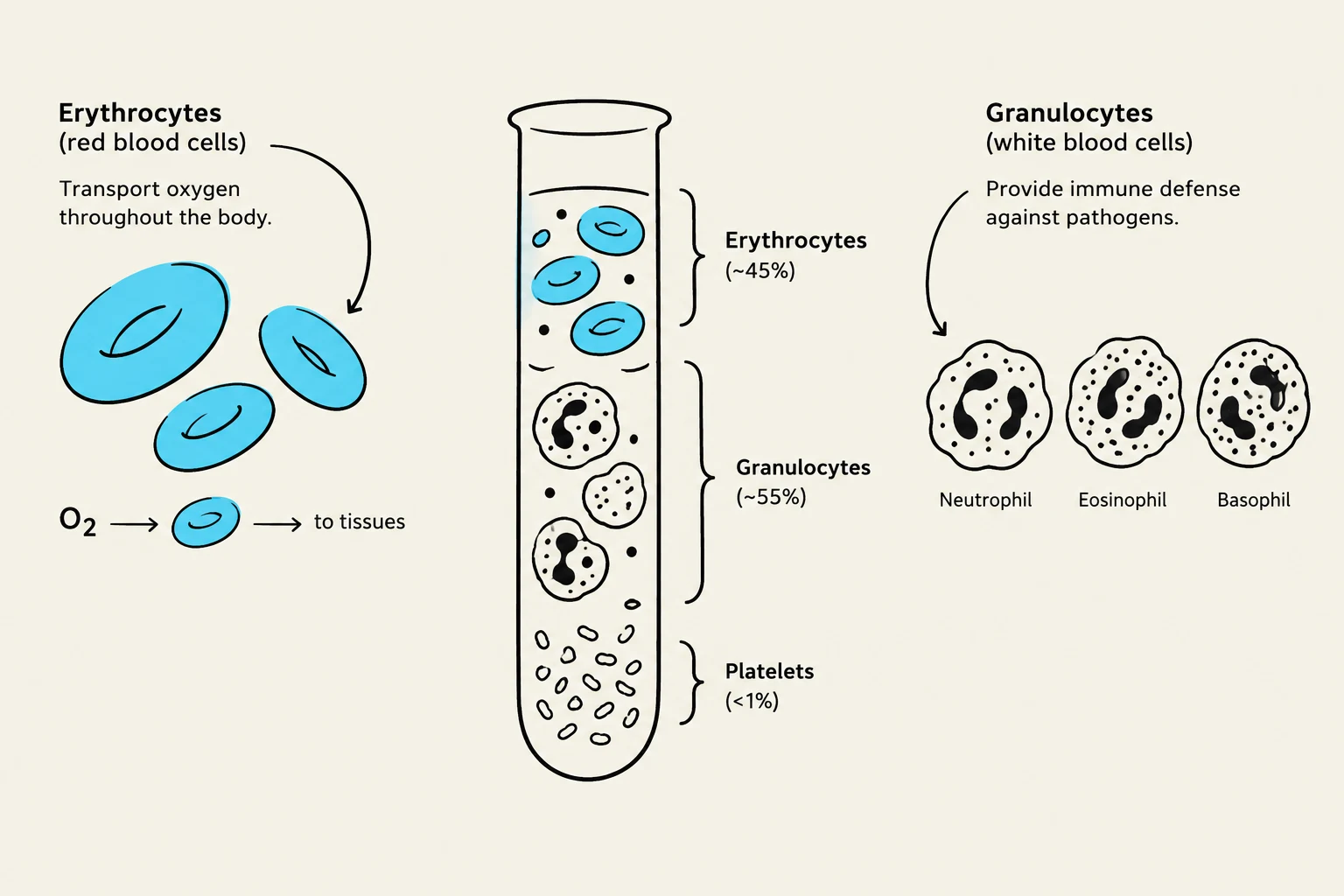
Erythrocytes (Red Blood Cells): These cells are responsible for carrying oxygen to tissues and transporting carbon dioxide back to the lungs for excretion. Each erythrocyte has a lifespan of approximately 120 days.
Granulocytes (White Blood Cells): These are the primary cells used to fight infection.
Platelets: These small cell fragments are essential for the clotting process, helping to plug injuries to prevent blood loss.
Plasma Cells: These cells are responsible for humoral immunity by secreting immunoglobulins, also known as antibodies.
This illustration depicts the different components of blood, including erythrocytes (red blood cells) responsible for oxygen transport, granulocytes (white blood cells) involved in immune defense, and platelets crucial for blood clotting. It also shows a test tube containing these components, illustrating their relative proportions in blood.
Hemostasis and the Pathophysiology of Clots
Hemostasis is the body's physiological mechanism for stopping bleeding and forming clots in response to injury. A blood clot is a gel-like mass composed of platelets and fibrin—a string-like substance that stabilizes the platelet plug.
While clotting is protective during an injury, a thrombus is an unexpected blood clot that develops within a blood vessel and can block necessary blood flow. If the clotting mechanism is altered by illness, genetics, or coagulopathy (an impairment in the body's ability to coagulate), the risk of dangerous clots increases.
Types of Thromboembolic Events
When a thrombus becomes an embolism (or thromboembolism), it means the clot has moved through the bloodstream to a different location. The clinical impact depends entirely on where the clot lodges:
Venous Thromboembolism (VTE): This term refers to clots that develop in the veins.
Deep Vein Thrombosis (DVT): A clot forming in a deep vein, most commonly in the lower extremities. Symptoms include pain, redness, swelling, and warmth.
Pulmonary Embolism (PE): A life-threatening event where a clot (often from a DVT) migrates to the lungs. Manifestations include sudden shortness of breath, chest pain that worsens with deep breathing, tachycardia, and hemoptysis.
Arterial Thrombosis: A clot that forms in an artery, which can lead to:
Myocardial Infarction (MI): Commonly known as a heart attack, occurring when blood flow to the heart is blocked.
Ischemic Stroke: Occurs when a clot or plaque blocks blood vessels supplying the brain, potentially leading to paralysis.
Diagram illustrating the progression from deep vein thrombosis (DVT) to pulmonary embolism (PE) and its potential life-threatening consequences, including severe breathing problems, right heart failure, low oxygen levels, and death if untreated.
Risk Factors and Comorbidities
Blood clots do not occur in a vacuum; they are often driven by a combination of lifestyle, medical, and genetic factors.
Risk Factors
Immobility and Surgery: Being on bed rest after surgery or prolonged inactivity (such as long flights) slows blood flow, increasing clot risk.
Hormonal Influences: Estrogen found in oral contraceptives, pregnancy, and hormone replacement therapy can influence hemostatic variables and increase thrombosis risk.
Lifestyle: Smoking and obesity (which increases pressure on lower extremities and decreases circulation) are significant contributors.
Age: The risk of developing a blood clot doubles every decade after age 40.
Comorbidities
Certain medical conditions, or comorbidities, significantly elevate the likelihood of clotting:
Malignancy: Cancers of the lung, pancreas, or blood cancers like lymphoma and myeloma increase risk.
Cardiovascular Issues: Atrial fibrillation (A-fib) creates blood turbulence that can trigger clots.
Chronic Diseases: Diabetes mellitus, kidney disease, and heart failure.
Infection: The inflammatory response to infections (like pneumonia or UTIs) can trigger platelet activation and fibrin deposits.
Nursing Care and Clinical Management
Nurses play a vital role in the prevention, recognition, and management of hematologic disorders.
Assessment and Diagnosis
Nurses must "Recognize Cues" by monitoring for vital sign changes (tachycardia, tachypnea) and physical symptoms like unilateral leg swelling or facial weakness. Diagnostic tools include:
D-dimer Test: A blood test that detects protein fragments indicating a clot is present.
Imaging: Ultrasounds for veins, CT scans for detailed views of organs, and MRA for specific blood vessel examination.
Treatment Modalities
Management typically involves one of three pharmacological approaches:
Anticoagulants: (e.g., Warfarin, Heparin, Enoxaparin) These prevent the growth of existing clots and the formation of new ones.
Antiplatelets: (e.g., Aspirin, Clopidogrel) These prevent platelets from sticking together.
Thrombolytics: These are medications used to actively dissolve existing clots.
This diagram illustrates the mechanisms of action and common examples of anticoagulants, antiplatelets, and thrombolytics, which are all types of medications used to manage blood clotting.
Nursing Alert: Anticoagulation Safety
When administering oral anticoagulants like Warfarin, the number one risk is bleeding. Nurses must monitor for gastrointestinal bleeding (black, tarry stools) and neurological changes (sudden headaches or confusion) which may indicate a brain bleed.
Psychosocial Impact
Hematologic disorders affect more than just physical health. Clients experiencing a PE may suffer from Post-Traumatic Stress Disorder (PTSD) due to the intense anxiety and shortness of breath experienced during the event. Additionally, clients may express a lack of trust in healthcare providers if they feel the seriousness of their condition was not adequately addressed.
Patient Education
Effective discharge planning must include:
Lifestyle Modifications: Smoking cessation, hydration, and maintaining activity.
Dietary Consistency: For clients on Warfarin, they do not need to avoid Vitamin K (found in leafy greens), but they must maintain a consistent intake to avoid fluctuating their INR levels.
Symptom Reporting: Teaching clients to recognize signs of bleeding or new clot formation immediately.
Keep reading for free.
Create an account to finish this reading and make it part of your study routine.