


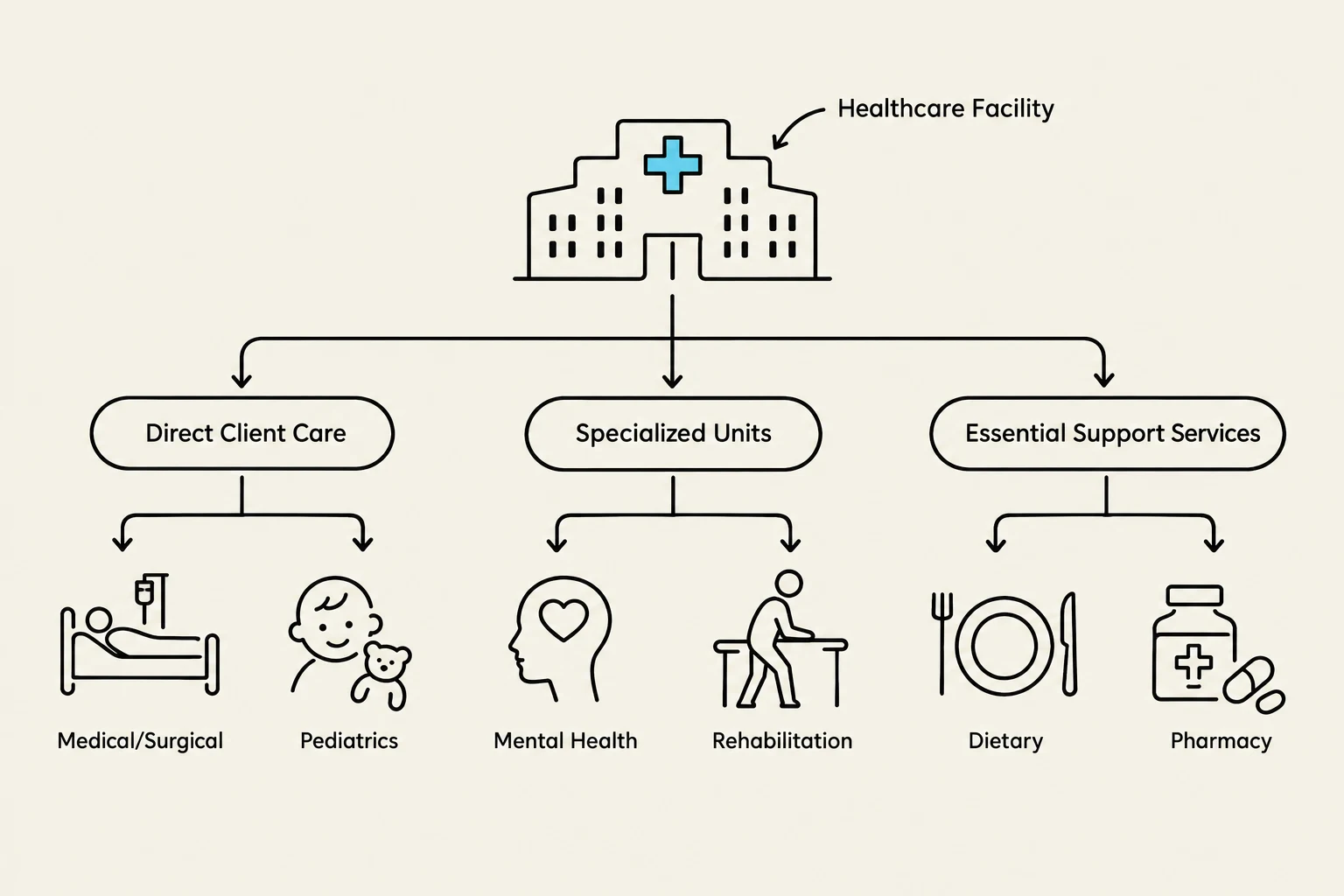
Modern healthcare facilities are complex ecosystems designed to provide specialized care while maintaining high levels of operational efficiency. To meet the diverse needs of clients—ranging from basic physiological requirements to complex psychological and rehabilitative needs—facilities are organized into distinct categories: direct client care departments, specialized units, and essential support services. Understanding this organizational structure is vital for healthcare professionals to ensure seamless coordination and high-quality patient outcomes.
Client Care and Nursing Units
The core of any healthcare facility is the nursing care unit, where the majority of direct patient interaction occurs. These units are often categorized by the specific needs of the client population.
General Nursing Care
- Medical/Surgical Units: These are the backbone of many hospitals. Medical units care for adults with conditions that do not require surgery, while surgical units manage clients before and after operative procedures.
- Pediatrics (PEDS): Specialized care for infants, children, and adolescents.
- Obstetrics (OB): This department manages labor, delivery, and postpartum care. Modern facilities may include birthing centers where families remain together throughout the process.
- Geriatric (GERI) Units: Focused on older adults, these units often include specialized memory care for clients with dementia.
Specialized Clinical Units
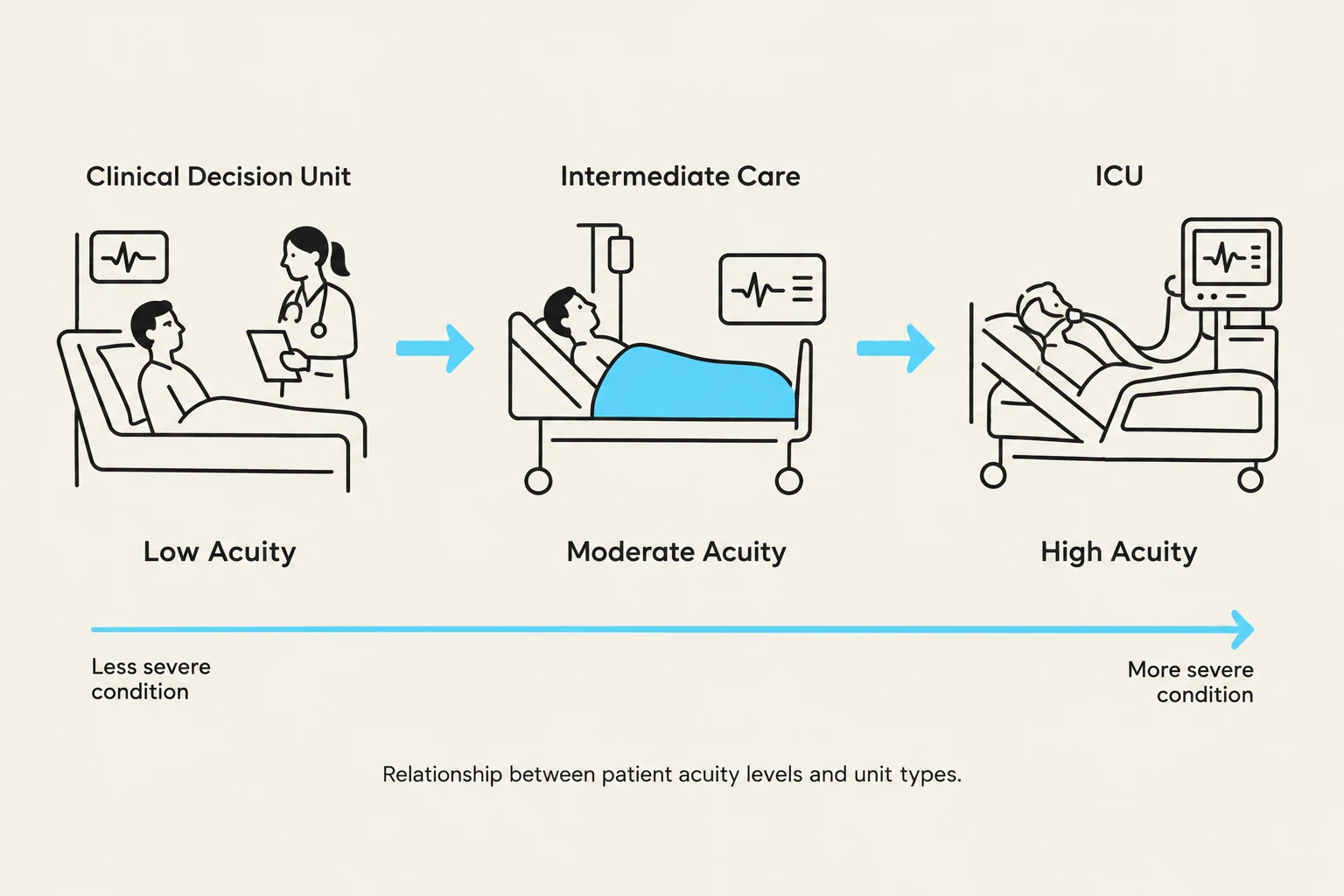
When a client's condition requires more focused expertise, they are moved to specialized departments:
- Mental Health (MHU/Psych): Serves clients with emotional or psychiatric disorders.
- Chemical Dependency (CD): Provides inpatient and outpatient support for individuals facing substance abuse issues.
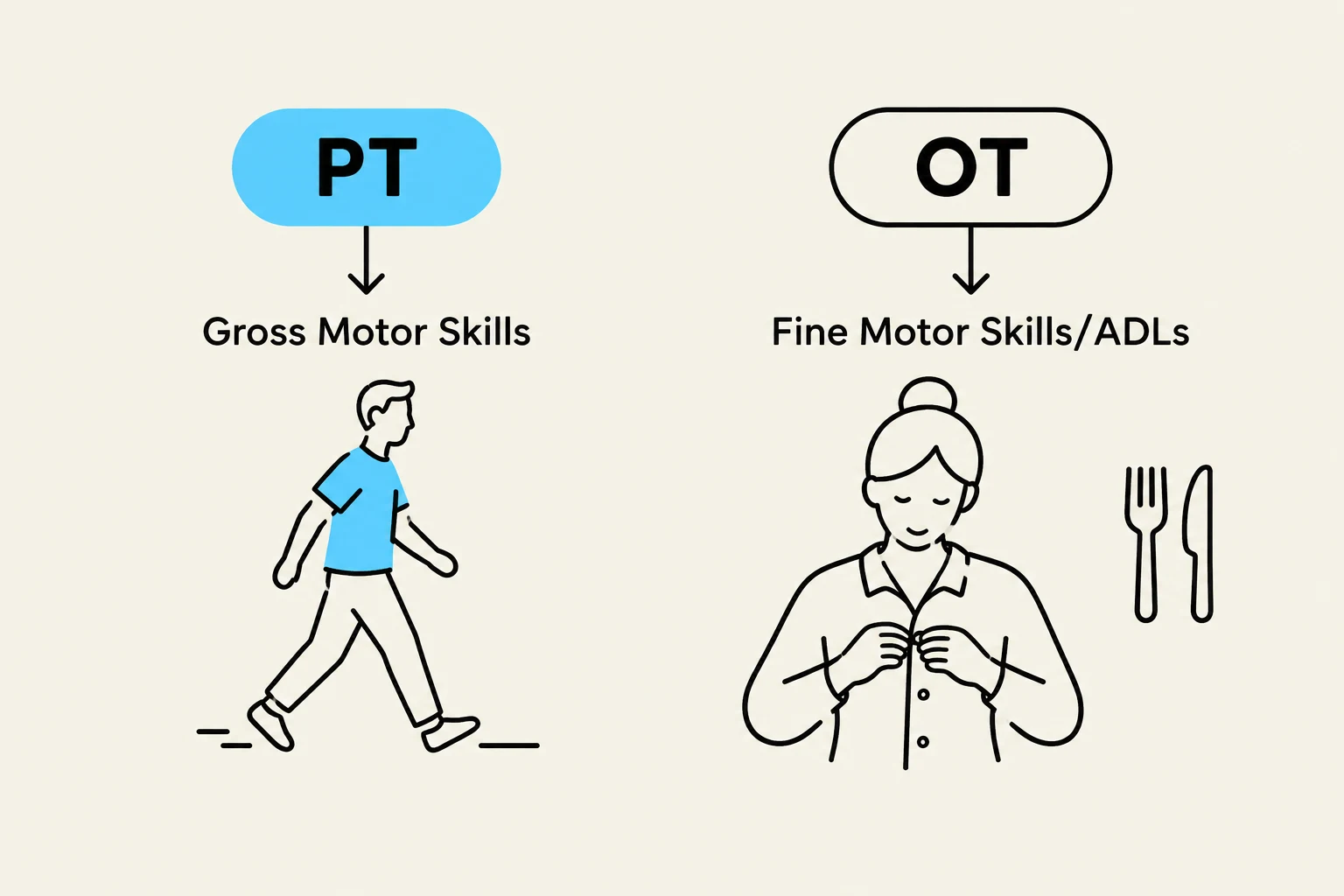
- Rehabilitation (REHAB/PM&R): Focuses on helping clients regain physical and psychosocial capacity following trauma, stroke, or injury.
- Dialysis Unit: Provides essential renal replacement therapy for clients with kidney failure.
- Burn Center: Offers specialized wound and systemic care for severe burns and frostbite.
Keep reading for free.
Create an account to finish this reading and make it part of your study routine.
Continue reading freeAlready have an account? Log in
Updated