A comprehensive guide to health assessment techniques for various body systems, including musculoskeletal, respiratory, cardiovascular, and peripheral vascular systems, with a focus on older adult functional assessment and breast/lymphatic examination.
Preparing for the NUR 301 Health Assessment exam requires a systematic approach to understanding how various body systems function and how to identify deviations from normal. This exam covers a broad spectrum of clinical assessments, ranging from the structural integrity of the musculoskeletal system to the complex hemodynamics of the cardiovascular and peripheral vascular systems. This guide organizes these essential concepts into logical sections to facilitate your study process.
Musculoskeletal System Assessment
The musculoskeletal assessment begins with an understanding of the anatomy and function of the bones, the vertebral column, and the temporomandibular joint (TMJ). The primary goal is to evaluate the structural integrity and the ability of the patient to move effectively.
A critical component of this assessment is evaluating Range of Motion (ROM). You must be able to distinguish between:
Active ROM: The patient moves the joint through its range independently.
Passive ROM: The nurse moves the joint through its range while the patient remains relaxed.
Additionally, clinicians must assess skeletal muscle strength and identify any abnormal movements that might indicate neurological or structural issues.
This illustration depicts the difference between active and passive range of motion exercises. Active range of motion involves the patient moving their own joints using their muscles, while passive range of motion involves a healthcare provider moving the patient's joints for them.
Functional Assessment of the Older Adult
When assessing geriatric patients, the focus shifts from purely anatomical findings to functional status and safety. The nurse must assess Activities of Daily Living (ADLs) to determine the patient's level of independence.
Beyond physical movement, nutritional status is a vital concern. Nurses play a key role in identifying risks of malnutrition and providing necessary patient education. Ultimately, all nursing interventions for the older adult should be centered around ensuring patient safety within their environment.
Breasts, Axillae, and Regional Lymphatics
This section requires a detailed understanding of breast anatomy and the surrounding lymphatic structures. Key anatomical features to remember include the Montgomery glands (sebaceous glands on the areola) and the production of colostrum during lactation.
Clinicians must be able to distinguish between normal and abnormal findings, such as:
Gynecomastia: The enlargement of male breast tissue.
Lymphatic Drainage: Understanding how fluid moves from the breast tissue through the axillary nodes is essential for identifying potential pathologies.
Thorax and Lungs
The respiratory assessment involves evaluating the mechanics of inspiration and expiration and identifying the clinical manifestations of respiratory distress.
Knowledge of respiratory anatomy is foundational, specifically regarding:
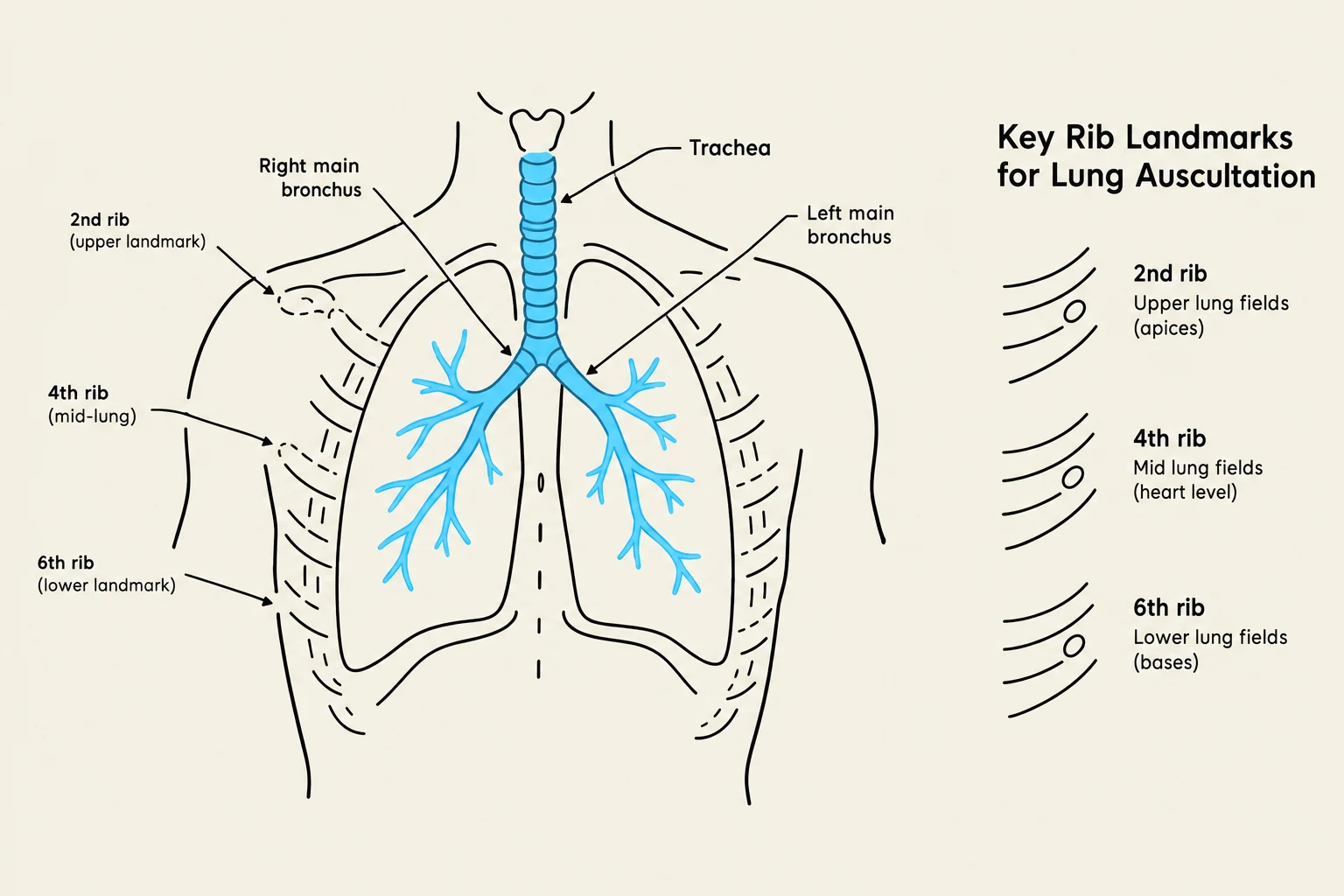
Rib Landmarks: Used to guide auscultation.
Trachea and Bronchi: Understanding these structures, including the concept of "dead space," is vital.
During physical examination, you will use tactile fremitus—feeling for vibrations through the chest wall—to assess lung tissue density. You must also be proficient in identifying adventitious breath sounds (abnormal sounds like crackles or wheezes) that deviate from normal breath sounds.
Diagram illustrating key rib landmarks for lung auscultation, indicating the positions of the trachea, main bronchi, and specific rib levels corresponding to lung fields.
Heart and Neck Vessels
The cardiovascular portion of the exam is heavily weighted and requires a deep understanding of cardiac anatomy, the pathway of blood through the chambers, and the specific functions of the cardiac valves.
Key assessment skills include:
Auscultation: You must know the specific landmarks for auscultation (e.g., aortic, pulmonic, Erb's point, tricuspid, and mitral areas) to correctly identify heart sounds.
Neck Vessels: This includes assessing the carotid artery for pulse quality and checking for Jugular Venous Distention (JVD), which can be an indicator of fluid volume overload or heart failure.
Exam Tip: When studying the heart, visualize the "pathway of blood." If you can trace a drop of blood from the vena cava through every valve and chamber to the aorta, you will better understand the clinical implications of valve dysfunction.
Peripheral Vascular and Lymphatic Systems
The final section covers the venous and lymphatic systems, focusing on how the body manages fluid and blood return.
Peripheral Vascular Assessment:
Edema Assessment: Evaluating swelling in the extremities is a primary task.
Doppler Ultrasound: Used to detect blood flow in vessels that are difficult to palpate.
Peripheral Artery Disease (PAD): You must recognize the clinical manifestations of PAD and provide appropriate patient education.
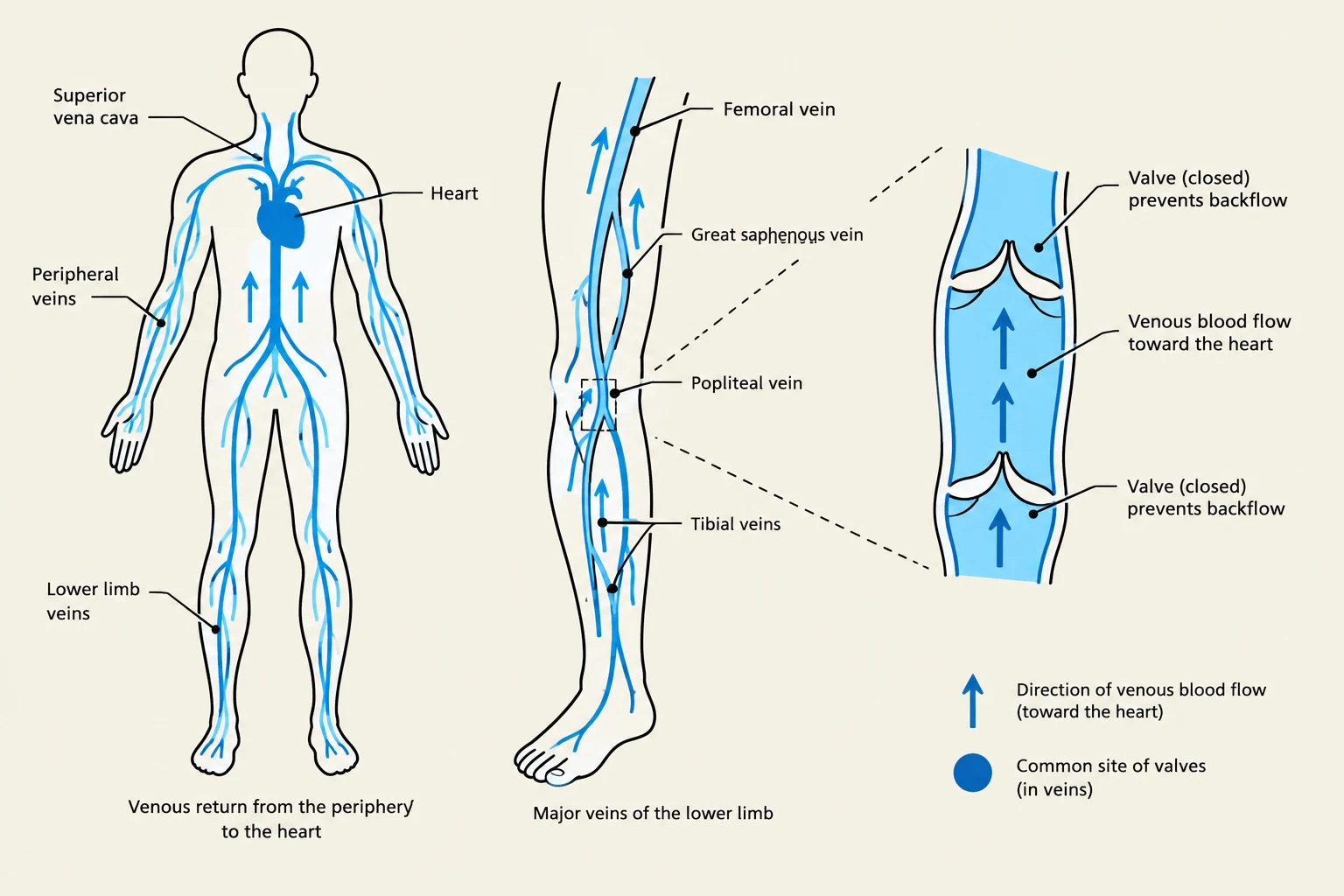
Varicose Veins: Understanding the pathophysiology and providing education on management is essential.
Lymphatic Assessment:
This involves evaluating the function of lymphatic-related organs and assessing cervical lymph nodes for enlargement or tenderness.
Diagram illustrating the venous system, showing blood flow toward the heart and the function of valves in veins.
Keep reading for free.
Create an account to finish this reading and make it part of your study routine.