


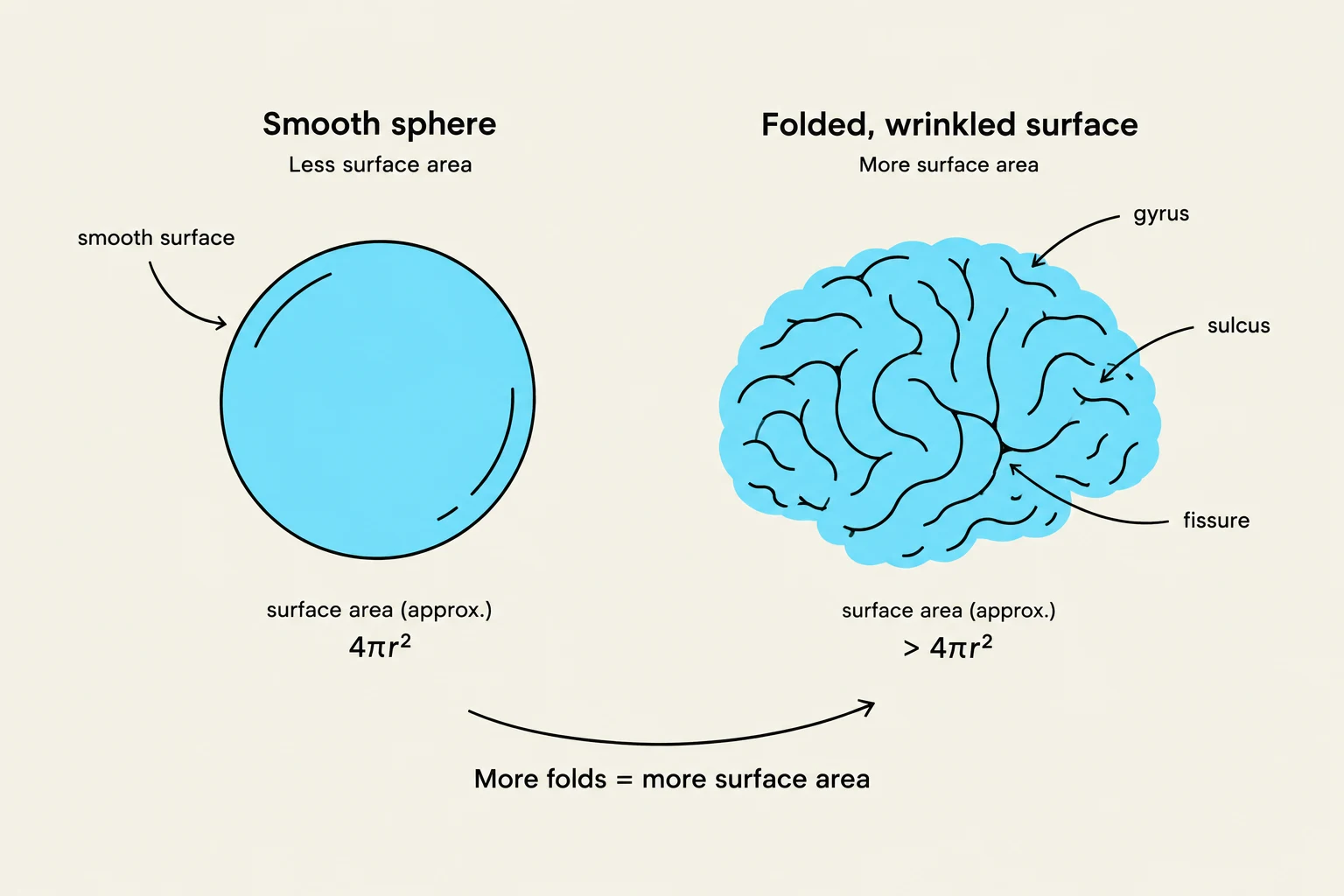
If you were to look at a human brain, the first thing you would notice is that it is not a smooth, egg-shaped organ. Instead, it is incredibly wrinkled, characterized by a complex landscape of ridges and valleys. This folded appearance is not random; it is a highly efficient biological design intended to pack as much processing power as possible into the limited space of the skull.
To understand neuroanatomy, one must master the distinction between the three primary structural features of the cerebral cortex: gyri, sulci, and fissures. These structures work together to maximize the surface area of the gray matter, allowing for the complex cognitive functions that define human intelligence.
The Principle of Cortical Folding
The primary goal of the brain's folding pattern is to increase the surface area of the cerebral cortex without significantly increasing the overall volume of the brain. The cerebral cortex is the thin outer layer of gray matter where most of our high-level processing occurs.
If the brain were perfectly smooth (a condition known as lissencephaly), there would be much less cortical tissue available for neurons to inhabit. By folding the tissue inward, the brain creates more "real estate" for neurons to reside, allowing for more complex neural networks and higher cognitive capabilities.
Exam Tip: When studying neuroanatomy, remember that "surface area" is the keyword. Folding = increased surface area = increased computational capacity.

Keep reading for free.
Create an account to finish this reading and make it part of your study routine.
Continue reading freeAlready have an account? Log in
Updated