


In the healthcare profession, documentation is far more than just "paperwork." It is a fundamental component of the nursing process that serves as a legal requirement and a vital communication tool. High-quality documentation and reporting ensure that patient care is efficient, safe, and individualized by providing a continuous account of a patient's health status, treatments delivered, and responses to therapy. When done correctly, it facilitates interprofessional communication; when done poorly, it can lead to disjointed and unsafe patient care.
Principles of High-Quality Documentation
To meet professional standards, all nursing entries must adhere to specific criteria to ensure they are useful for the entire healthcare team. Quality documentation is characterized by three core pillars:
- Complete: Records must include the care provided, the patient's response to that care, and all pertinent health data.
- Current: Information should be recorded at the time of occurrence to ensure accuracy.
- Organized: Entries must follow a logical, chronological order to allow other providers to follow the patient's progress easily.
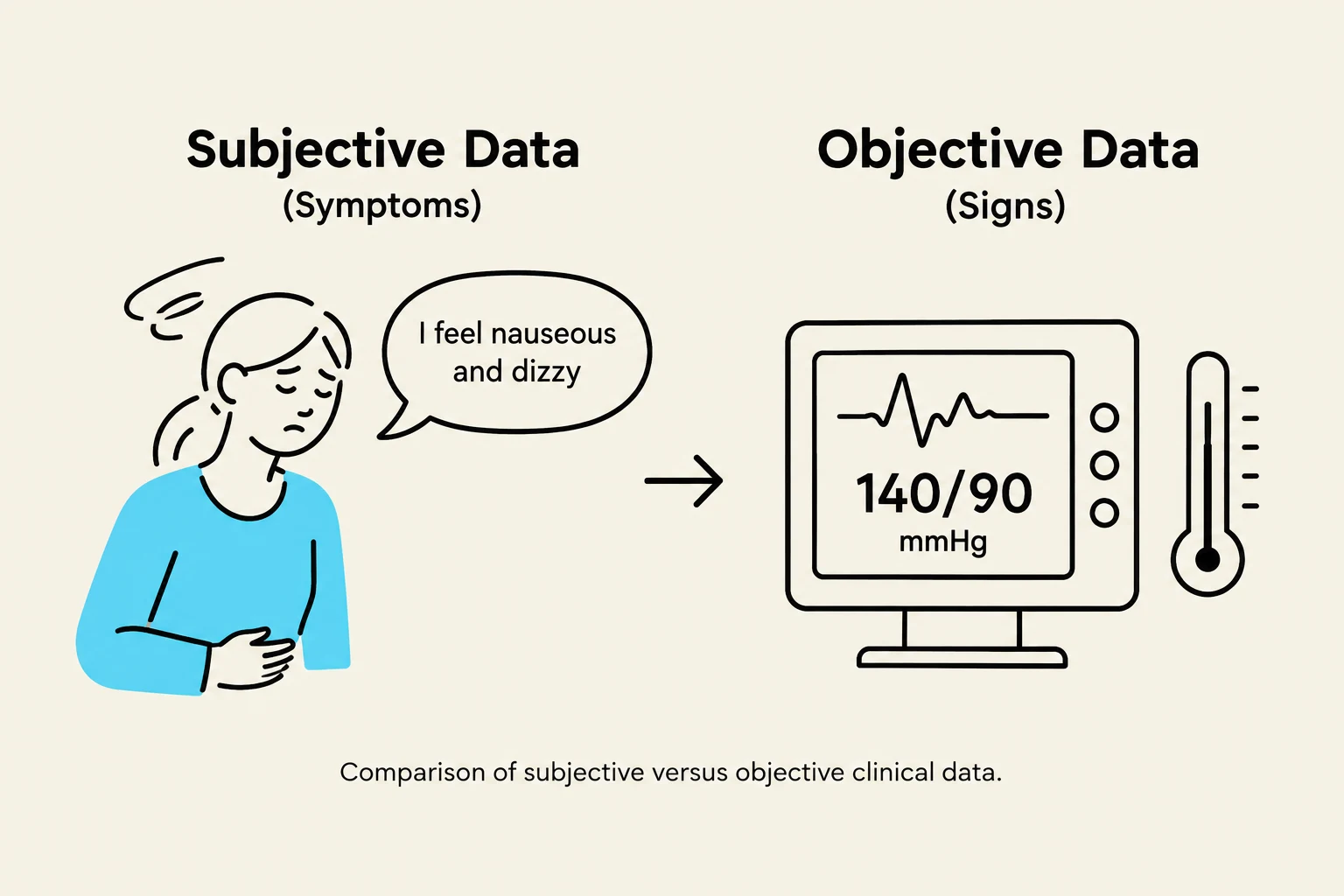
Beyond these, documentation should be legible, reliable, precise, consistent, and clear. Clinicians should focus on being objective—recording what can be seen or measured (objective data) rather than just what is felt (subjective data).
Exam Tip: Subjective vs. Objective Data
- Subjective Data: What the patient tells you (e.g., "I feel nauseous" or "My pain is a 5/10").
- Objective Data: What you observe or measure (e.g., a visible bruise, a blood pressure reading, or perspiration).
Keep reading for free.
Create an account to finish this reading and make it part of your study routine.
Continue reading freeAlready have an account? Log in
Updated