


As global populations rise and climate change alters precipitation patterns, the demand for freshwater is outstripping our natural supply. Traditional water management often follows a "linear" model: water is extracted, used once, and then sent directly to a wastewater treatment plant or discharged into the environment. However, to achieve true sustainability, we must shift toward a "circular" model. One of the most effective ways to do this at the household and community level is through the identification and reuse of greywater.
Understanding the Water Hierarchy: Blackwater vs. Greywater
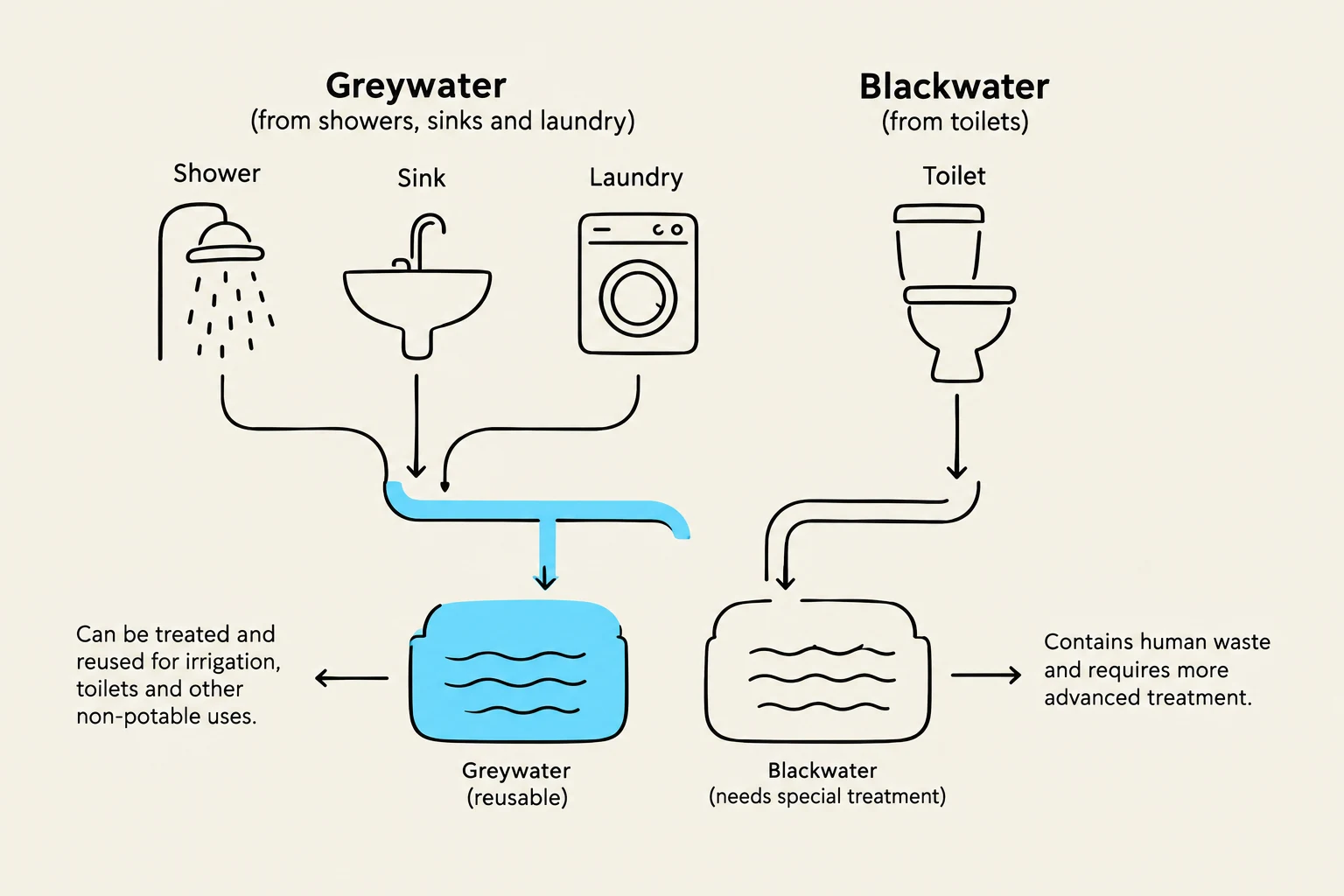
To understand water reuse, we must first categorize the different types of wastewater generated in a typical household. Not all "used" water is created equal. In environmental science, we distinguish between two primary categories based on their level of contamination.
Blackwater refers to wastewater that contains significant amounts of human waste (feces and urine) and often includes high concentrations of pathogens and organic matter. This water typically comes from toilets and sometimes from kitchen sinks where food scraps are washed away. Because of the high risk of disease, blackwater requires intensive biological and chemical treatment before it can be safely reused or released.
Greywater, on the other hand, is wastewater collected from non-toilet sources. It is relatively low in pathogens and organic contaminants compared to blackwater. Common sources include:
- Bathing and Showers: Water containing soap, skin cells, and hair.
- Laundry: Water from washing machines containing detergents and lint.
- Sinks and Washbasins: Water used for handwashing or brushing teeth.
Exam Tip: When distinguishing between these two for an environmental science exam, remember that the presence of human excrement is the defining characteristic of blackwater. Greywater is "lightly" contaminated and much easier to treat for non-potable purposes.
Keep reading for free.
Create an account to finish this reading and make it part of your study routine.
Continue reading freeAlready have an account? Log in
Updated