


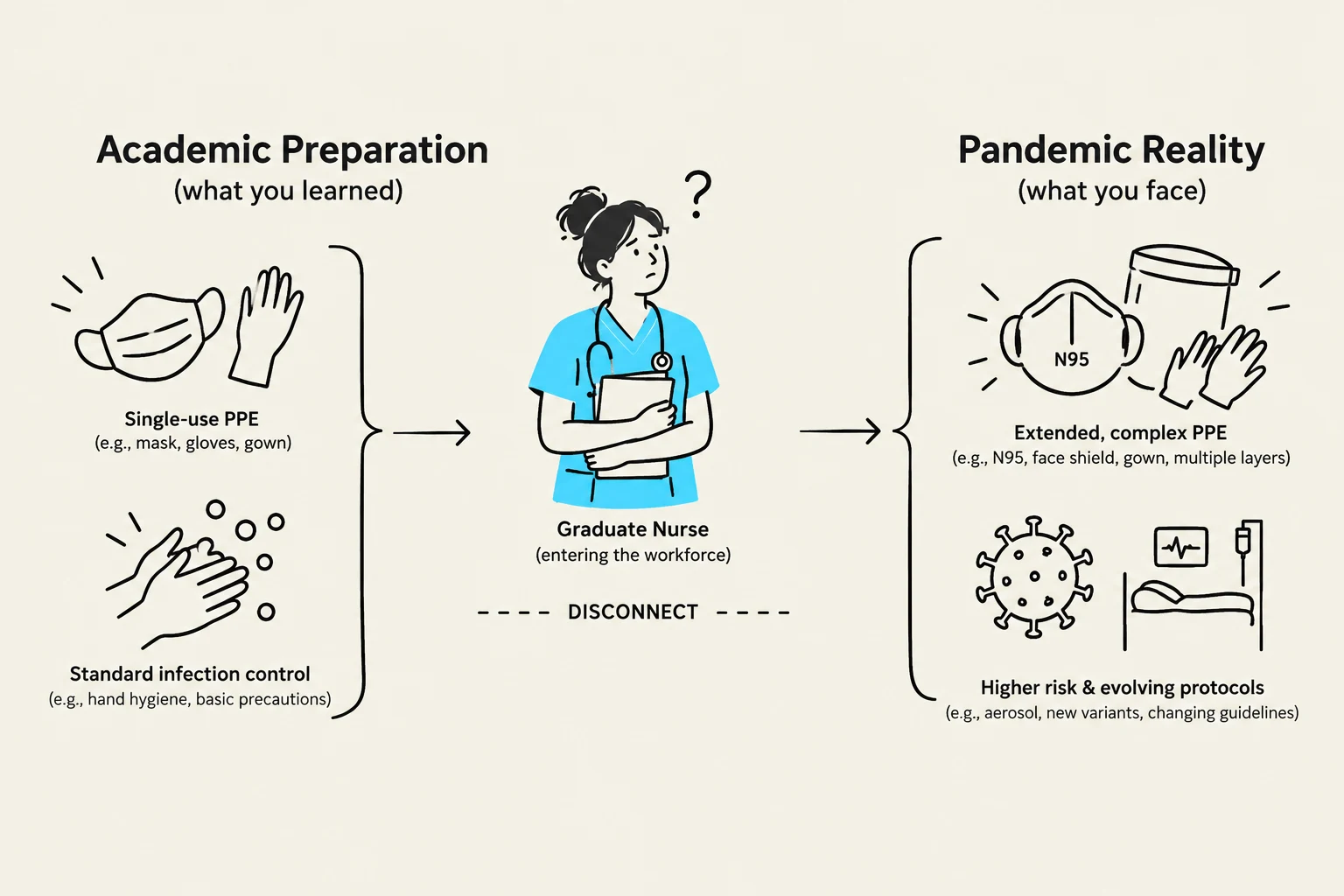
The transition from a nursing student to a professional practitioner is widely recognized as a period of intense stress, role adjustment, and "reality shock". For many, this journey involves reconciling the idealized values learned in the classroom with the complex, often harsh realities of the clinical environment. However, for the cohort of nurses entering the workforce during the COVID-19 pandemic, this transition was not merely difficult—it was fundamentally altered by a global health crisis that disrupted traditional learning, communication, and support structures.
Understanding the Transition to Practice
The first year of nursing practice is a critical developmental window. Historically, researchers have identified specific stages that new nurses move through as they gain competence. Kramer (1974) described a progression from a "honeymoon phase" of excitement to a "shock phase" where negative feelings toward the profession emerge. Later, Duchscher (2008) expanded this into the "Stages of Transition Theory," which categorizes the process into three distinct phases: Doing, Being, and Knowing.
- Doing: The first 3–4 months, characterized by high cognitive and physical energy as the nurse struggles to meet heavy workloads and steep learning curves.
- Being: The next 4–5 months, where knowledge and skill competency increase, and the nurse begins to gain confidence.
- Knowing: The final stage where the nurse moves from insecurity to professional socialization, viewing their role within the larger healthcare system.
Study Tip: When analyzing nursing role development, remember that this process is often non-linear. Stressors can cause a nurse to regress from "Being" back into a state of "Transition Shock".
The Phenomenological Perspective on the Pandemic Experience
To capture the depth of these experiences, researchers utilized a phenomenological study design. Phenomenology is the study of the "lifeworld"—the lived experience of individuals as they exist in the world. By using a hermeneutic phenomenological approach, researchers were able to move beyond simple statistics to understand the "essential meaning" of what it felt like to be a graduate nurse during the COVID-19 crisis.
Keep reading for free.
Create an account to finish this reading and make it part of your study routine.
Continue reading freeAlready have an account? Log in
Updated