


Understanding dental anatomy requires a precise vocabulary to describe the complex shapes and surfaces of human teeth. While posterior teeth (premolars and molars) are characterized by their chewing surfaces and cusps, anterior teeth (incisors and canines) possess unique landmarks that define their aesthetic and functional roles. This article provides a comprehensive glossary of the anatomical features of anterior teeth, moving from the developmental origins of the tooth to the specific ridges and depressions that characterize their morphology.
Developmental Origins: Lobes and Grooves
To understand why an anterior tooth has its specific shape, one must look at how it forms. Teeth develop from primary growth centers known as lobes. Each tooth crown is composed of multiple lobes—typically four or more—that coalesce during development to form the unique shape of the crown.
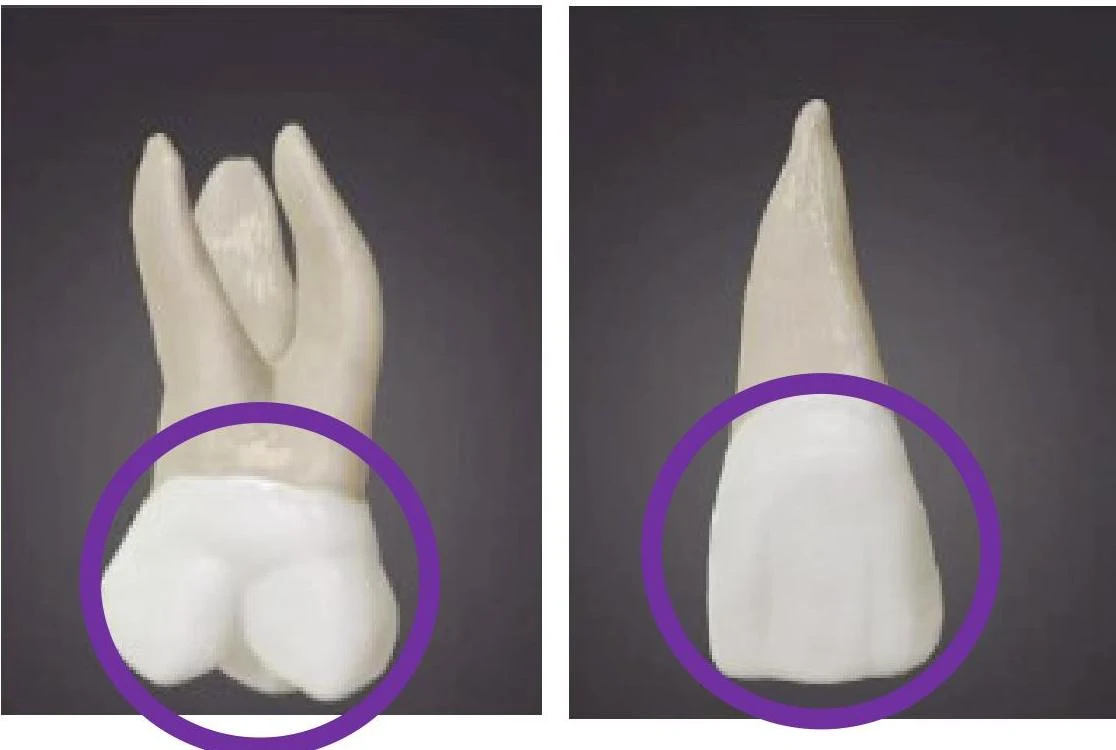
When these lobes fuse together, they often leave behind a visible trace. These shallow lines or grooves that separate the primary parts of the crown or root are called developmental grooves. In clinical practice, these grooves can sometimes appear dark due to staining.
The Lingual Surface of Anterior Teeth
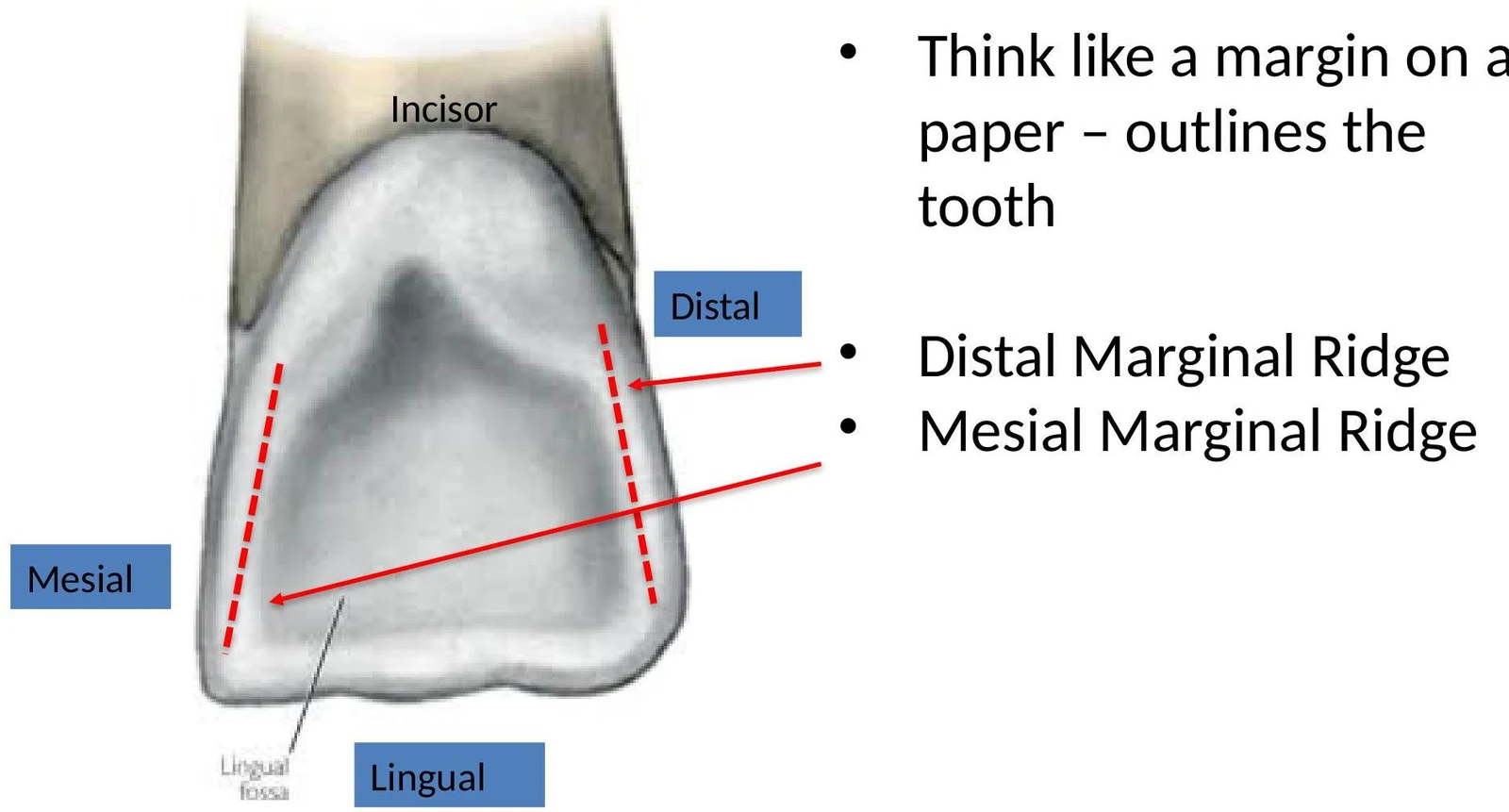
The lingual surface (the side of the tooth facing the tongue) of anterior teeth contains several critical landmarks that distinguish them from posterior teeth.
Cingulum and Tubercles
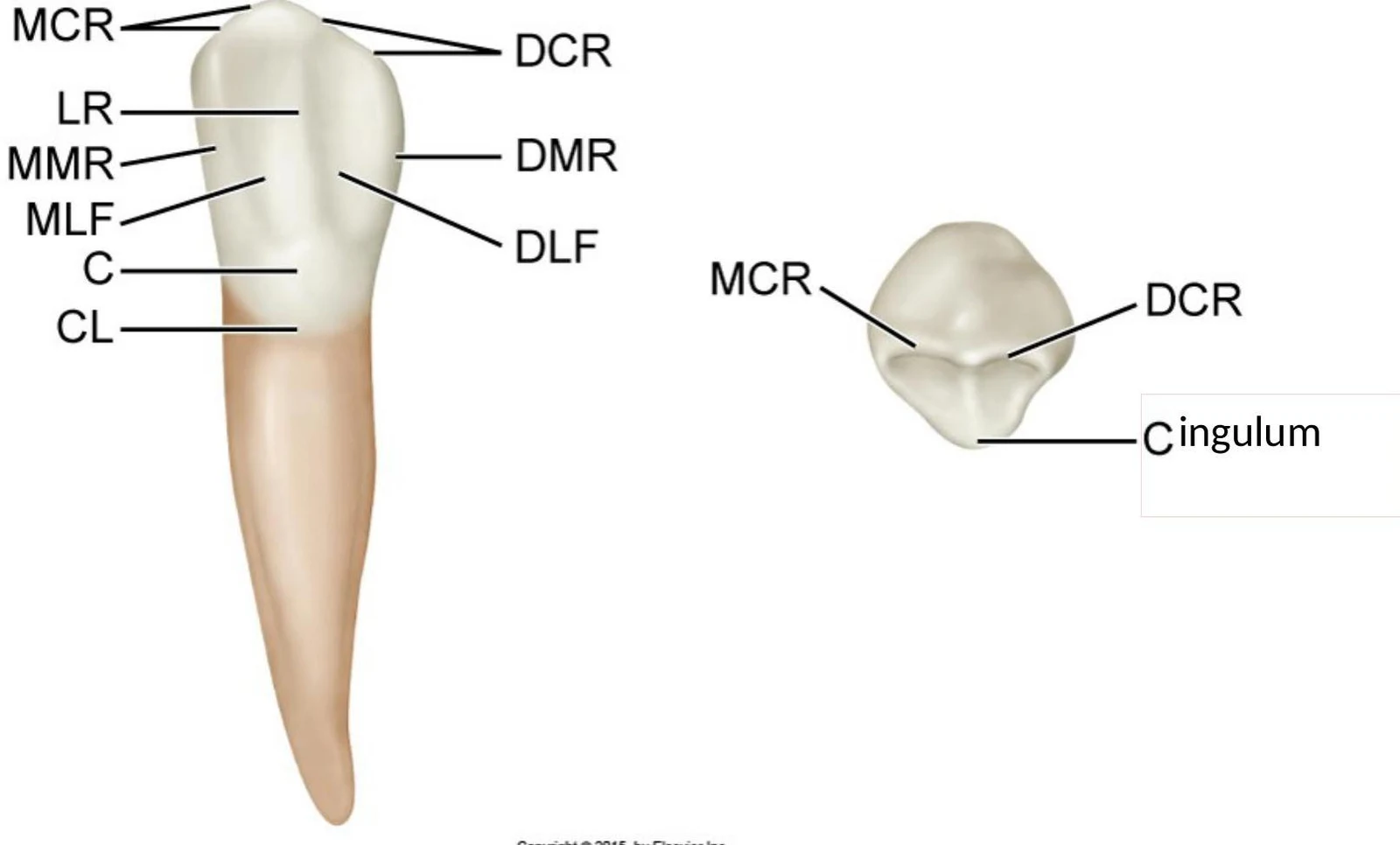
The cingulum is a prominent bulge or convexity of enamel located in the cervical third (the part closest to the root) of the lingual surface of anterior teeth, such as incisors and canines.
Keep reading for free.
Create an account to finish this reading and make it part of your study routine.
Continue reading freeAlready have an account? Log in
Updated