


In the study of histology, we learn that form dictates function. This principle is nowhere more evident than in the specialized cells known as glandular epithelia. While standard epithelial tissues serve to cover surfaces or line cavities, glandular epithelia are modified cells specifically engineered to synthesize and secrete chemical substances. These secretions may be destined for elimination from the body or for use in distant locations to maintain homeostasis.
Glandular Epithelia: The Two Primary Classifications
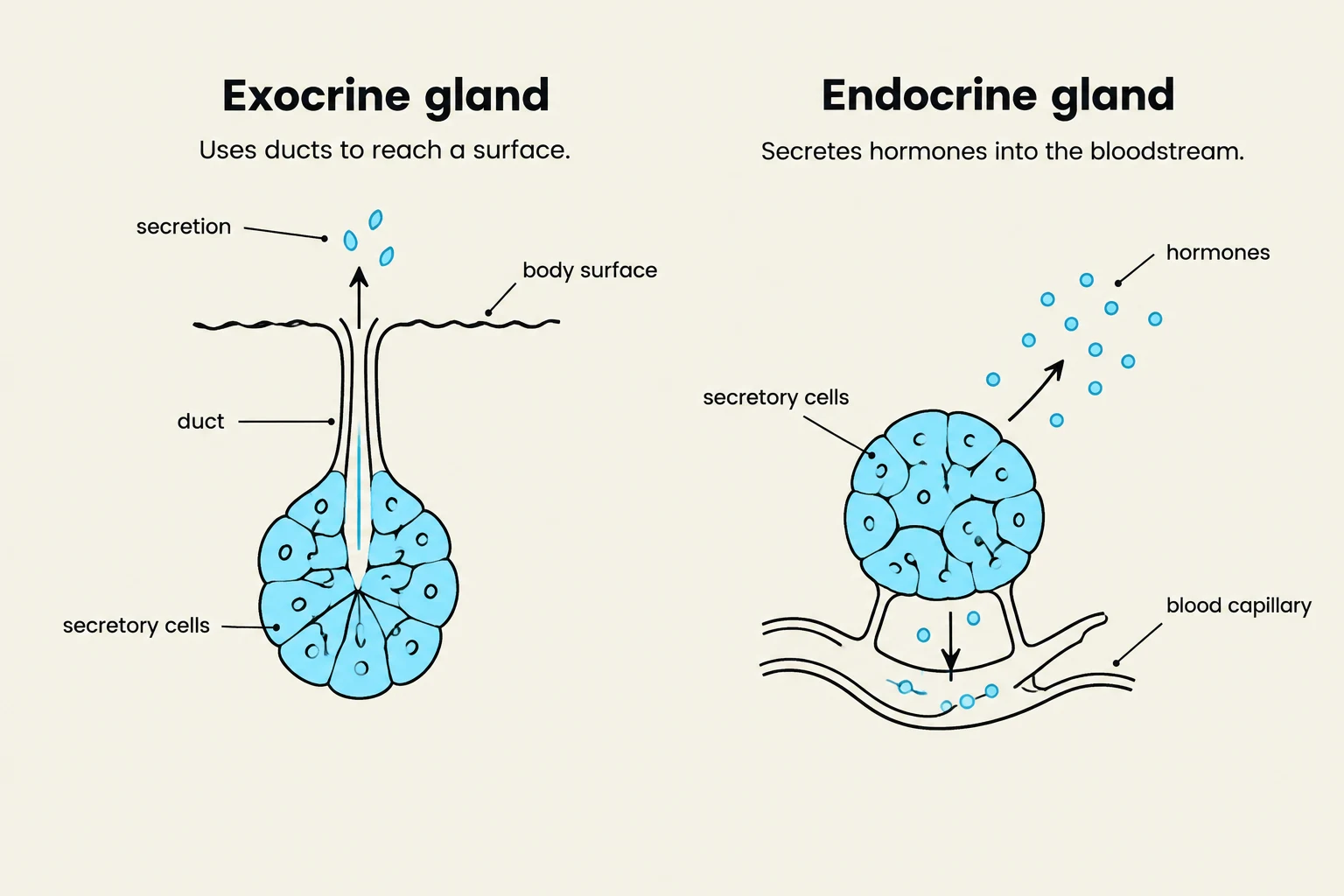
Glands are categorized based on how they deliver their secretory products to their target destinations. This distinction is fundamental to understanding how different organ systems communicate and regulate themselves.
Exocrine Glands
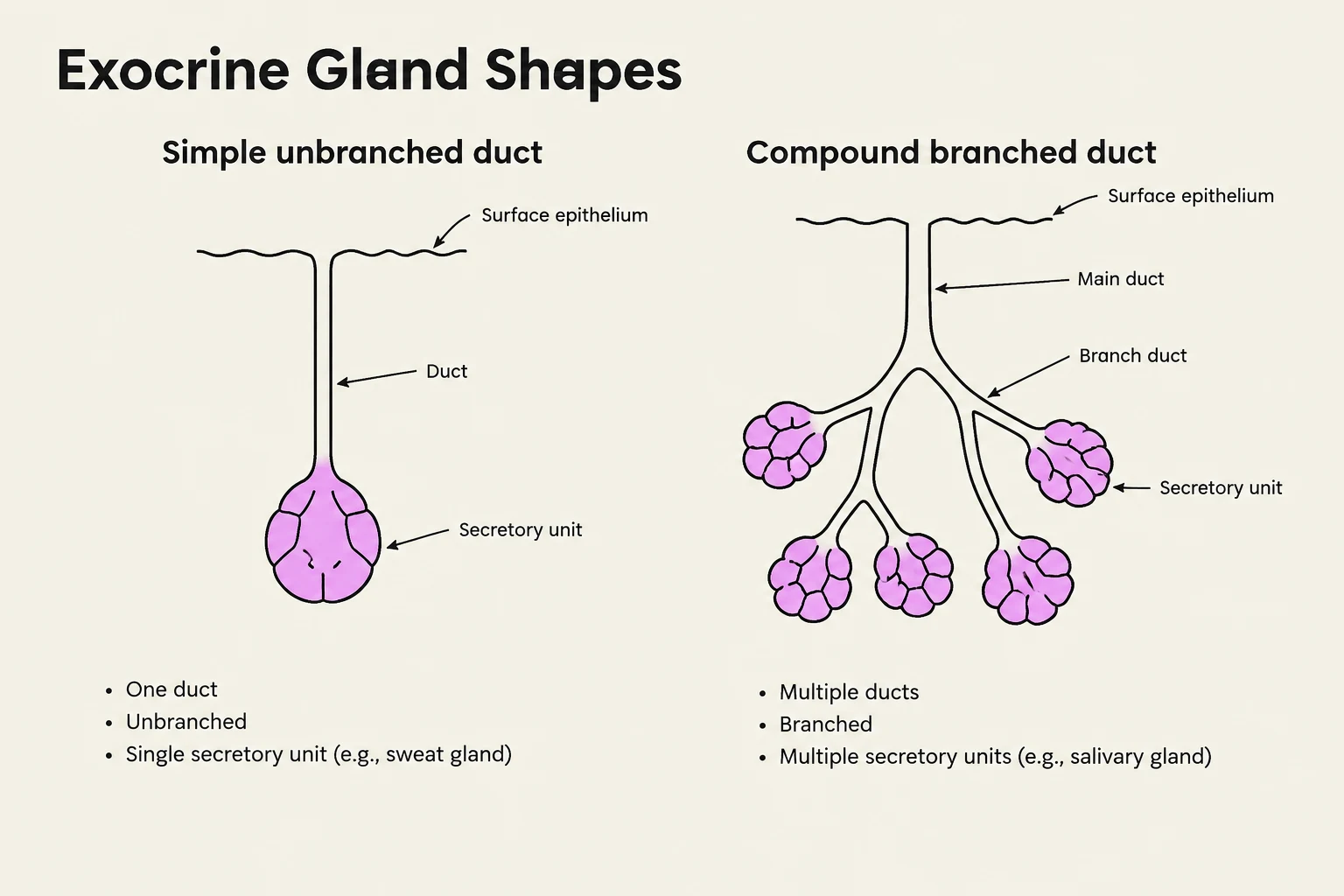
Exocrine glands maintain a physical connection to a body surface via an epithelial tube known as a duct. Because they are tethered to a surface, they can deliver substances like sweat to the skin or digestive enzymes into the lumen of the gastrointestinal tract.
Endocrine Glands
In contrast, endocrine glands are "ductless". Instead of traveling through a tube, their products—known as hormones—are secreted directly into the surrounding interstitial fluids and subsequently enter the bloodstream. This allows the endocrine system to act as a slow-acting but widespread regulatory mechanism for the body.
Note on Mixed Organs: Not all organs fit into a single category. Some organs, such as the liver and the gonads, are considered "mixed." For example, the liver secretes bile into a duct (exocrine function) while also releasing albumin into the blood (endocrine function).
Keep reading for free.
Create an account to finish this reading and make it part of your study routine.
Continue reading freeAlready have an account? Log in
Updated