


In clinical periodontology, distinguishing between healthy tissue and inflammatory changes is vital for accurate diagnosis and treatment planning. One of the most significant clinical observations during periodontal probing is the presence of increased pocket depth. While deep pockets often signal the progression of periodontal disease, it is essential to differentiate between "true" periodontal pockets and "pseudo-pockets." This article explores the phenomenon of pseudo-pocketing, the underlying mechanisms of gingival swelling, and the comprehensive management strategies required to restore periodontal health.
Understanding Pseudo-pocketing
Pseudo-pocketing, frequently referred to in clinical settings as "false pocketing," is a condition where a periodontal probe measures a depth greater than . At first glance, a deep pocket might suggest the loss of attachment, but the defining characteristic of a pseudo-pocket is the absence of any migration of the junctional epithelium (JE).
In a true periodontal pocket, the attachment apparatus is destroyed, and the JE moves apically (downward) along the root surface. In contrast, pseudo-pocketing is caused solely by gingival swelling (edema). This swelling causes the gingival margin to be pushed coronally (upward) away from the tooth surface, creating an artificial increase in depth without actual bone or attachment loss.
Exam Tip: If a question asks you to differentiate between gingivitis and periodontitis based on pocket depth, look for mentions of the junctional epithelium. If the JE has not migrated, it is a pseudo-pocket (gingivitis); if the JE has migrated apically, it is a true pocket (periodontitis).
The Mechanism of Gingival Swelling
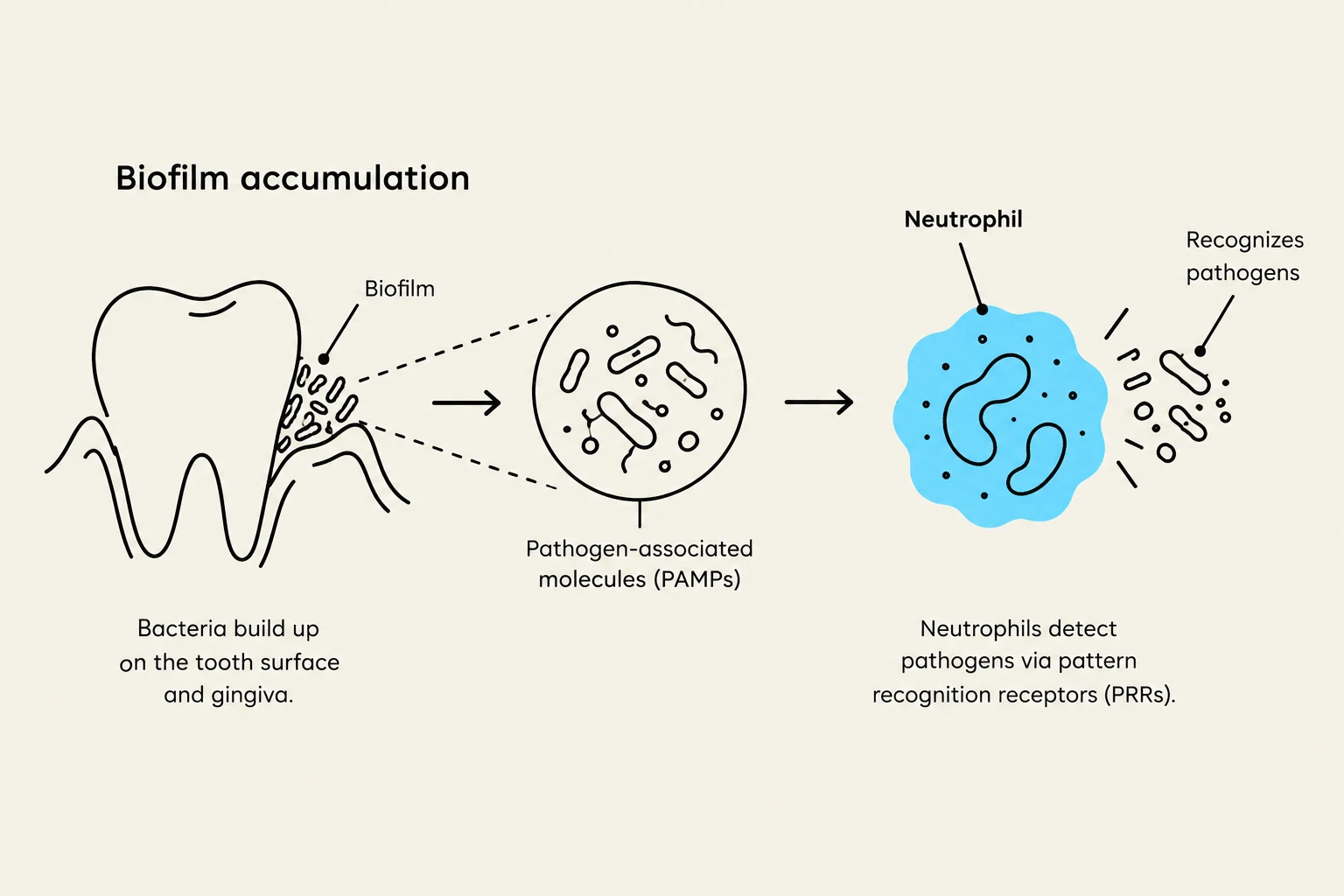
Gingivitis is a nonspecific inflammatory reaction to the accumulation of dental biofilm. When bacteria, such as Streptococcus sanguinis or certain Actinomyces species, accumulate in the sulcus, they trigger a host immune response.
Keep reading for free.
Create an account to finish this reading and make it part of your study routine.
Continue reading freeAlready have an account? Log in
Updated