Gingival Recession: Monitoring vs. Treatment Decisions
This content explains the factors influencing decisions on whether to monitor or treat gingival recession, including patient symptoms, aesthetic concerns, oral hygiene, and biological risk factors like periodontal phenotypes.
Gingival recession is a common clinical finding that presents a significant diagnostic challenge: when is it merely a stable anatomical variation, and when does it require surgical intervention? The decision-making process is not solely based on the depth of the recession, but rather on a holistic assessment of the patient's biological phenotype, their symptomatic experience, and their personal expectations. Understanding the interplay between a patient's risk factors and their quality of life is essential for transitioning from a purely observational approach to a proactive treatment plan.
The Core Decision: Treat vs. Monitor
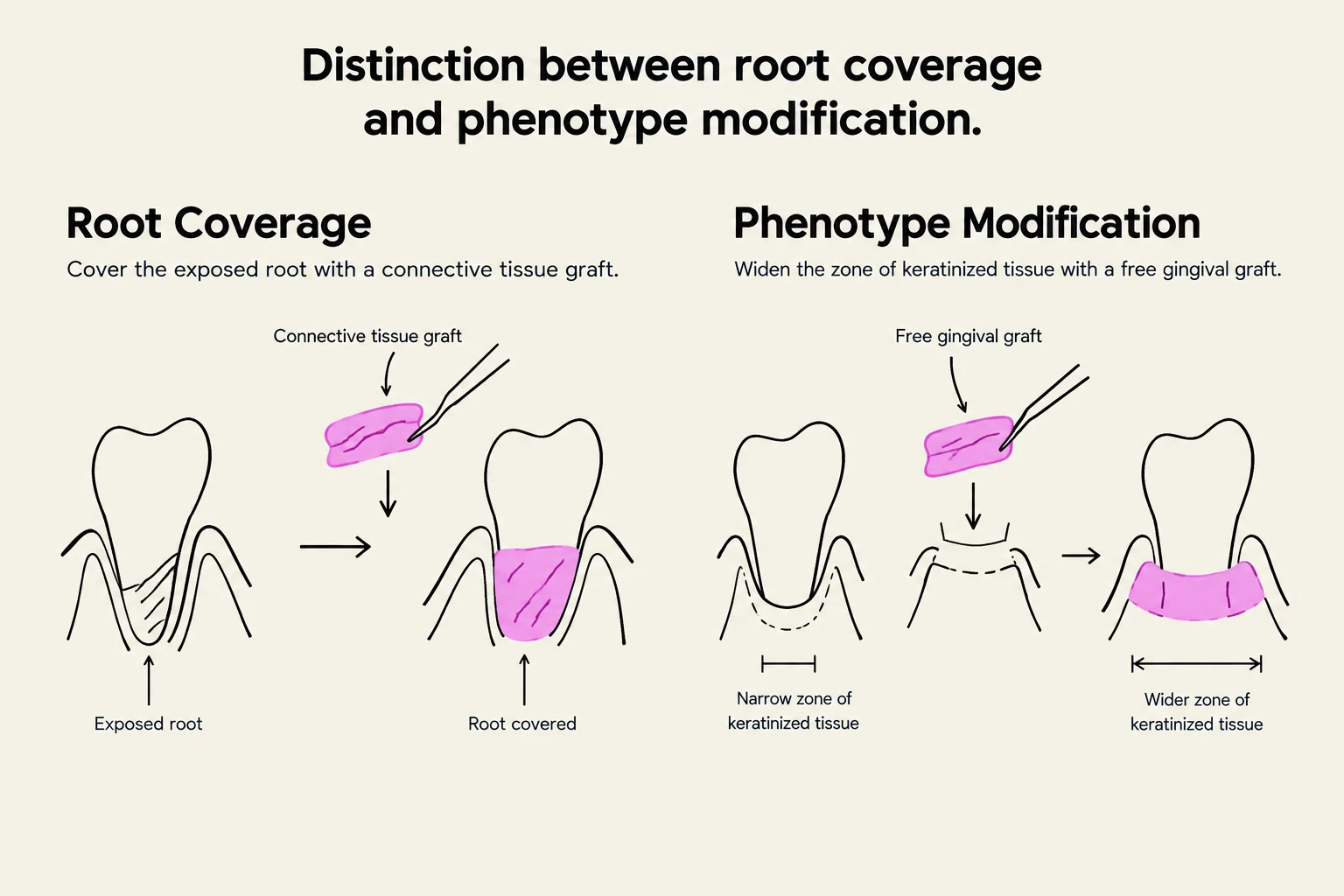
This illustration differentiates between root coverage and phenotype modification procedures in dentistry, showing how connective tissue grafts cover exposed roots and free gingival grafts widen the zone of keratinized tissue.
The primary goal in managing gingival recession is to prevent progression and address patient concerns. Clinicians generally categorize their approach into two pathways: monitoring or treatment.
When to Monitor
Monitoring is appropriate when the recession is stable and does not negatively impact the patient's health or well-being. This typically involves annual reviews to track any changes in the recession margin. Monitoring is often the recommended preventive approach in the absence of active pathology, even in susceptible sites such as those with a thin gingival phenotype, aberrant frenal attachments, or a lack of keratinized tissue.
When to Treat
Treatment becomes necessary when there is evidence of progression or when the patient experiences specific complications. Treatment options generally fall into two categories:
Root Coverage Procedures: Aimed at covering the exposed root surface (e.g., Coronally Advanced Flap with Connective Tissue Graft).
Phenotype Modification Therapy: Aimed at increasing the zone of keratinized tissue (e.g., Free Gingival Graft).
Clinical Tip: Always assess the "Recession Type" (RT1, RT2, or RT3) as a prognostic factor. Type 1 recession typically offers a better prognosis for root coverage than Type 3.
Assessing Patient Discomfort and Symptoms
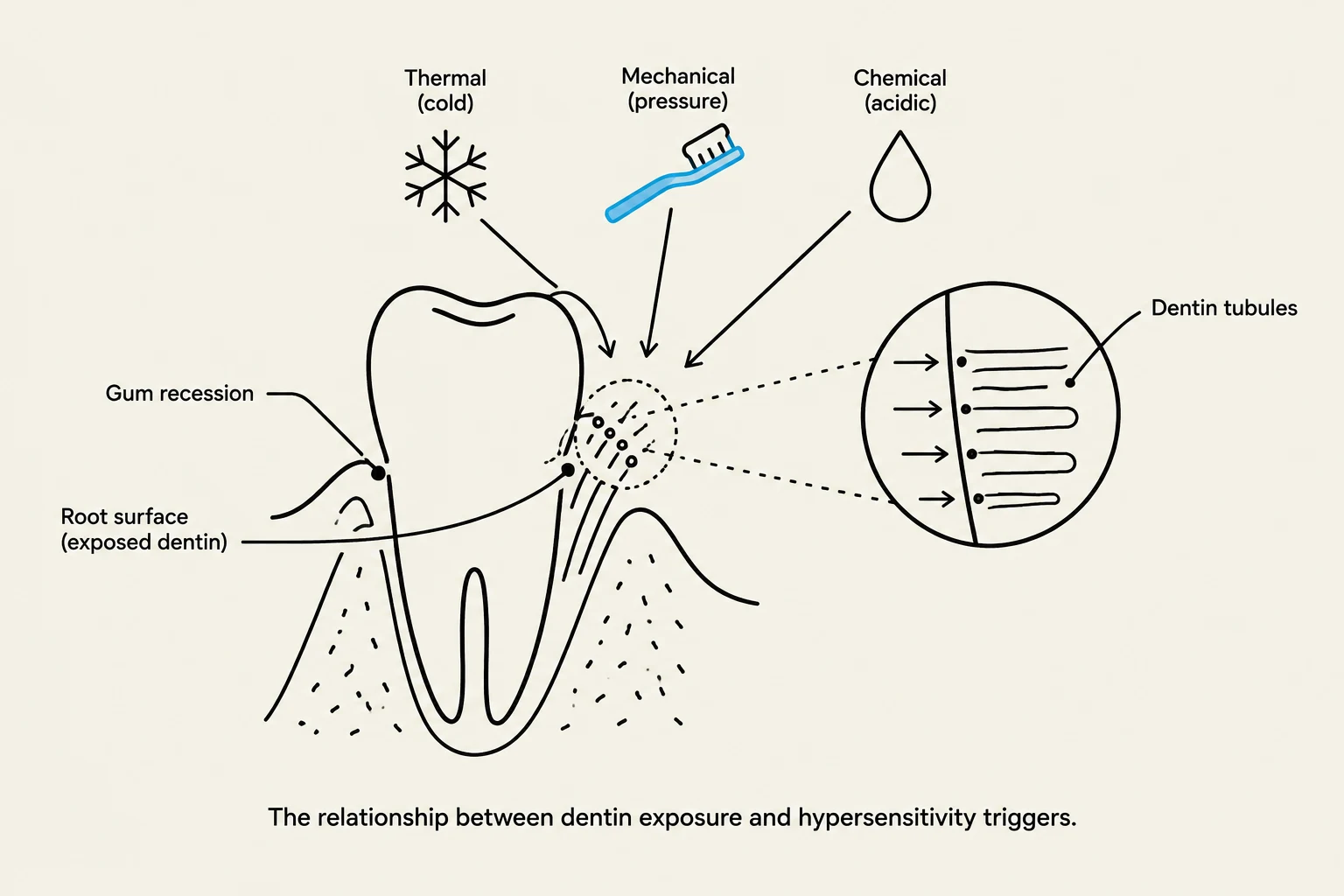
The relationship between dentin exposure and hypersensitivity triggers.
A patient's subjective experience is often the most compelling reason to move from monitoring to treatment. When evaluating a patient, clinicians should ask specific questions to gauge the impact of the recession on their daily life.
Sensitivity and Discomfort
Exposed dentin can lead to dentinal hypersensitivity, which may be triggered by thermal, mechanical, or chemical stimuli. If a patient reports ongoing sensitivity or finds it uncomfortable to brush the affected area, this is a strong indication for intervention.
Bleeding and Swelling
The presence of bleeding or swollen gums in the area of recession suggests active inflammation. This could be due to bacterial-induced inflammation (plaque) or non-bacterial factors. Chronic inflammation can lead to localized bone loss, which further exacerbates the recession.
Aesthetic Expectations and Patient Factors
Because the gingival margin is a prominent feature of the smile, aesthetic concerns are a frequent driver for treatment.
Aesthetic Expectations
A clinician must determine if the patient's aesthetic expectations can be predictably met. For some, a small amount of recession is acceptable; for others, it is a significant psychological burden. The clinician must balance the goal of aesthetics with the functional reality of what can be achieved through mucogingival surgery.
Oral Hygiene and Lifestyle
The patient's ability to maintain a healthy oral environment is a critical prognostic factor for any treatment success.
Oral Hygiene Regime: A high standard of home care is necessary to prevent further recession. Conversely, improper or traumatic toothbrushing (e.g., excessive pressure or aggressive flossing) is a known cause of recession.
Smoking: While not explicitly detailed as a mechanism in the provided text, smoking is listed as a key "other patient factor" that must be gauged during the risk assessment process.
Risk Analysis: The Biological Context
Comparison of thin and thick periodontal phenotypes, illustrating differences in gingival thickness, keratinized tissue width, alveolar bone thickness, and buccal bone structure.
To make an informed decision, the clinician must understand the underlying biological risks that make a patient more likely to progress from a stable state to an active recession state.
Periodontal Phenotypes
The patient's phenotype plays a massive role in recession risk:
Thin Phenotype: Characterized by clear, thin, delicate gingiva, a narrow zone of keratinized tissue (2.75 to 5.44 mm), and relatively thin alveolar bone. These patients are at a much higher risk for developing recession.
Thick Phenotype: Characterized by thick, fibrotic gingiva, a broad zone of keratinized tissue (5.09 to 6.65 mm), and thicker alveolar bone. These patients are generally more resilient.
Other Risk Factors
Anatomical Factors: Aberrant frenal attachments can cause muscle pull and tension during mastication, making it difficult for the patient to maintain hygiene.
Dento-alveolar Housing: Pre-existing bone dehiscence, whether anatomical or caused by orthodontic movement, is a prerequisite for recession to occur.
Restorative Factors: Deep, over-contoured restorative margins can violate the biological width, leading to chronic inflammation and bone loss.
Summary Table: Clinical Decision Matrix
Feature
Monitor (Preventive)
Treat (Intervention)
Symptom
Asymptomatic
Sensitivity, Pain, Bleeding
Progression
Stable margins
Evidence of recession increase
Aesthetics
Patient is satisfied
Patient is dissatisfied
Hygiene
Good/Maintainable
Difficult to clean/Inflamed
Keep reading for free.
Create an account to finish this reading and make it part of your study routine.