A comprehensive guide to understanding and managing gestational hypertensive diseases, including preeclampsia, eclampsia, and HELLP syndrome, as well as preterm labor. Covers risk factors, clinical manifestations, diagnostic procedures, and nursing management.
Pregnancy brings about profound physiological changes, but it can also introduce serious complications that threaten the well-being of both the mother and the fetus. Among the most critical of these are gestational hypertensive diseases and preterm labor. Understanding the progression from mild hypertension to life-threatening conditions like eclampsia or HELLP syndrome is essential for effective nursing management and timely intervention.
Gestational Hypertensive Diseases
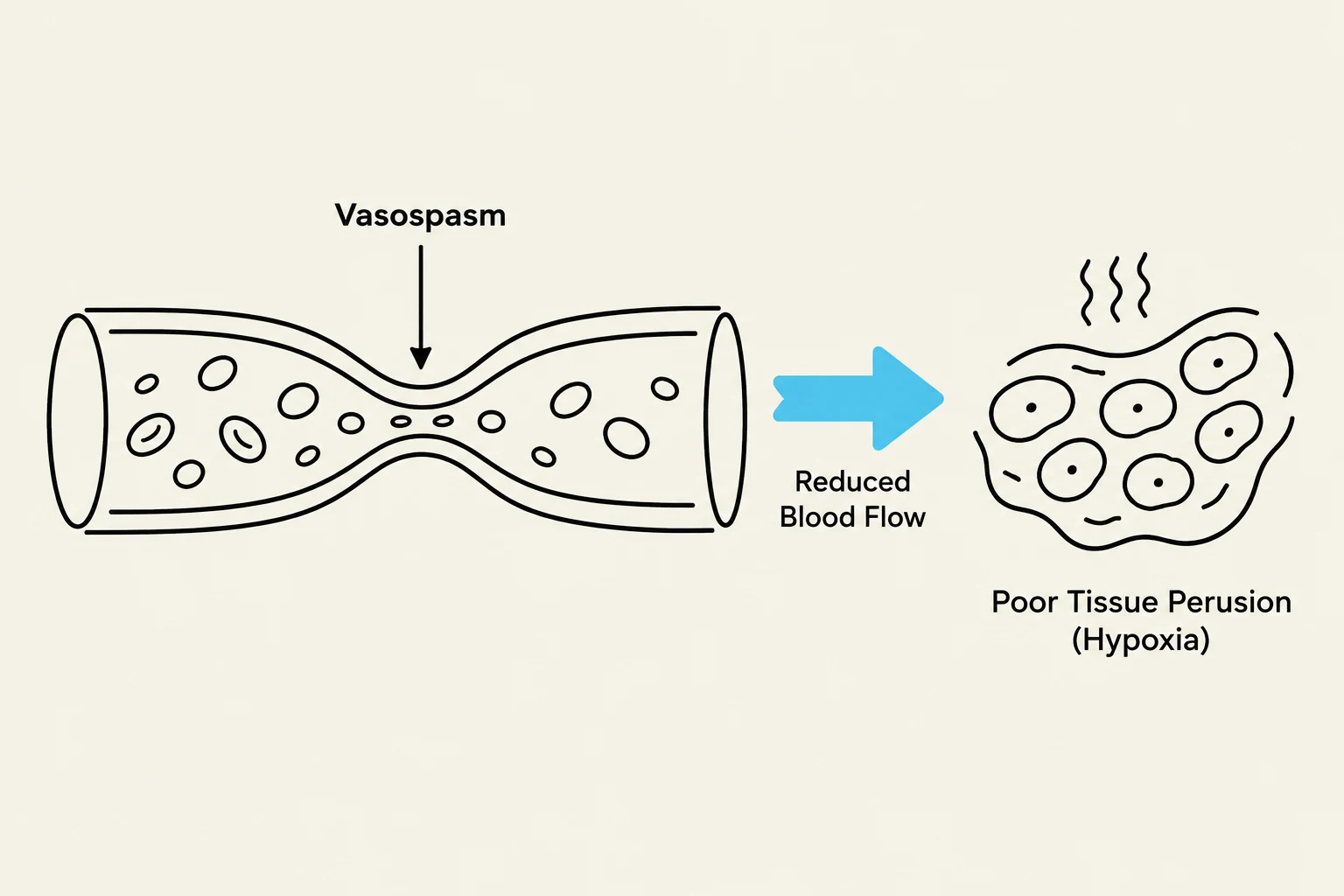
Diagram illustrating how vasospasm leads to reduced blood flow and poor tissue perfusion, also known as hypoxia.
The underlying mechanism driving most gestational hypertensive disorders is vasospasm, which leads to poor tissue perfusion. This reduced blood flow can result in severe complications, including placental abruption, kidney failure, hepatic rupture, and even maternal or fetal death.
1. Gestational Hypertension
Gestational hypertension is defined as a blood pressure reading of ≥ 140/90 mmHg recorded on two separate occasions at least 4 hours apart, occurring after the 20th week of pregnancy. A key distinguishing feature is the absence of proteinuria. Typically, blood pressure levels return to the client's baseline by 12 weeks postpartum.
2. Preeclampsia
Preeclampsia is a more complex condition. While it was traditionally diagnosed by the presence of protein in the urine, recent research indicates that it can occur even without proteinuria.
3. Severe Preeclampsia
When the condition progresses, it is classified as severe preeclampsia. This is identified by specific clinical markers and organ involvement:
Neurological/Visual: Cerebral or visual disturbances (e.g., scotoma, blurred vision) and hyperreflexia with possible ankle clonus.
Organ Involvement: Hepatic dysfunction (often presenting as epigastric or right upper quadrant pain), pulmonary involvement, or cardiac issues.
4. Eclampsia
Eclampsia represents a critical emergency. It is defined as the onset of seizure activity or coma in a client who is already manifesting severe preeclampsia. These seizures are often preceded by severe headaches, epigastric pain, and hyperreflexia.
5. HELLP Syndrome
HELLP syndrome is a severe variant of gestational hypertension that is diagnosed via laboratory findings rather than clinical observation alone. The acronym stands for:
H: Hemolysis (breakdown of red blood cells)
EL: Elevated Liver enzymes
LP: Low Platelets
Risk Factors and Clinical Presentation
Risk Factors
Certain clients are at a higher risk for developing hypertensive diseases during pregnancy:
Maternal Age:<19 or >40 years old.
Obstetric History: Primigravida (first pregnancy) or multifetal gestation.
Exam Tip: Diagnostic Procedures
To monitor the fetus and the progression of the disease, providers use a combination of:
24-hour urine collection for protein and creatinine clearance.
Non-Stress Tests (NST) and Biophysical Profiles (BPP) to assess fetal well-being.
Doppler blood flow analysis to check placental perfusion.
Daily kick counts to monitor fetal movement.
Nursing Management and Pharmacology
Nursing Care
The primary goal is to maintain a safe environment for the mother and fetus:
Positioning: Encourage a side-lying (lateral) position to improve uterine perfusion.
Environment: Maintain a quiet, dark environment to reduce stimuli that might trigger seizures.
Monitoring: Closely track vital signs, urine output (aiming for >30 mL/hr), deep tendon reflexes (DTRs), and fetal heart rate.
Diet: Advise the client to avoid foods high in sodium.
Antihypertensive Medications
Medications are used to control blood pressure, but certain classes are strictly contraindicated:
Commonly Used: Methyldopa, Nifedipine, Hydralazine, and Labetalol.
AVOID: ACE inhibitors and Angiotensin II Receptor Blockers (ARBs).
Magnesium Sulfate Administration
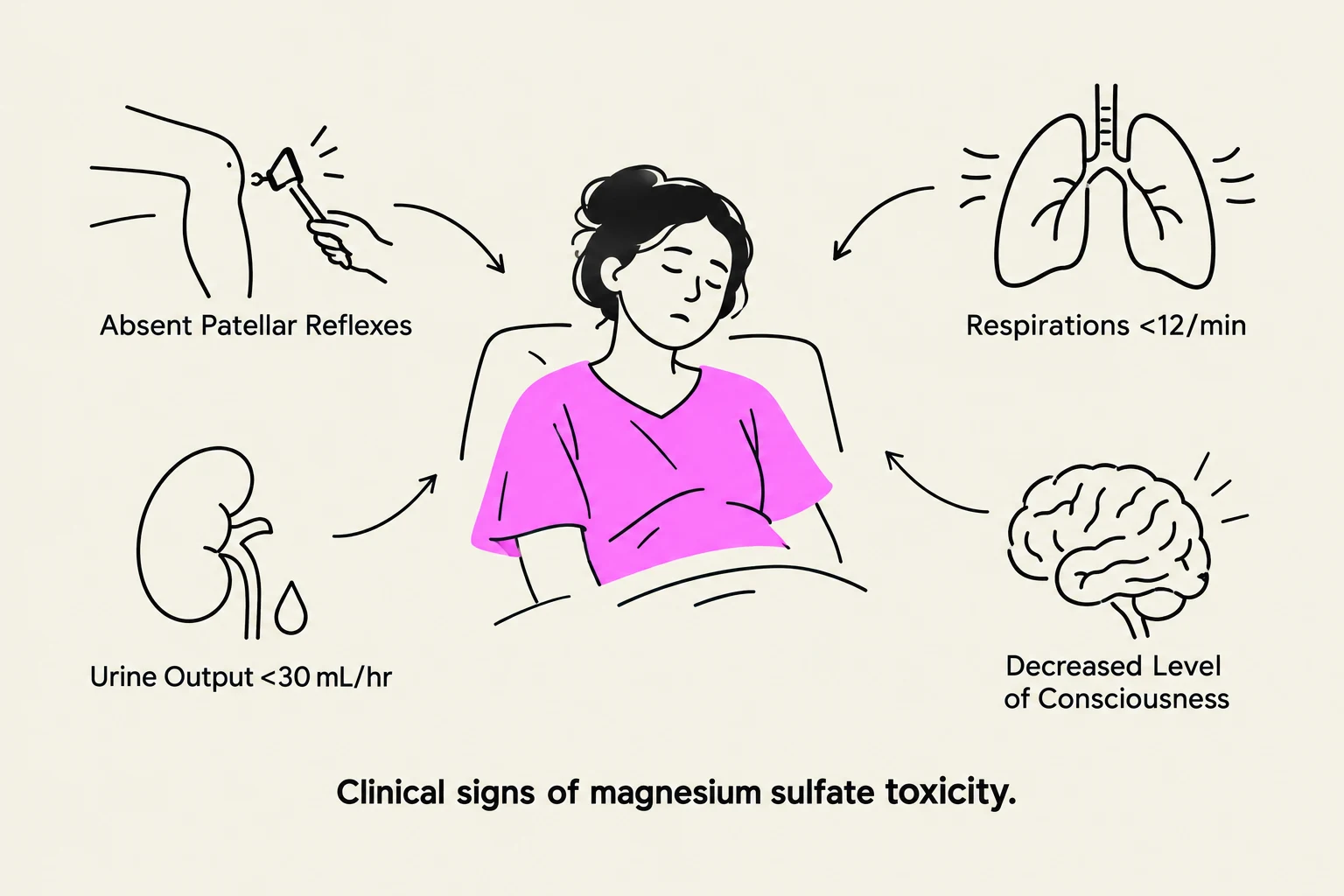
Clinical signs of magnesium sulfate toxicity include absent patellar reflexes, respirations less than 12 per minute, decreased level of consciousness, and urine output less than 30 mL/hr.
Magnesium sulfate is administered as an anticonvulsant to prevent seizures. Because it is a CNS depressant, nurses must monitor for magnesium toxicity:
Signs of Toxicity: Absent patellar deep tendon reflexes, respirations <12/min, urine output <30 mL/hr, and decreased level of consciousness.
Antidote: If toxicity is suspected, immediately discontinue the infusion and prepare to administer calcium gluconate or calcium chloride.
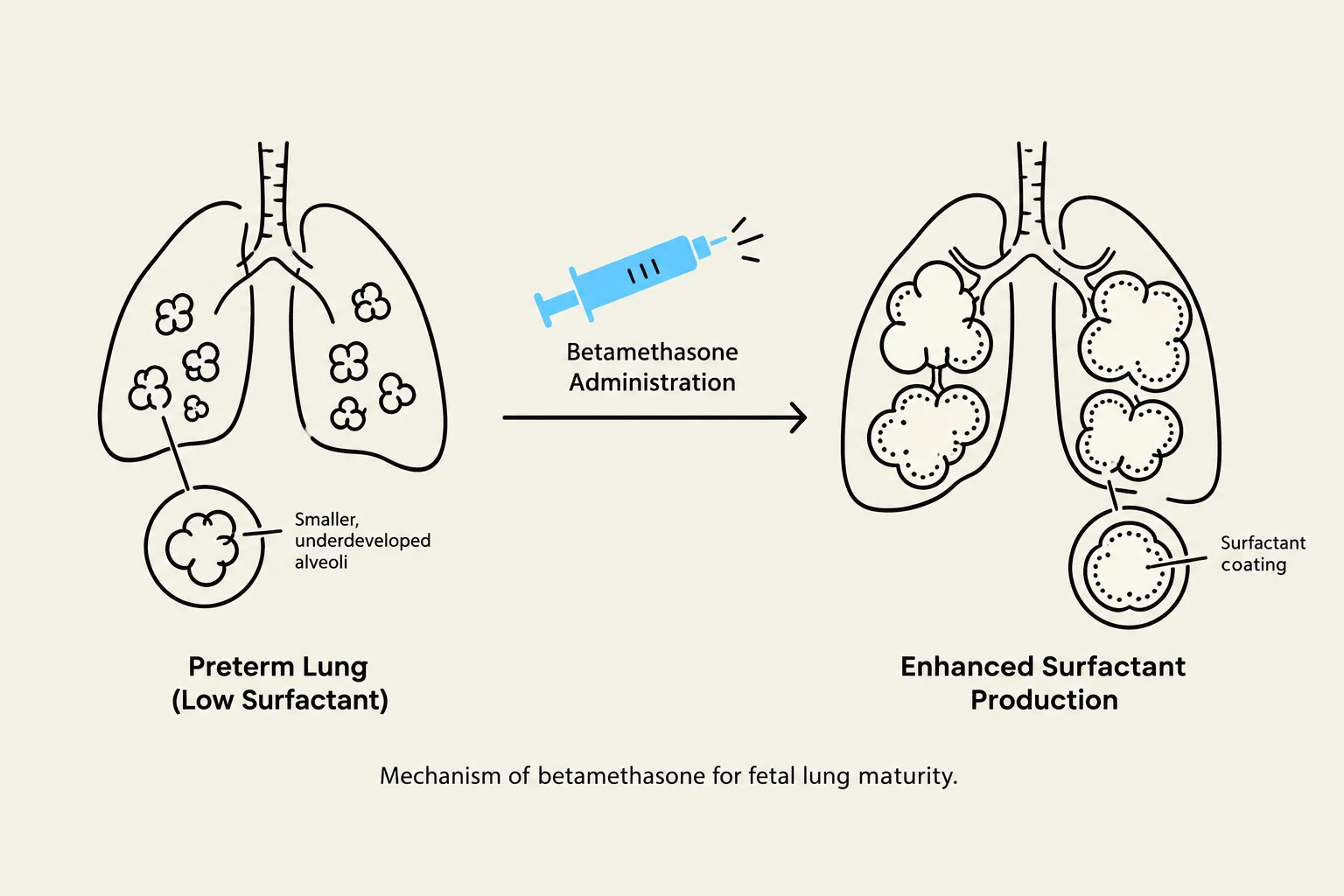
Diagram illustrating the mechanism of betamethasone for fetal lung maturity, showing the transition from a preterm lung with underdeveloped alveoli to enhanced surfactant production.
Preterm Labor
Preterm labor is defined as uterine contractions and cervical changes occurring between 20 and 36.6 weeks of gestation.
Categorization and Risk Factors
Preterm labor is categorized by gestational age:
Very preterm:<32 weeks.
Moderately preterm: 32–34 weeks.
Late preterm: 34–36 weeks.
Risk factors include infections (UTI, vaginal infections, HIV, chorioamnionitis), a history of previous preterm birth, multifetal pregnancy, smoking, and uterine abnormalities.
Clinical Manifestations
Clients may report pelvic pressure, menstrual-like cramping, persistent low backache, gastrointestinal cramping/diarrhea, or changes in vaginal discharge (increased amount, odor, or blood).
Management and Medications
Nursing care focuses on stopping contractions and enhancing fetal maturity:
Tocolytics (to stop contractions):
Nifedipine: A calcium channel blocker. Monitor for dizziness, headache, and nausea.
Terbutaline: A beta-adrenergic agonist. Monitor for tachycardia (notify provider if HR >130 bpm), tremors, and palpitations.
Magnesium Sulfate: Also used here to relax smooth muscles, though it should not be used if there is active vaginal bleeding or chorioamnionitis.
Fetal Lung Maturity:
Betamethasone: A glucocorticoid administered via two IM injections (12mg each, 24 hours apart) to enhance surfactant production in fetuses between 24–34 weeks. Monitor the mother for hyperglycemia.
Clinical Note: Premature Rupture of Membranes (PROM)
If a client experiences a gush of fluid, perform a Nitrazine test (blue indicates positive/rupture) or a ferning test. If membranes rupture preterm, monitor closely for infection (temperature >100∘F) and umbilical cord prolapse.
Keep reading for free.
Create an account to finish this reading and make it part of your study routine.