Gerontology Nursing: A Study Guide for Older Adult Care
This guide covers key concepts in gerontological nursing, including holistic care, physiological changes in aging, life transitions, legal and ethical considerations, and the nursing process. It is designed to help students prepare for exams by applying nursing theory to the realities of aging.
Preparing for the first exam in VNSG 1226 Gerontology requires a multifaceted approach. This exam is not merely a test of memorization; it is designed to assess your ability to apply nursing theory to the complex realities of aging. Based on the blueprint for the Fall 2026 semester, the content is derived from Chapters 1–5 of Davis Caring for Older Adults (7th ed.).
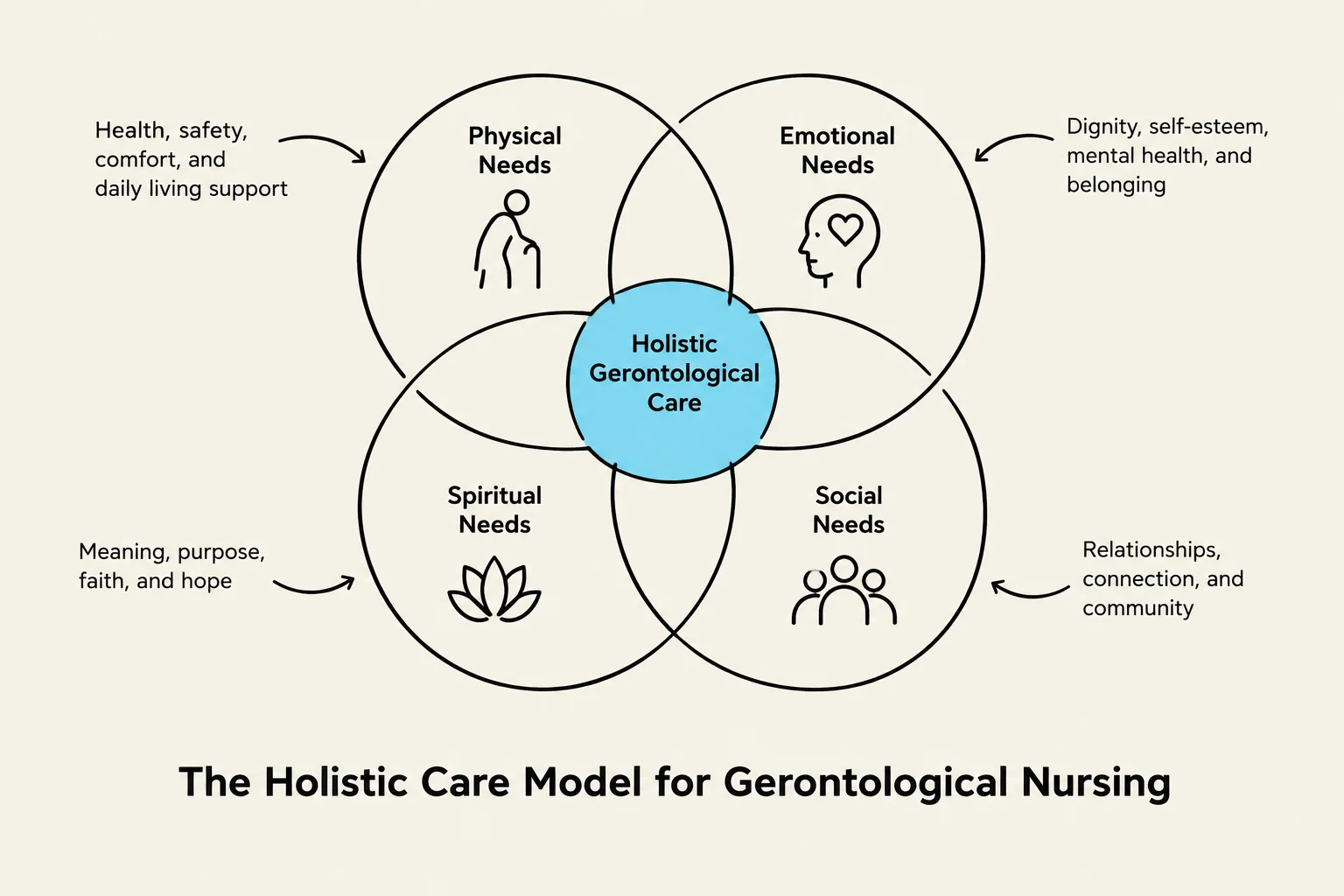
This diagram illustrates the Holistic Care Model for Gerontological Nursing, outlining four key areas: Physical Needs, Emotional Needs, Social Needs, and Spiritual Needs, all centered around Holistic Gerontological Care.
To succeed, you must move beyond simple "remembering" and prepare for questions that require "applying" and "analyzing" clinical scenarios. This guide breaks down the blueprint into its core thematic pillars to help you organize your study sessions.
Holistic Caring and the Nursing Philosophy
Gerontological nursing is rooted in a philosophy that views the older adult as a whole person, rather than a collection of physiological symptoms. A significant portion of the exam focuses on the foundational concepts of holistic care and the demographics of the aging population.
Key concepts to master include:
Gerotranscendence: Understanding this developmental stage where older adults may shift their perspective from a materialistic/rational view to a more cosmic and spiritual one.
Demographics: Being able to identify trends in the aging population and how these shifts impact healthcare delivery.
Teamwork and Communication: Holistic care requires effective collaboration within the healthcare team and clear documentation.
Exam Tip: When you see questions regarding "Holistic Care," look for answers that address the emotional, spiritual, and social needs of the patient alongside their physical needs.
The Aging Experience: Physiological Changes
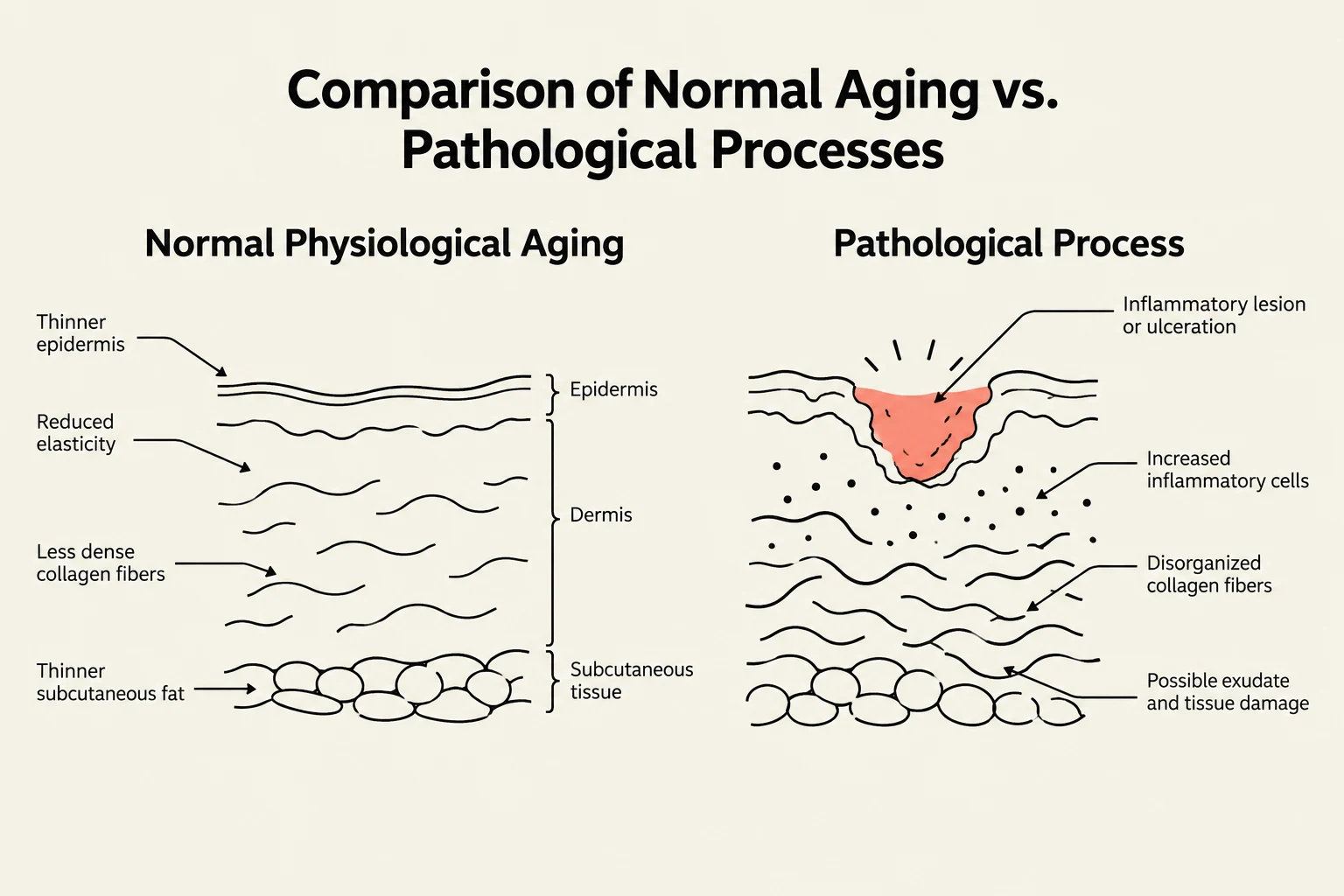
Comparison of normal aging and pathological processes in skin layers, illustrating changes in epidermis, dermis, and subcutaneous tissue.
A heavy emphasis is placed on the "Aging Experience," specifically the normal physiological changes that occur across various body systems. You must be able to distinguish between normal age-related changes and pathological processes.
The blueprint highlights several critical systems:
Cardiovascular & Respiratory: Changes in heart rate, blood pressure, and lung elasticity.
Gastrointestinal (GI) & Genitourinary (GU): Changes in digestion, absorption, and renal function.
Integumentary: Skin changes, such as thinning and loss of elasticity.
Special Sense Organs: Changes in vision and hearing that impact safety and communication.
Reproductive Health: Age-related changes in reproductive functions.
Clinical Application Example:
If a question asks about a patient with decreased skin elasticity and increased bruising, you should identify this as a normal integumentary change related to the aging process rather than an acute injury, unless other symptoms suggest otherwise.
Supporting Life Transitions and Spirituality
Aging involves significant psychological and social shifts. The exam tests your ability to support patients through these transitions.
Focus your study on:
Life Review: The process through which older adults reflect on their lives to find meaning.
Religion and Spirituality: Recognizing how spiritual beliefs influence coping mechanisms and end-of-life care.
Family Role Changes: Managing the shift in dynamics when an older adult moves from a provider role to a care-recipient role.
Resolving Transitions: Identifying strategies to help patients navigate common life changes.
Legal, Ethical, and Financial Considerations
Nursing in gerontology carries significant legal responsibilities. You must be proficient in understanding the boundaries of professional practice to ensure a "Safe and Effective Care Environment" (SEC).
Be prepared to address:
Legal Liability: Understanding the definitions and applications of negligence, malpractice, and omission.
Restraints: The ethical and legal implications of using restraints in the care of older adults.
Financial Aspects: Knowledge of Medicare and how it affects the patient's ability to access care.
Ethical Care: Respecting the patient's autonomy and providing for their intimacy needs.
The Nursing Process and Promoting Wellness
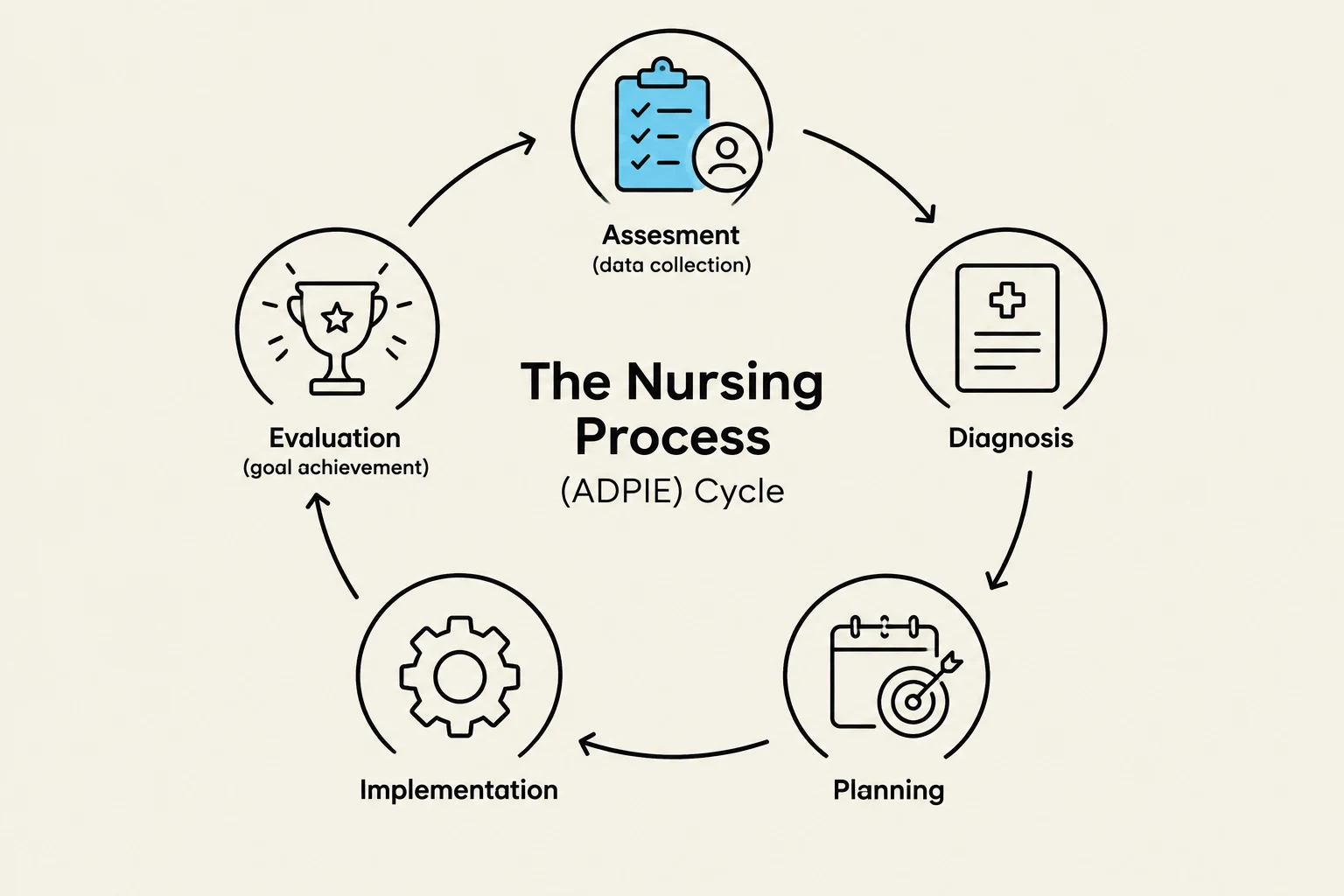
The Nursing Process (ADPIE) Cycle illustrates the steps of assessment, diagnosis, planning, implementation, and evaluation in patient care.
The exam will require you to apply the Nursing Process (ADPIE) to geriatric-specific scenarios. You should be able to identify which step of the process is being described or which step is most appropriate for a given patient situation.
The Nursing Process Steps
Assessment (A): Gathering data (e.g., assessing special sense organs or GI function).
Planning (P): Setting goals and designing care plans.
Implementation (I): Carrying out nursing actions.
Evaluation (E): Determining the effectiveness of interventions.
Promoting Wellness
Finally, the exam covers "Promoting Wellness," which involves health promotion and maintenance (HPM). This includes understanding how to encourage healthy behaviors and teaching/learning (TL) strategies that are appropriate for the older adult's cognitive and physical abilities.
Study Strategy Summary:
SEC (Safe/Effective Care): Focus on legalities, restraints, and liability.
HPM (Health Promotion): Focus on physiological changes and wellness.
PsI (Psychosocial Integrity): Focus on spirituality, life review, and transitions.
PhI (Physiological Integrity): Focus on body systems and normal aging.
Keep reading for free.
Create an account to finish this reading and make it part of your study routine.