Geriatric Nursing: Nutrition, Hydration, Elimination, and Medication Safety
This guide provides a framework for geriatric nursing care, focusing on assessing and intervening in risks related to nutrition, hydration, elimination, and medication management in older adults. It covers topics such as unintentional weight loss, dysphagia, constipation, urinary changes, and polypharmacy.
In geriatric nursing, one of the most critical skills is the ability to distinguish between "normal aging" and pathological changes that require intervention. Many physiological shifts in older adults can be mistaken for inevitable decline, yet many are actually reversible or manageable through targeted nursing care. This article explores the interconnected risks of nutrition, hydration, elimination, and medication management, providing a framework for assessment and intervention in the aging population.
Nutrition and Hydration Risks
Nutritional status in older adults is influenced by a complex web of biological, psychological, and socioeconomic factors. Risk factors include reduced appetite, dental issues, depression, cognitive changes, and social isolation, as well as practical barriers like financial constraints or difficulty with grocery shopping and cooking.
A primary clinical red flag is unintentional weight loss. When a patient loses weight without trying, it should immediately trigger a comprehensive assessment of their food access, meal patterns, dentition, and ability to prepare meals. Nurses should advocate for culturally familiar foods and adequate protein intake, referring patients to a dietitian when necessary.
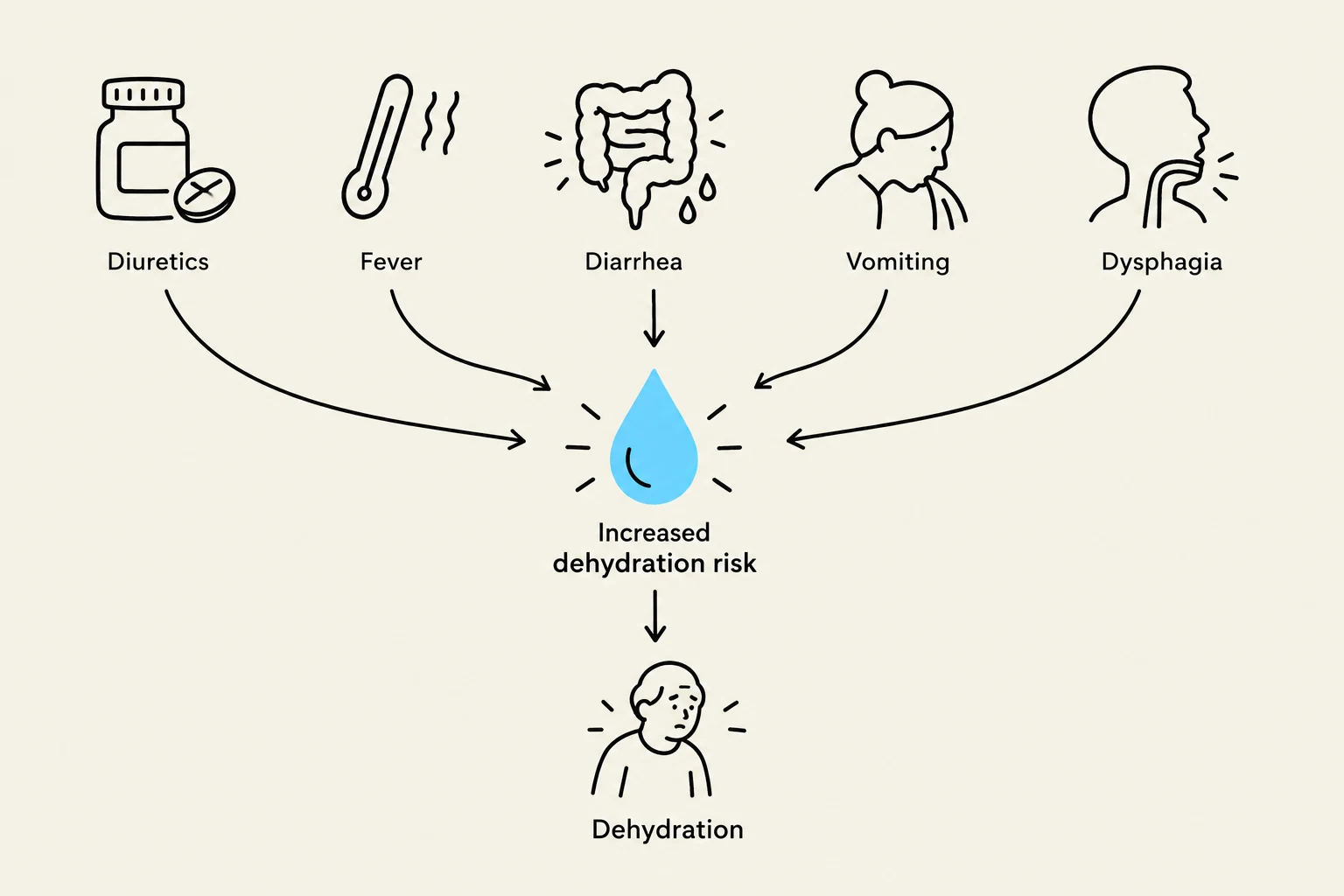
Closely linked to nutrition is hydration. Older adults are at a heightened risk for dehydration because the thirst sensation often diminishes with age. Furthermore, limited mobility or cognitive impairment may prevent them from accessing fluids when they need them.
This diagram illustrates factors that increase the risk of dehydration, including diuretics, fever, diarrhea, vomiting, and dysphagia, ultimately leading to dehydration.
To monitor hydration effectively, nurses should assess mucous membranes, urine concentration, orthostatic blood pressure, and cognitive status.
Clinical Judgment Cue: Always compare every new finding with the patient's baseline. A change from the patient's "normal" is often more significant than the absolute value of a lab result.
Dysphagia and Aspiration Prevention
Dysphagia (difficulty swallowing) is a significant risk factor for both malnutrition and aspiration pneumonia. Nurses must remain vigilant for signs such as coughing or choking during meals, a "wet" sounding voice, food pocketing in the cheeks, or unexplained recurrent pneumonia.
If swallowing impairment is suspected, a Speech-Language Pathology (SLP) evaluation is required. While implementing safety measures, always position the patient upright for meals and adhere strictly to prescribed food textures and liquid consistencies.
Warning: Do not independently thicken liquids or alter a patient's diet texture without an official assessment and a provider's order.
Elimination: Constipation and Urinary Changes
Constipation Assessment
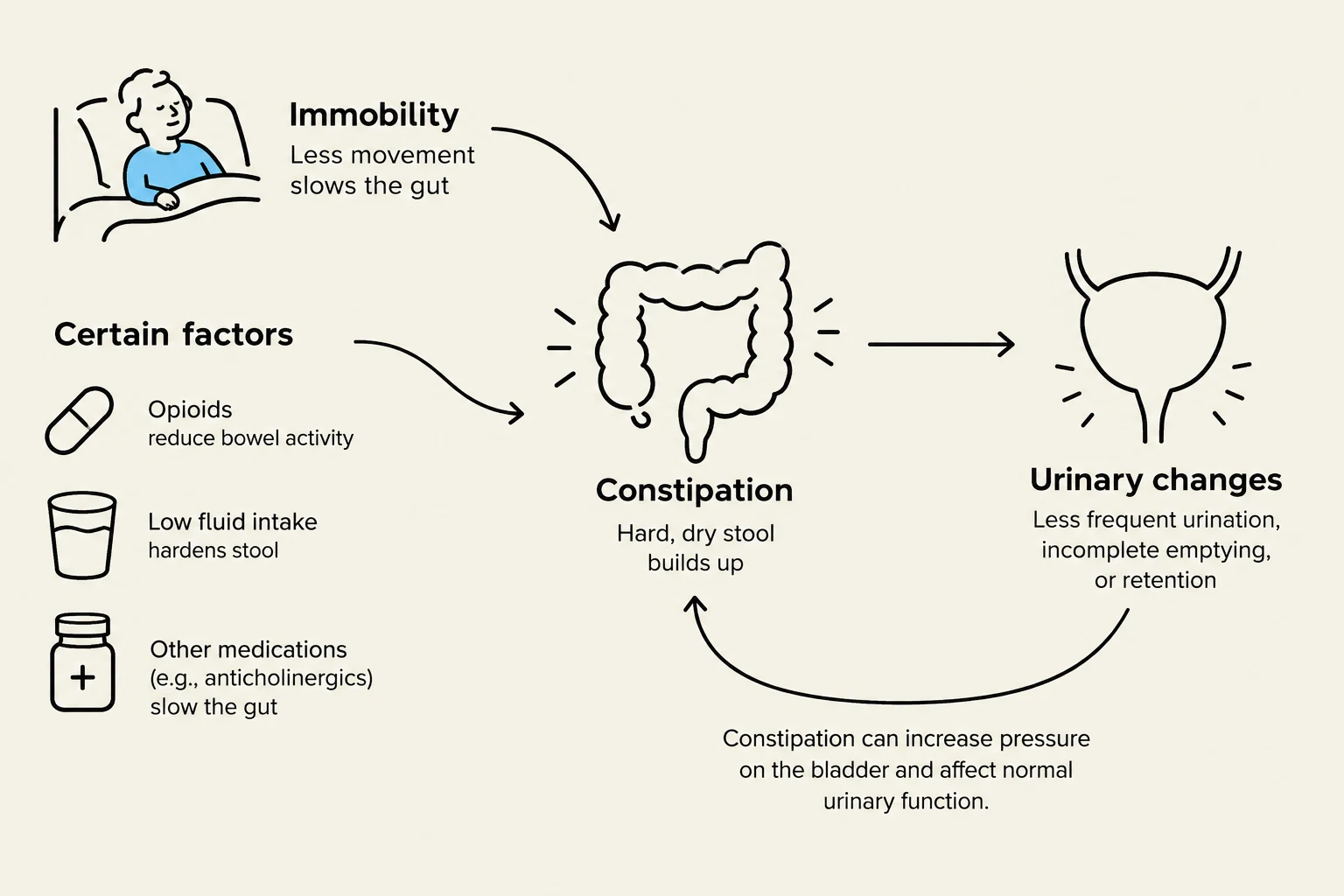
Constipation in the elderly is often multifactorial, driven by low fiber/fluid intake, immobility, or medications such as opioids and anticholinergics. It is important to assess the patient's usual bowel pattern rather than assuming everyone must have a daily bowel movement.
Nursing interventions include promoting mobility, ensuring adequate fluids and fiber, and maintaining privacy and routine. However, certain symptoms require immediate escalation, such as severe pain, vomiting, blood in the stool, acute abdominal distention, or suspected impaction.
Urinary Changes and Incontinence
While an increase in frequency or nocturia (waking at night to urinate) may occur with age, new-onset incontinence or dysuria (painful urination) should never be dismissed as "normal". These symptoms often stem from reversible causes, such as:
Urinary Tract Infections (UTIs)
Constipation
Medication side effects
Mobility barriers
Excess fluid intake before bedtime
To manage incontinence, nurses can implement scheduled or prompted toileting and ensure easy access to the bathroom. Crucially, avoid the unnecessary use of indwelling catheters, as these significantly increase the risk of infection and limit mobility.
This diagram illustrates how immobility and certain factors like opioids, low fluid intake, and other medications can lead to constipation, which in turn can affect urinary function.
Medication Safety and Polypharmacy
Polypharmacy—the use of multiple medications—is a major concern in the aging population. It increases the risk of drug-drug interactions, duplication of therapies, adverse effects, falls, delirium, and nonadherence.
Medication Reconciliation and Risk
Effective medication reconciliation must go beyond just looking at a list of prescriptions. It must include over-the-counter (OTC) drugs, supplements, and "as needed" (PRN) medications, as well as the patient's actual practices. When assessing a patient, ask:
What is the purpose of each medication?
Can the patient physically obtain, open, or organize these medications?
Nurses should be alert to "medication-related cues" such as new confusion, falls, hypotension, bleeding, hypoglycemia, or increased sedation.
Medication Safety Checklist
When evaluating a medication regimen, use the following framework to identify potential risks:
Category
Clinical Consideration
Right Medication
Is the indication for this drug still present?
Right Dose
Has renal or hepatic function been considered?
Right Timing
Are there barriers to adherence or complexity issues?
Right Monitoring
Are labs, BP, glucose, or signs of bleeding being tracked?
Right Patient Plan
Are cost, dexterity, cognition, and support addressed?
Medication Safety Teaching
Patient education is a cornerstone of safety. When teaching, use clear, large-print medication lists and employ the "teach-back" method to ensure understanding. To reduce errors, collaborate with providers and pharmacists to simplify dosing schedules whenever possible.
Professional Boundary: If you identify a medication concern, do not tell a patient to stop a prescribed medication independently. Instead, communicate your concerns directly to the prescribing provider.
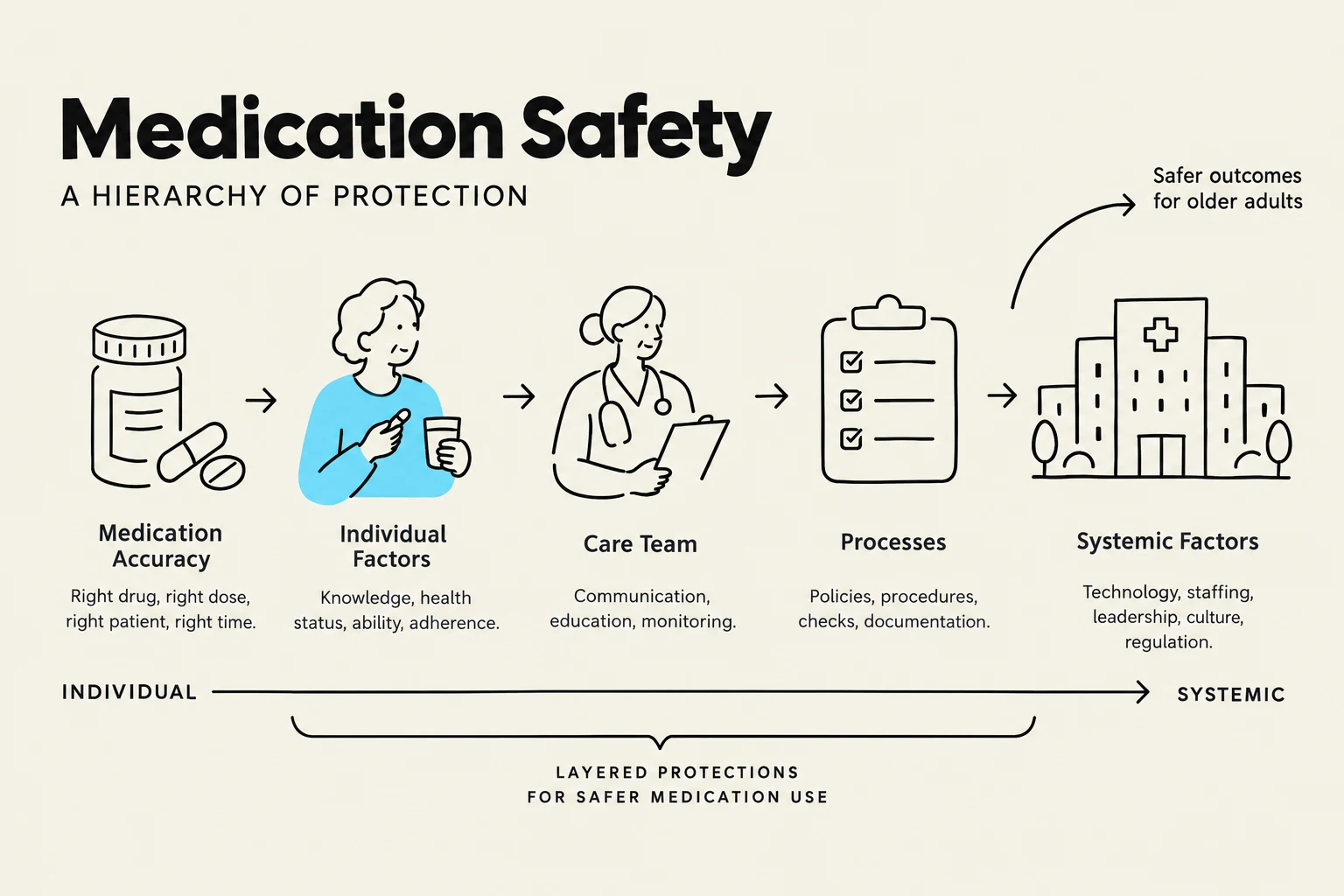
A hierarchy of protection for medication safety, illustrating factors from individual accuracy to systemic influences, leading to safer outcomes for older adults.
Summary of Geriatric Nursing Interventions
The goal of geriatric nursing is to protect function, autonomy, and quality of life while minimizing modifiable risks. This requires a proactive approach: recognizing nutritional deficits, preventing aspiration, managing elimination issues without over-medicalizing, and vigilantly monitoring for the side effects of polypharmacy.
NCLEX Tip: When faced with a question about which finding is most important to follow up on, prioritize a new acute change from the patient's baseline over a stable, long-standing condition.
Keep reading for free.
Create an account to finish this reading and make it part of your study routine.