


Geometry is more than just studying static shapes; it is the study of how shapes move, how they relate to one another, and how lines interact in space. To master geometry, one must understand two fundamental pillars: transformations, which describe the movement of figures, and angle relationships, which describe the logic of intersecting lines.
Geometric Transformations
A transformation is a process that maps an original figure (the preimage) onto a new figure (the image). When we talk about moving shapes without changing their size or shape, we are discussing rigid transformations (also known as isometries). Because these transformations preserve the dimensions of the object, the preimage and the image remain congruent.
Types of Rigid Transformations
There are three primary ways to move a figure rigidly within a plane:
- Translation: This is a "slide." A figure moves a specific distance along a specific vector without rotating or flipping.
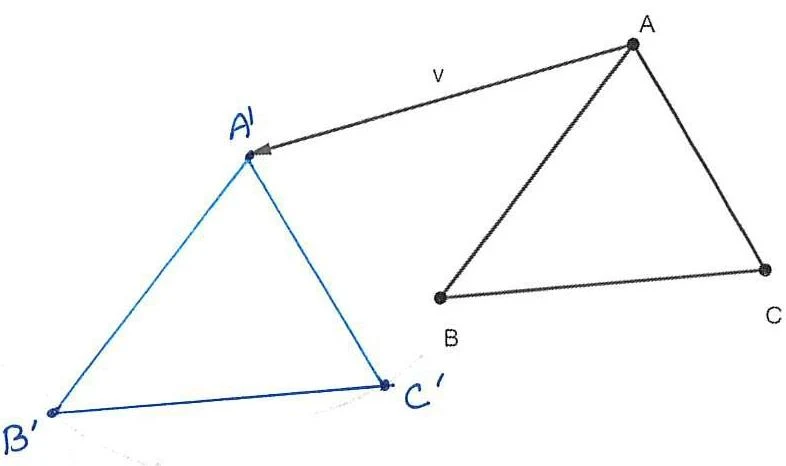
A triangle ABC is translated by vector v to triangle A'B'C'. - Reflection: This is a "flip." A figure is flipped across a specific line known as the axis of reflection.
- Rotation: This is a "turn." A figure is turned around a fixed center point by a specific angle of rotation.
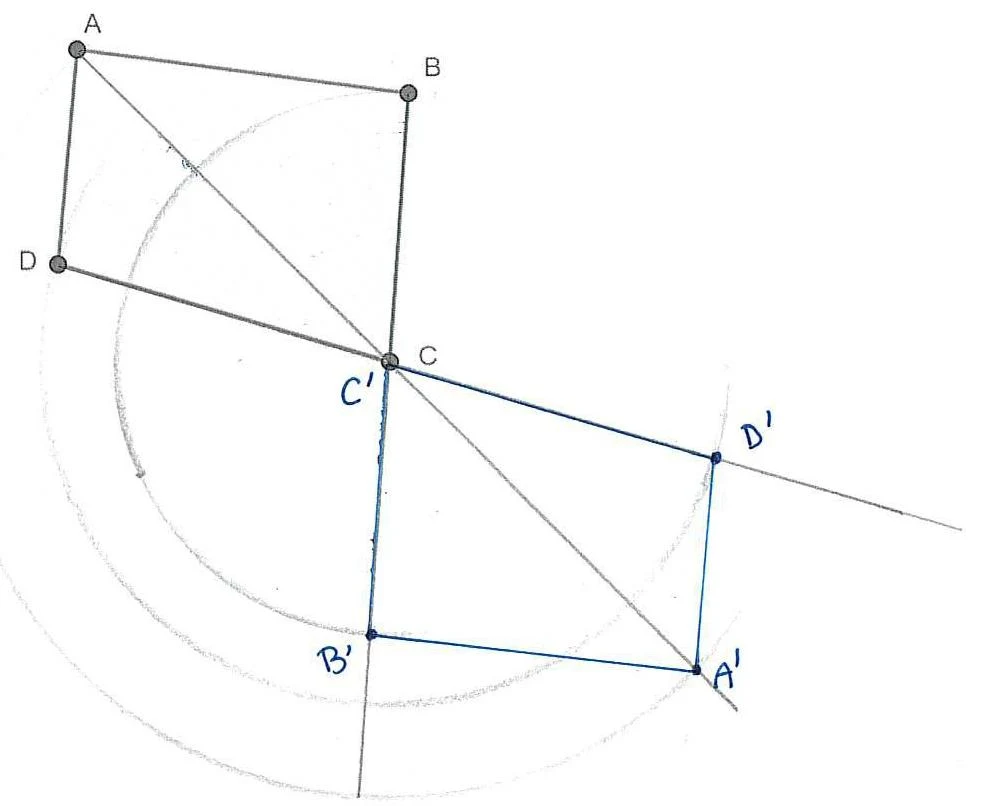
Geometric construction illustrating transformations of shapes.
Exam Tip: Sometimes a single movement isn't enough to get from point A to point B. You may need a sequence of transformations, such as rotating a shape and then reflecting it, to reach the desired image.
Symmetry in Geometry
Symmetry describes a sense of balance or repetition within a shape. We categorize this into two main types:

Keep reading for free.
Create an account to finish this reading and make it part of your study routine.
Continue reading freeAlready have an account? Log in
Updated