


South America is a realm of immense physical diversity and complex human history. Stretching from the northern tropics to the sub-antarctic reaches of the south, the continent is defined by extreme topographical contrasts—from the world's longest mountain range to its largest rainforest. This vastness has not only shaped the natural environment but has also dictated the patterns of human settlement, the rise and fall of mighty empires, and the intricate cultural tapestry of its modern inhabitants.
Physical Geography: Climates and Habitats
The South American realm is an elongated landmass characterized by substantial variation in relief from west to east. This variation creates a wide range of climates and vegetation types, which in turn contribute to significant cultural differences across the continent.
The western edge of the continent is dominated by the Andes Mountains, one of the world's longest and highest mountain ranges. To the east, the landscape transitions into massive basins and highlands, including the Amazon Basin—the largest rainforest in the world—and the Brazilian Highlands. Other notable features include the Atacama Desert, known as the driest place on Earth, and the fertile Pampas grasslands of eastern Argentina and Uruguay.

Ancient Societies and the Inca State
Long before European arrival, indigenous peoples migrated into the realm from North and Middle America. These populations founded diverse societies in coastal valleys, river basins, plateaus, and mountains, adapting to their specific natural environments to create distinct regional cultures.
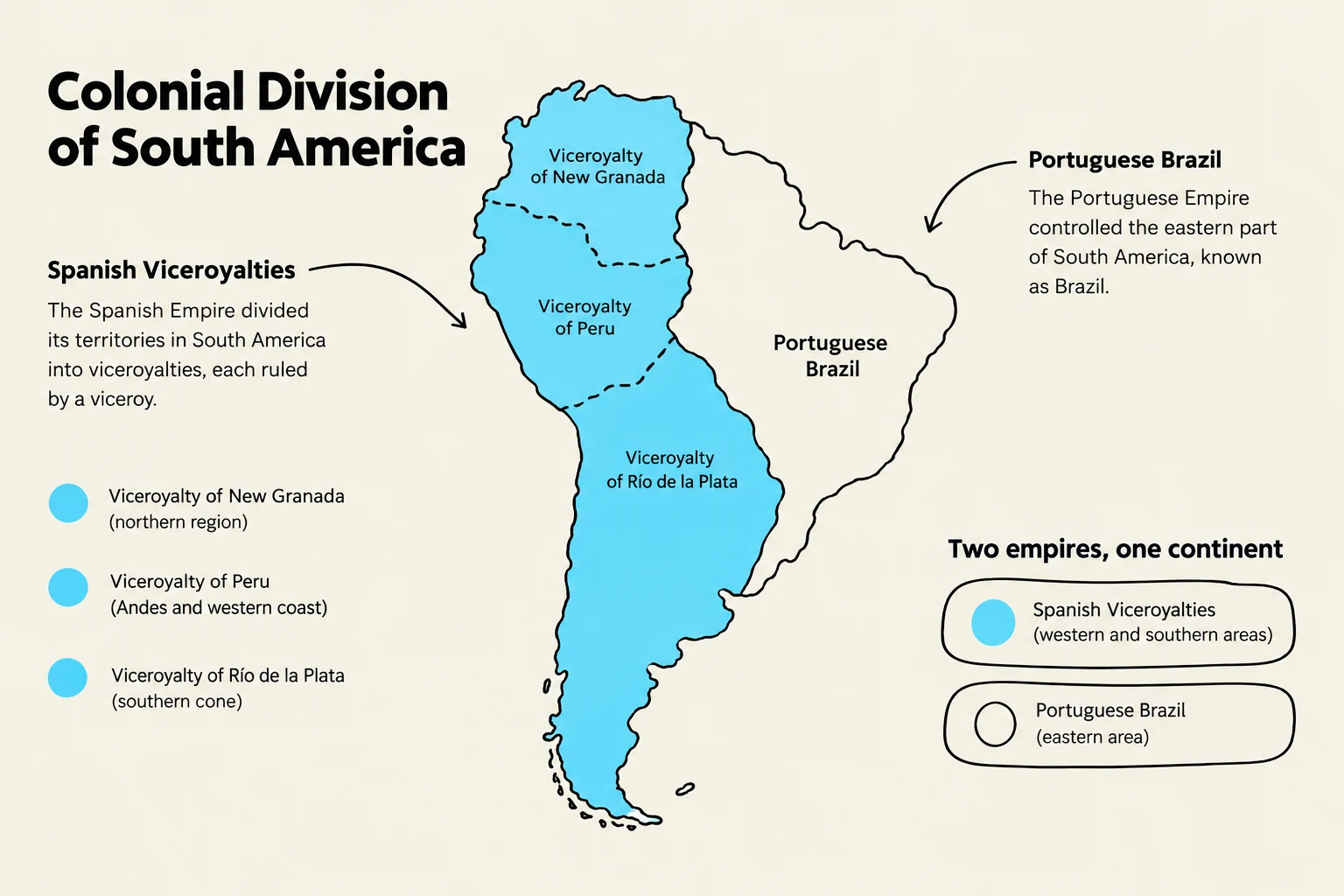
One of the most sophisticated of these civilizations was the Inca State. Centered in the high-altitude valleys of the Andes known as altiplano (specifically around Cuzco, in modern-day Peru), the Inca were expert builders, farmers, herders, and scholars. They managed an extensive empire unified by a complex network of roads and bridges. Despite their highly centralized society and rigid class structure, the empire was vulnerable to external shocks; in the 1530s, a relatively small army of Spanish invaders was able to take over the state.

Keep reading for free.
Create an account to finish this reading and make it part of your study routine.
Continue reading freeAlready have an account? Log in
Updated