


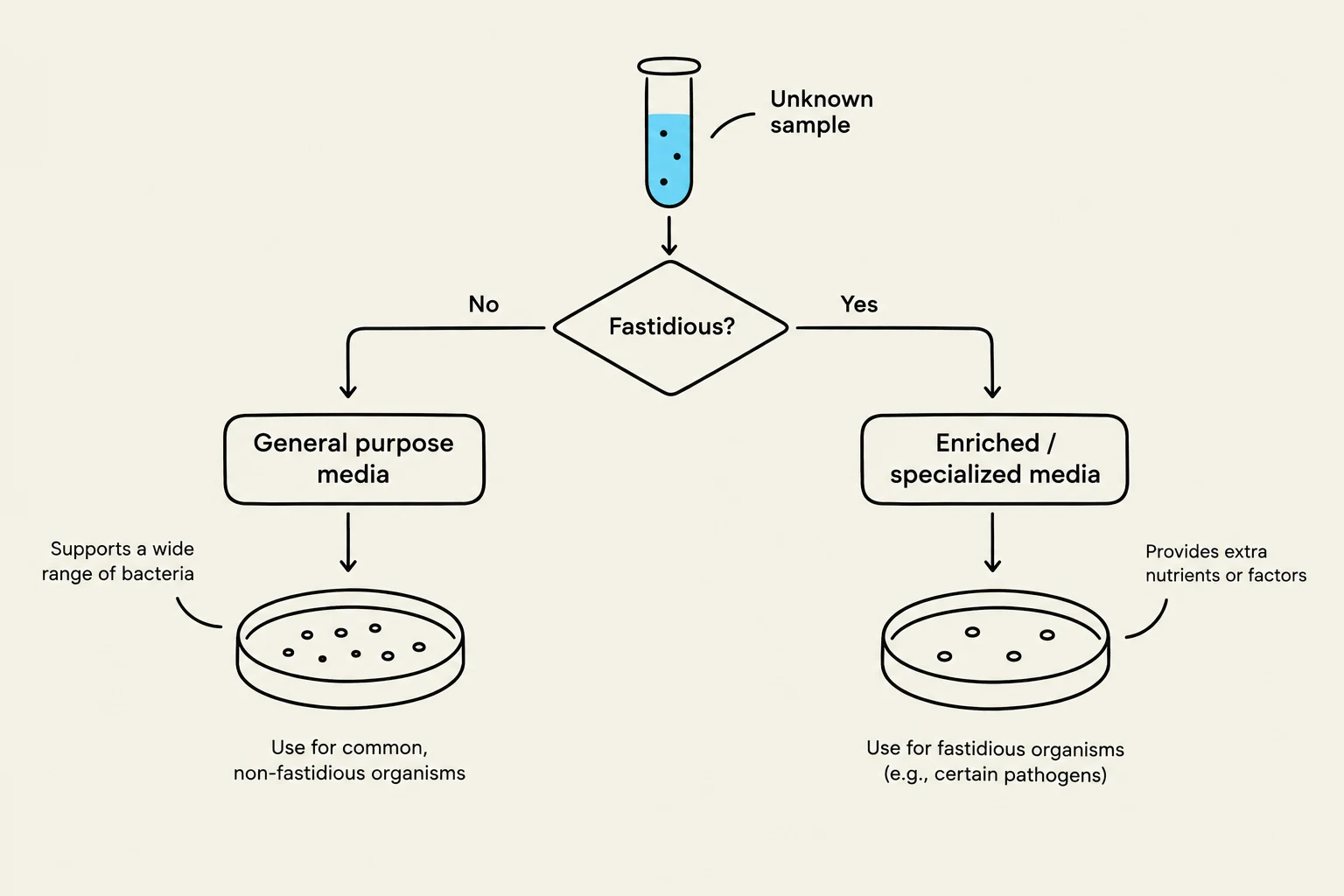
In the field of microbiology, the ability to isolate and identify bacteria depends heavily on the environment in which they are grown. Not all bacteria are created equal; some are "fastidious," meaning they require complex, specific nutrients to survive, while others are much more resilient. To study these resilient organisms, microbiologists rely on General Purpose Media. These are nutrient-rich environments designed to support the growth of most non-fastidious bacteria, providing a baseline for identification and study.
Defining Non-Fastidious Organisms
Before diving into specific media types, it is essential to understand the distinction between different nutritional requirements. Bacteria are often categorized by how "picky" they are regarding their food source.
Non-fastidious bacteria are organisms that can thrive on a wide variety of standard nutrient sources. They do not require specialized growth factors, such as specific vitamins, amino acids, or blood components, to complete their metabolic processes. Because these organisms are relatively easy to grow, general purpose media is the first line of defense in diagnostic microbiology and environmental sampling.
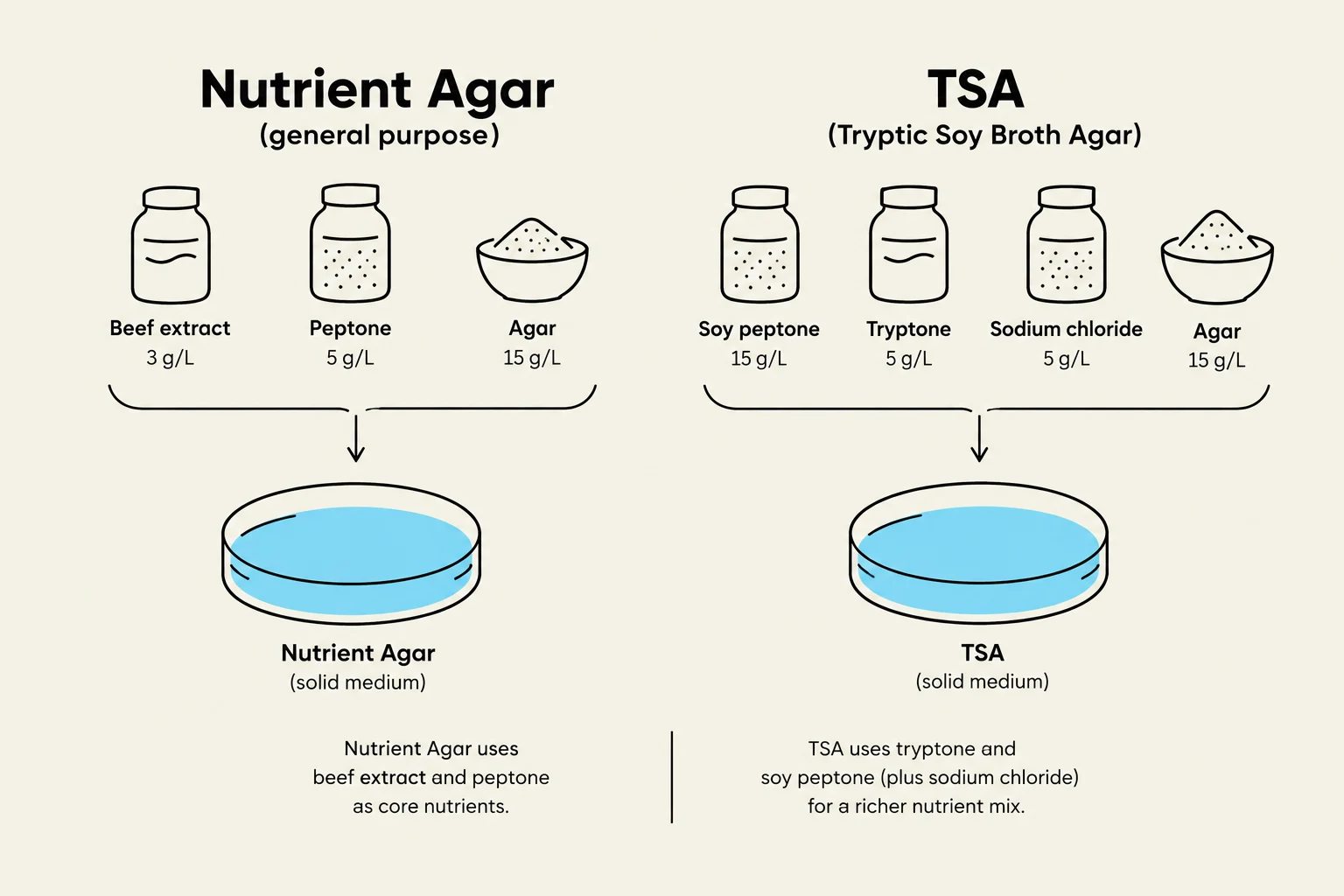
Exam Tip: If a question asks which media to use for an unknown sample where the nutritional requirements are not yet known, the answer is almost always a general purpose medium like TSA or Nutrient Agar.

Keep reading for free.
Create an account to finish this reading and make it part of your study routine.
Continue reading freeAlready have an account? Log in
Updated