


In every cell of your body, the genetic blueprint is identical. Whether it is a neuron in your brain or a muscle cell in your leg, the DNA sequence remains the same. However, these cells look and function completely differently. This phenomenon is made possible by gene expression and gene regulation—the sophisticated processes that determine which genes are "turned on" and which are "turned off" at any given time.
Rather than simply being a long string of code, DNA is intricately packaged within the nucleus. The way this DNA is organized and accessed dictates the cell's phenotype, allowing for diverse functions despite a shared genome.
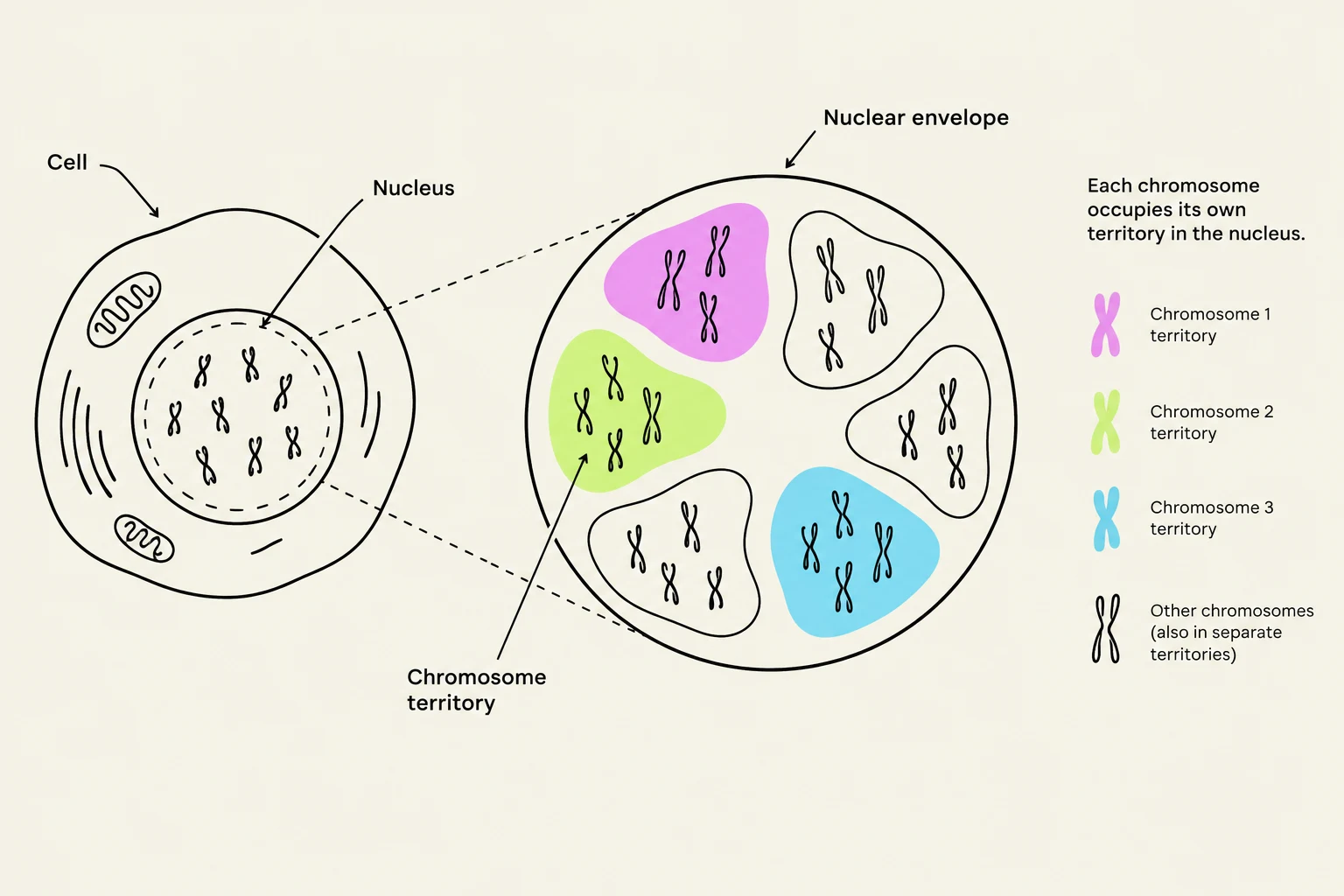
The Architecture of the Nucleus: Chromosomal Territories
DNA does not float loosely like spaghetti in a bowl. Instead, it is organized into specific regions known as chromosomal territories. Within the nucleus, each chromosome occupies its own distinct space, which helps manage the massive amount of genetic material.
This spatial organization is not random; it allows for preferential access to the transcriptional and splicing machinery. By organizing chromosomes into these territories, the cell can more efficiently manage the complex task of reading genes and processing RNA.
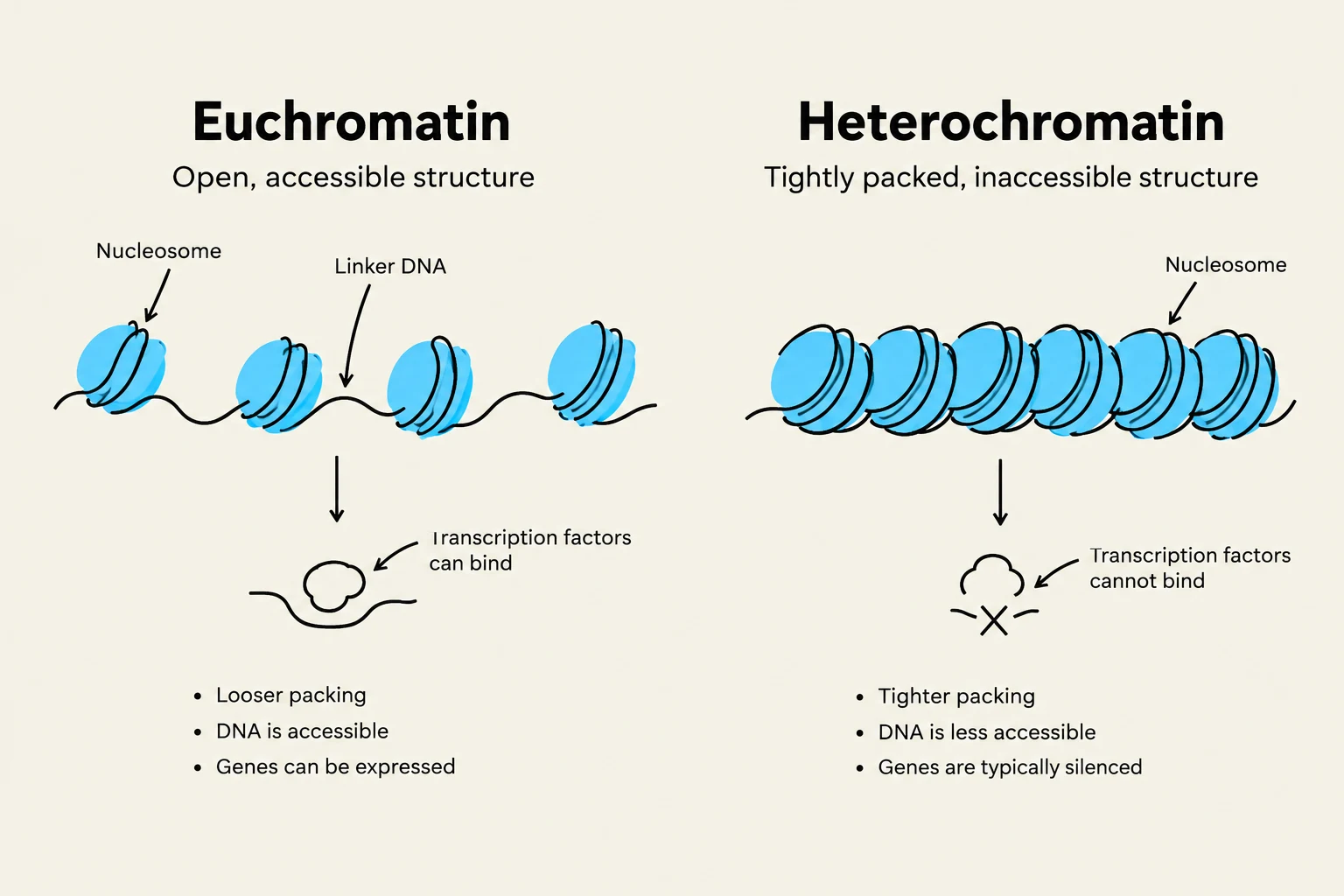
Chromatin Structure: Euchromatin vs. Heterochromatin
The fundamental unit of DNA packaging is the nucleosome, where DNA wraps around histone proteins. The density of this packaging determines the level of transcriptional activity—the rate at which a gene is being transcribed into RNA.
Keep reading for free.
Create an account to finish this reading and make it part of your study routine.
Continue reading freeAlready have an account? Log in
Updated