


Effective respiratory care relies on the body's ability to maintain a delicate balance between oxygen intake and carbon dioxide removal. When this balance is disrupted, patients can quickly progress from mild respiratory distress to life-threatening complications. For healthcare providers, mastering the assessment of gas exchange and the safe administration of oxygen therapy is a fundamental skill required to prevent injury and promote recovery.
Understanding Gas Exchange: Ventilation, Transport, and Perfusion
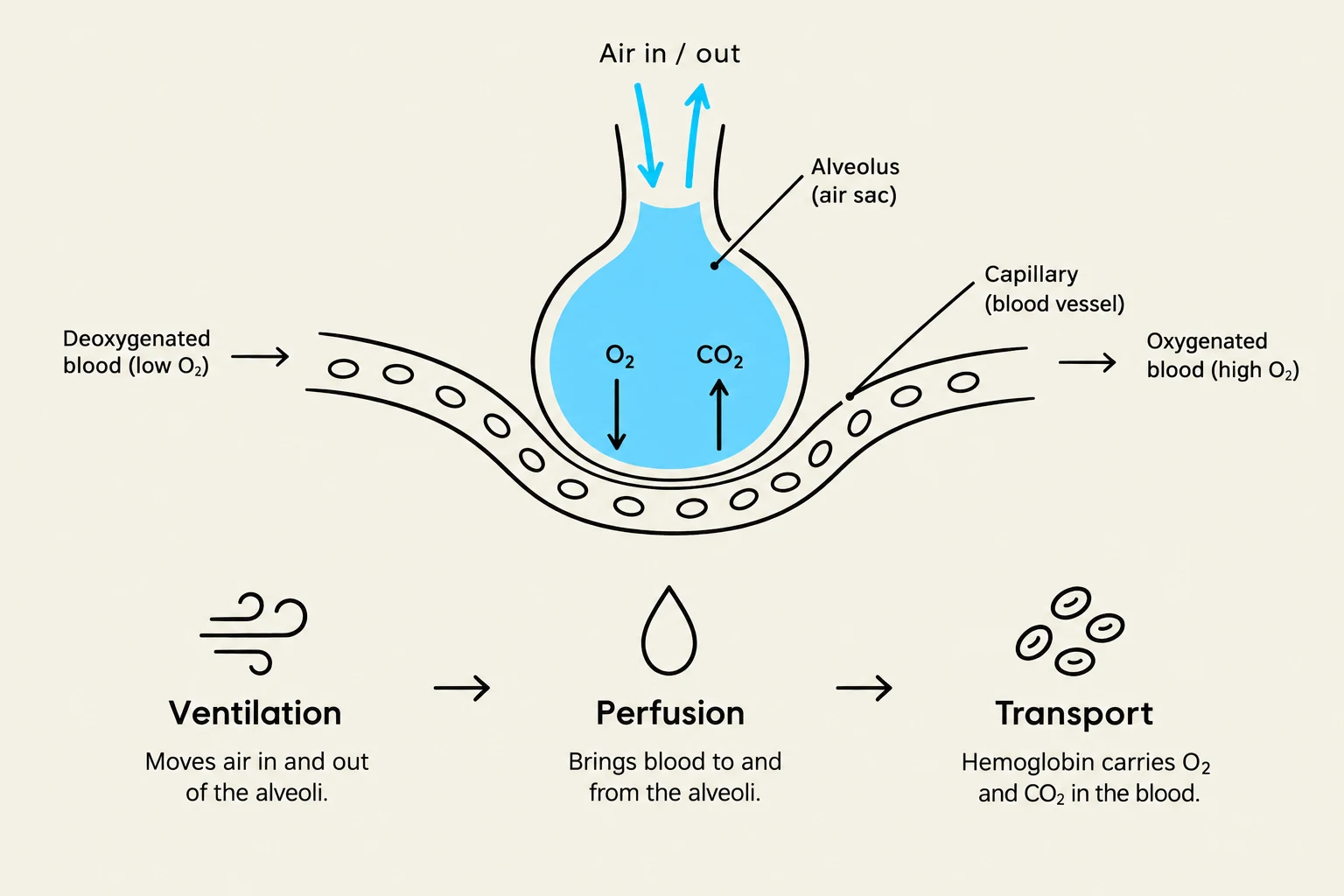
To understand respiratory failure, one must first understand the three pillars of gas exchange: ventilation, transport, and perfusion.
- Ventilation: The mechanical process of inhaling oxygen into the lungs and exhaling carbon dioxide. Adequate ventilation is characterized by quiet, effortless breathing.
- Transport: The ability of hemoglobin to carry oxygen from the alveoli to the cells and return carbon dioxide from the cells back to the alveoli for elimination.
- Perfusion: The ability of the blood to move oxygenated hemoglobin to the tissues and return deoxygenated blood to the lungs.
If any of these processes fail, gas exchange is impaired. For example, atelectasis (the collapse of small lung sections due to shallow breathing) can impair ventilation, while anemia can impair transport.
Recognizing Inadequate Gas Exchange
When gas exchange fails, the body initiates compensatory mechanisms. Nurses must be able to distinguish between early signs of distress and late-stage emergencies.
Clinical Manifestations
Inadequate gas exchange often presents through changes in vital signs:
- Increased Respiratory Rate (Tachypnea): Often due to the increased work of breathing.
- Decreased Oxygen Saturation (): A drop below $95%$ suggests oxygen is not being effectively transported to the cells.
- Tachycardia: An increased heart rate may occur as a compensatory effort to increase oxygen delivery or as a result of anxiety caused by dyspnea.
- Elevated Temperature: This may indicate an underlying infection, such as pneumonia, which is obstructing gas exchange.
Keep reading for free.
Create an account to finish this reading and make it part of your study routine.
Continue reading freeAlready have an account? Log in
Updated