


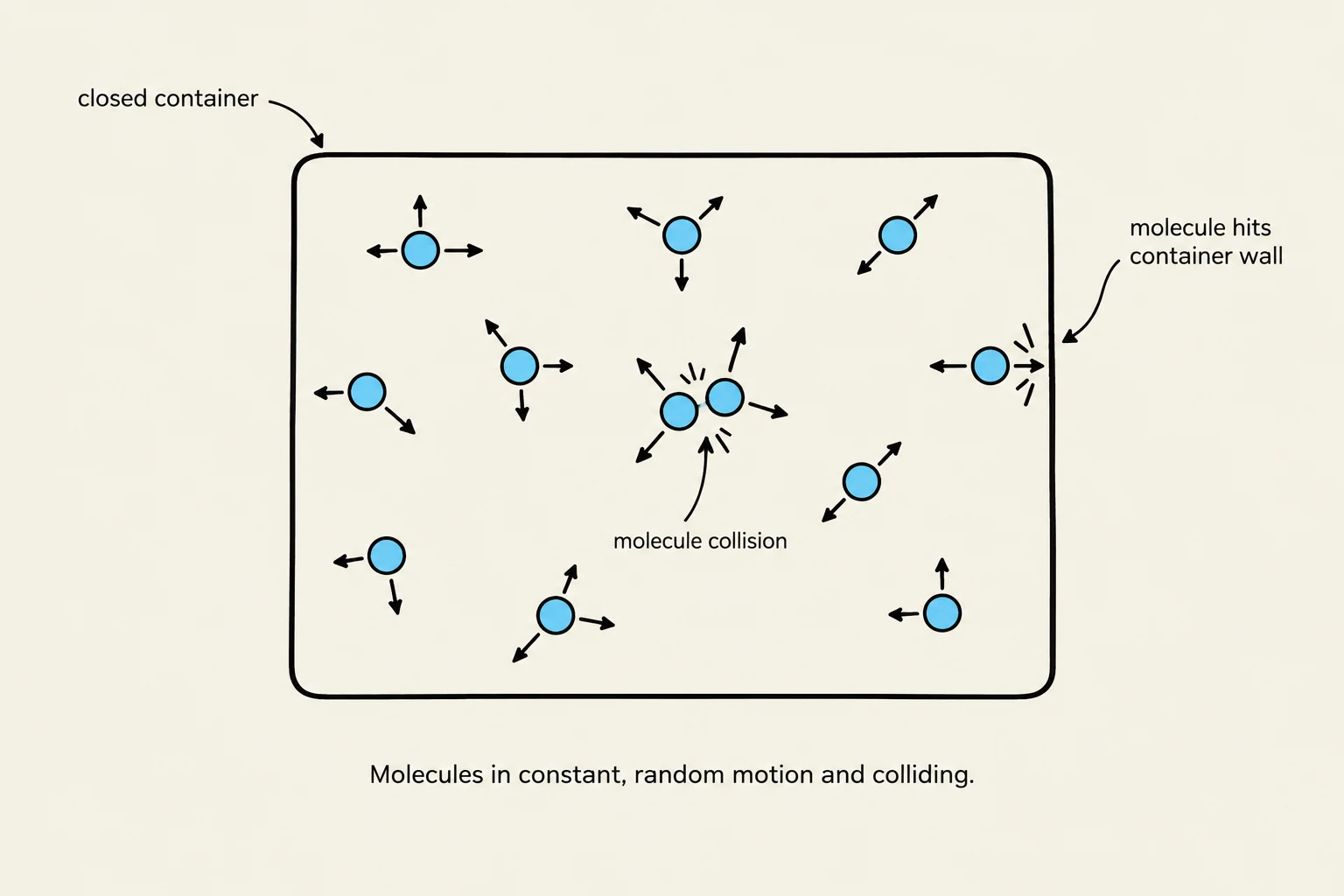
To understand how gases behave, we must look beyond what we can see with the naked eye and examine the microscopic world of particles. Unlike solids, which have a rigid structure, gases are characterized by their ability to expand and fill any container they inhabit. This unique behavior is driven by the relationship between the mass of the particles and their continuous, energetic movement.
Understanding Gas Density
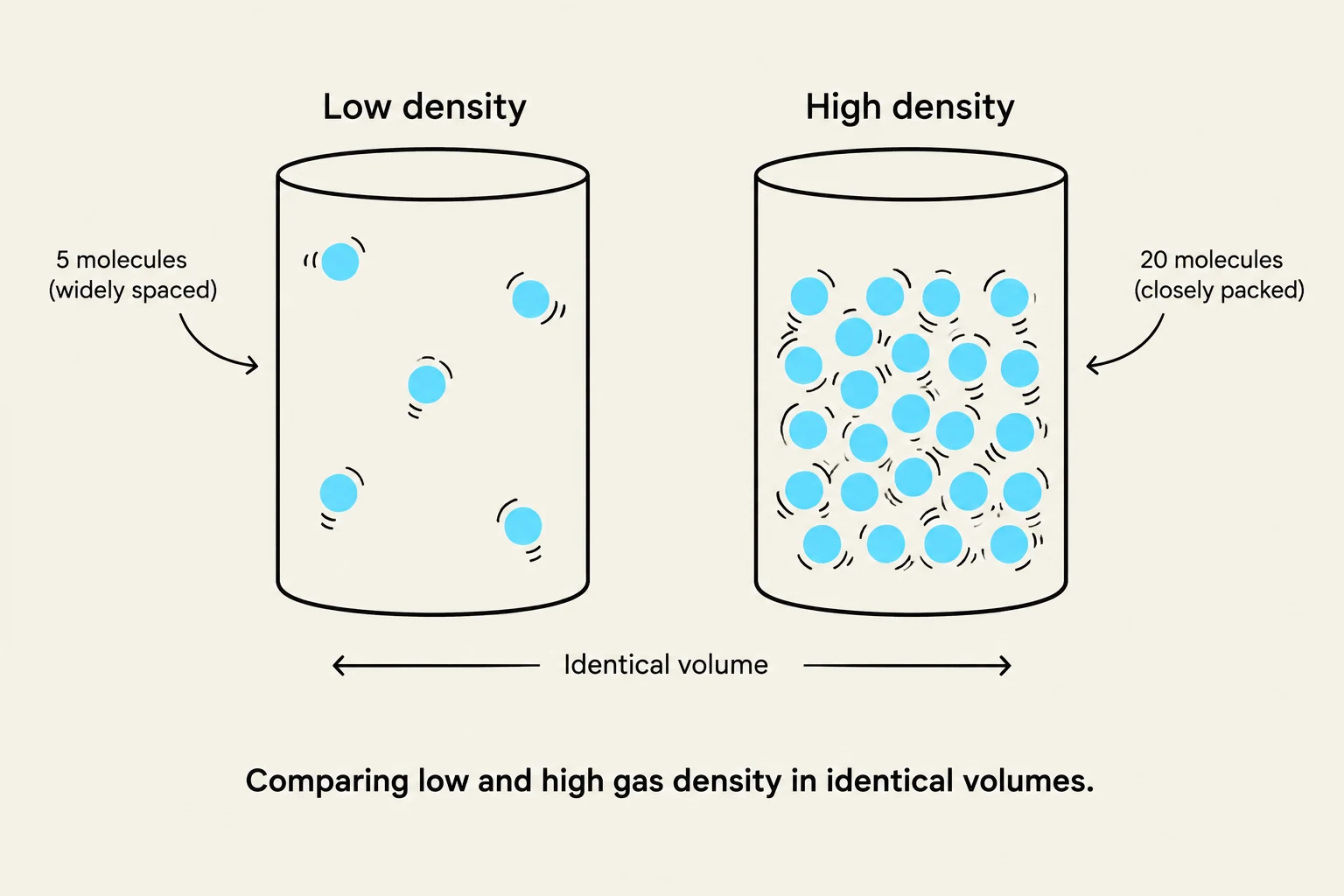
In physics and chemistry, density is a fundamental property that describes how much "stuff" is packed into a specific amount of space. Specifically, density is defined as the mass per unit volume of a substance.
While it is easy to measure the volume of a solid because it maintains a fixed shape, gases are much more elusive. Because gas molecules are constantly moving and spreading out, the density of a gas can change significantly depending on the environment. If you increase the volume of a container without adding more gas, the density decreases; if you compress the gas into a smaller space, the density increases.
Keep reading for free.
Create an account to finish this reading and make it part of your study routine.
Continue reading freeAlready have an account? Log in
Updated