The study of life has undergone a profound transformation, moving from simple visual observations to complex genetic analyses. This evolution in how we classify organisms has not only changed our understanding of biological relationships but has also provided the necessary framework to explore the intricate roles that fungi play in our global ecosystems. By tracing the history of taxonomy and delving into the microscopic world of soil chemistry, we can begin to appreciate the complex web of life that sustains our planet.
The Evolution of Biological Classification
For centuries, biological classification was dominated by Linnaean taxonomy. Developed by Carl Linnaeus, this system relied heavily on morphological appearance—the physical characteristics we can see with the naked eye or a basic microscope. Organisms were grouped into a hierarchy based on shared structural traits, a method that served science well for a long time but often grouped unrelated species together simply because they looked similar.
As biological understanding deepened, Robert Whittaker proposed the Five Kingdom System, which introduced a more nuanced way to categorize life. Instead of just looking at shape, Whittaker looked at how organisms obtained nutrients and their cellular complexity. This system divided life into Animals, Plants, Fungi, Protists, and Monerans.
The most significant revolution, however, came with the advent of molecular phylogeny. By analyzing the Small Subunit ribosomal RNA (SSU rRNA), scientists like Carl Woese were able to look past physical traits and into the very genetic blueprint of life. This work revealed that life is better organized into three massive domains—Archaea, Bacteria, and Eukarya—rather than just kingdoms.
Distinguishing Fungi from Other Life Forms
To understand why fungi are unique, we must compare them to the organisms they often interact with: plants and animals. While they may appear to share traits with both, their biological makeup is distinct.
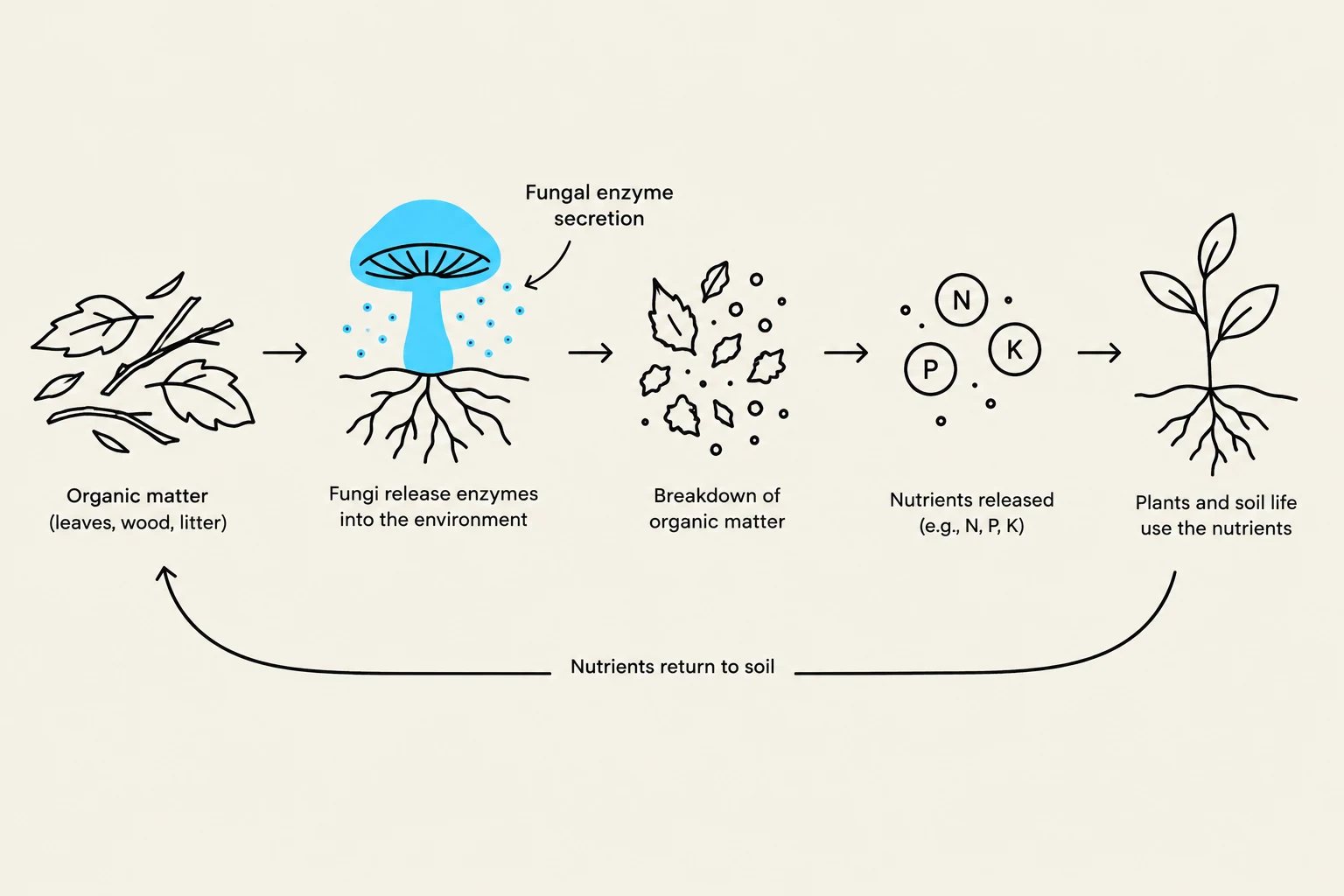
Nutrition: Unlike plants, which are autotrophs (producing food via photosynthesis), fungi are heterotrophs that absorb nutrients from organic matter. Unlike animals, which typically ingest food, fungi perform extracellular digestion by secreting enzymes into their environment.
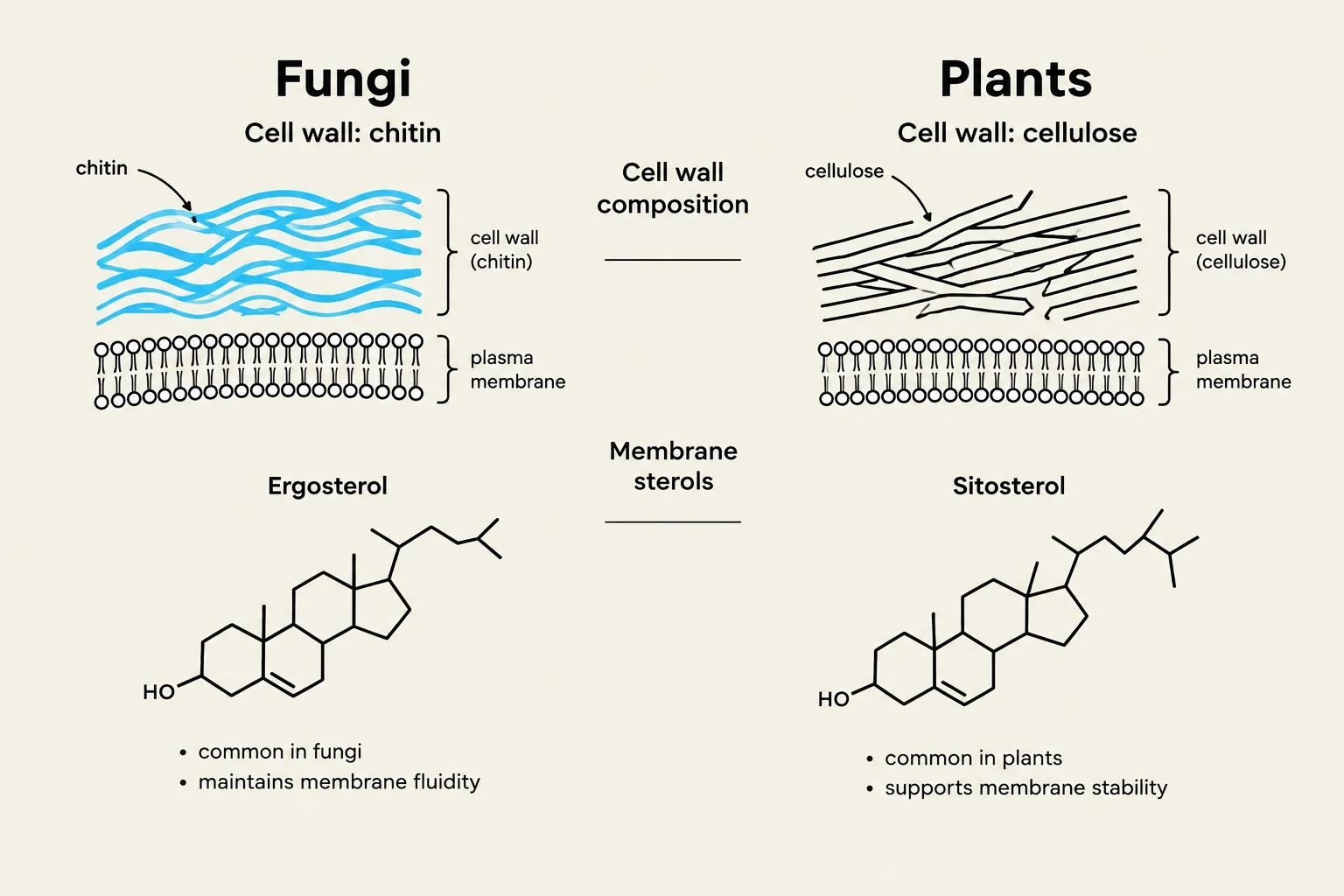
Cellular Composition: A key identifier is the cell wall. Plants use cellulose, while fungi use chitin. Furthermore, the cell membranes of fungi contain ergosterol, a sterol that differs from the cholesterol found in animal membranes.
Within the kingdom of fungi, we recognize the phylum Eumycota, which comprises ten recognized phyla. Two of the most ecologically significant are Ascomycota (sac fungi) and Basidiomycota (club fungi), which include many of the mushrooms and molds we encounter in daily life.
This diagram illustrates the differences in cell wall composition and membrane sterols between fungi and plants. Fungal cell walls are primarily composed of chitin, while plant cell walls are made of cellulose. Ergosterol is a common membrane sterol in fungi, maintaining membrane fluidity, whereas Sitosterol is common in plants, supporting membrane stability.
Exam Tip: If asked to differentiate fungi from plants, always mention both the cell wall material (chitin) and the specific sterol in the membrane (ergosterol).
The Microbial Landscape of Soil
Fungi do not exist in a vacuum; they are primary drivers of soil health. Soil is a complex matrix consisting of four main phases: mineral, organic (humus), liquid (water), and gaseous (air). The balance between these phases determines the pH and the availability of nutrients for all living organisms.
When scientists attempt to measure the diversity within this soil, they look at several metrics:
Species Richness: The total number of different species present.
Species Evenness: How close in numbers each species in an environment is.
Functional Groups: Grouping organisms by their ecological roles rather than just their names.
Historically, we measured this diversity through cultivation methods, growing microbes on agar plates. However, this only captures a tiny fraction of life. Modern DNA-based methods, such as PCR (Polymerase Chain Reaction), allow us to detect "biological dark matter"—the vast majority of microbes that are present in the soil but cannot be grown in a laboratory setting.
Fungal Symbiosis and Global Diversity
One of the most critical fungal roles is that of the obligate biotroph. These are fungi that cannot complete their life cycle without a living host. A prime example is Arbuscular Mycorrhizal Fungi (AMF), which form symbiotic relationships with plant roots, exchanging soil nutrients for plant sugars.
Estimating the total number of fungal species on Earth remains a challenge. Some scientists use conservative ratios based on known species, while others use phylogenetic analysis to predict how many species should exist based on genetic diversity. Regardless of the exact number, their impact is undeniable.
Geochemical Transformations and Nutrient Cycling
Fungi act as biological chemists in the soil. Through the production of extracellular enzymes, the uptake of minerals, and the release of metabolic byproducts, they drive geochemical transformations.
One of the most important processes is the breakdown of organic acids. As fungi decompose organic matter, they release carbon back into the system and alter the chemical environment. This can have two major effects:
Nutrient Availability: The breakdown of complex molecules can release essential nutrients like nitrogen and phosphorus, making them available to plants.
Toxicity Regulation: Fungal activity can alter the solubility of metals. While this can sometimes increase the availability of toxic metals, it can also help in sequestering them, thereby regulating the toxicity levels within the soil ecosystem.
This diagram illustrates the process of nutrient cycling in an ecosystem, showing how fungi break down organic matter to release nutrients that are then used by plants and soil life.
By understanding these processes—from the microscopic level of a single ergosterol-containing membrane to the global scale of fungal diversity—we gain a clearer picture of the essential, invisible forces that maintain the fertility and stability of our world.
Keep reading for free.
Create an account to finish this reading and make it part of your study routine.