


Fungi are a diverse group of eukaryotic organisms that play a fundamental role in Earth's ecosystems. While they were once grouped with plants, they are a distinct monophyletic lineage that colonized land approximately 500 million years ago, even before plants. From microscopic yeasts to the "Humongous Fungus"—a single Armillaria ostoyae colony covering 9 km² in Oregon—fungi exhibit a staggering range of sizes and life strategies.
Structure and Morphology: Hyphae and Mycelia
Unlike animals that ingest food or plants that photosynthesize, fungi are characterized by their unique absorptive structure. Most fungi are composed of filaments called hyphae, which are incredibly thin—often 100 times thinner than the thinnest plant root. These hyphae can pack together to form large, multicellular structures like mushrooms.
A mass of interconnected hyphae is known as a mycelium. In many species, the hyphae are divided by cross-walls called septa. These septa contain large pores that allow for the efficient passage of nutrients and even nuclei throughout the fungal network.
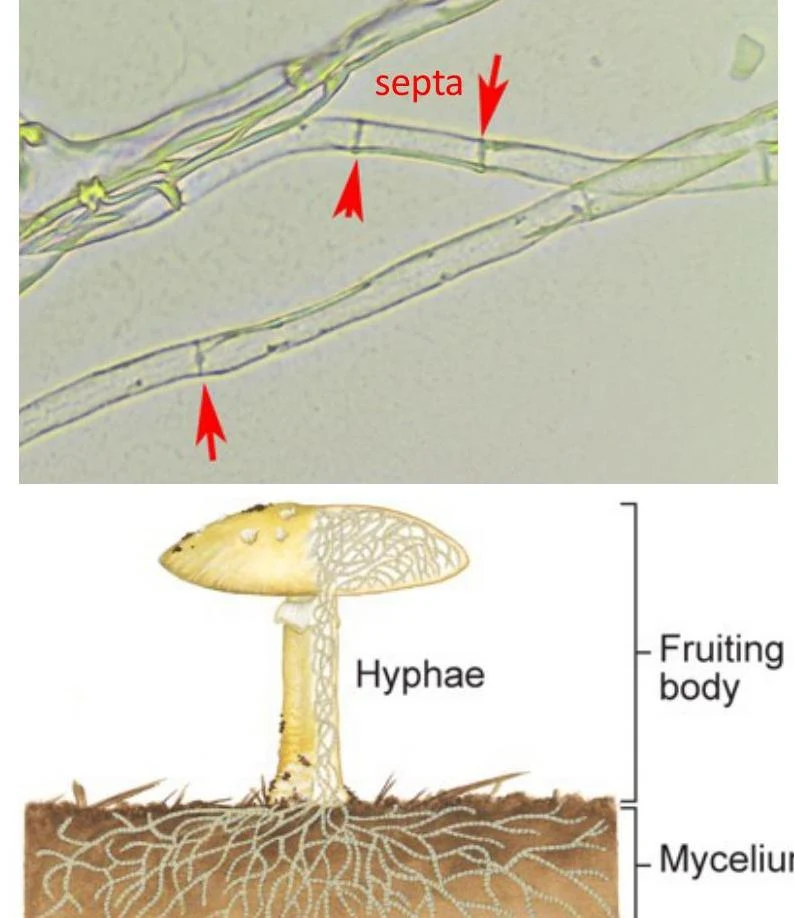
While most fungi are multicellular, some groups, such as yeasts and certain chytrids, are unicellular. A key way to distinguish a fungus from a bacterium is that fungi are eukaryotes (possessing a membrane-bound nucleus) and have cell walls made of chitin, whereas bacteria are prokaryotes with peptidoglycan cell walls.
Nutrition and Ecological Roles
Fungi are masters of absorption. They secrete digestive enzymes externally into their surroundings to break down organic matter, then absorb the resulting nutrients. This method of nutrition allows them to occupy several ecological niches:
Keep reading for free.
Create an account to finish this reading and make it part of your study routine.
Continue reading freeAlready have an account? Log in
Updated