An overview of the nervous system's three main functions (sensory input, integration, motor output), its structural organization (CNS and PNS), and its functional divisions (sensory and motor).
The nervous system is the body's master control and communication network. It functions as a sophisticated loop that allows an organism to interact with its environment and maintain internal stability. By monitoring changes, interpreting those changes, and executing responses, the nervous system ensures that the body can react to everything from a sudden loud noise to the subtle rise in blood sugar levels.
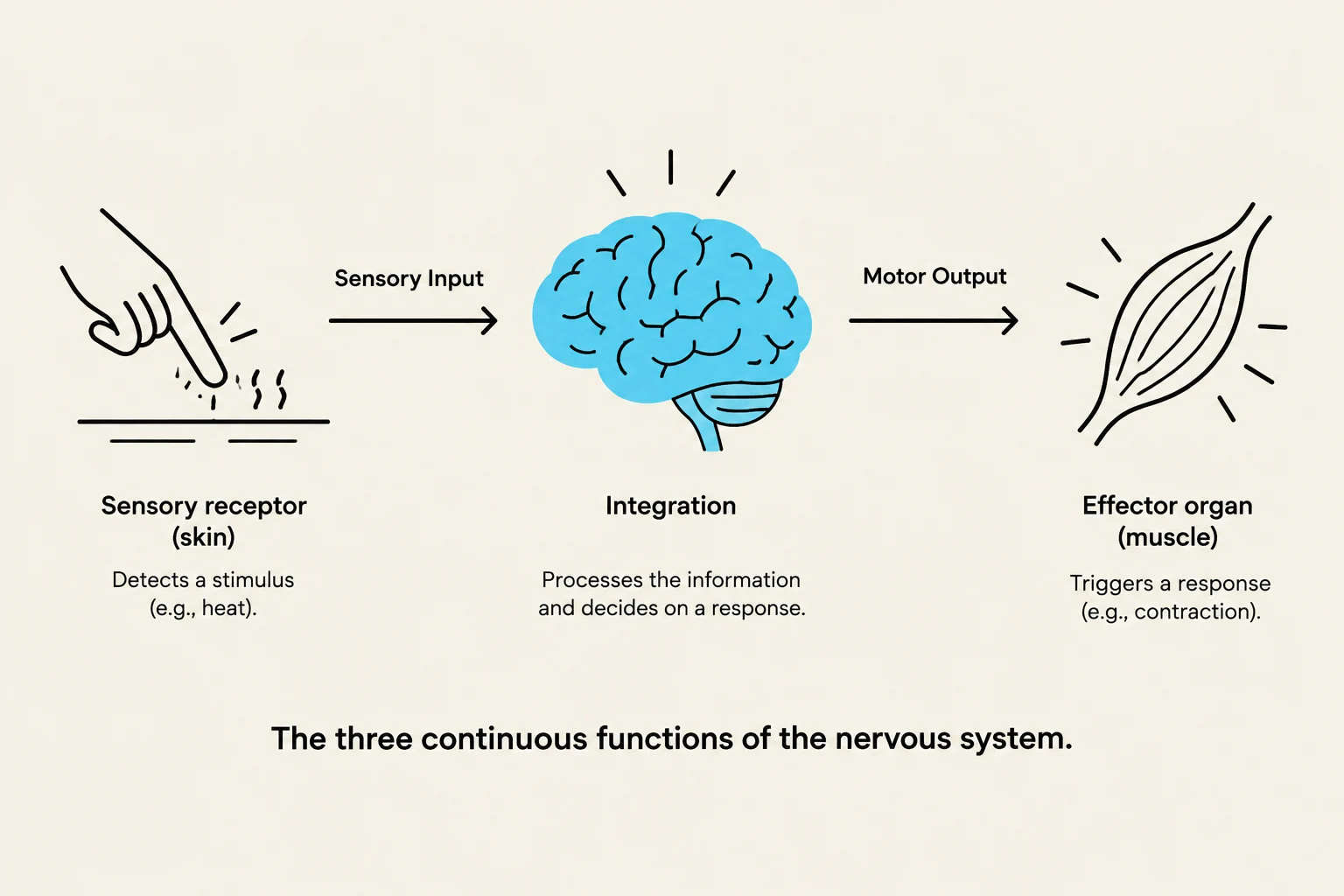
Diagram illustrating the three continuous functions of the nervous system: sensory input, integration, and motor output.
The Three Overlapping Functions
To understand how the nervous system works, it is helpful to view it through the lens of three continuous, overlapping functions:
Sensory Input: This is the gathering of information. Sensory receptors monitor changes occurring both inside the body (internal) and outside the body (external). This information is known as sensory input.
Integration: Once the information is gathered, it must be processed. Integration is the term for the process where the nervous system interprets the sensory input to make sense of the environment.
Motor Output: After the information is interpreted, the system must act. The nervous system dictates a response by activating effector organs (such as muscles or glands). This response is known as motor output.
Study Tip: Think of the nervous system as a computer. The sensory receptors are the keyboard and mouse (input), the integration is the CPU (processing), and the motor output is the monitor or printer (output).
Structural Organization: CNS and PNS
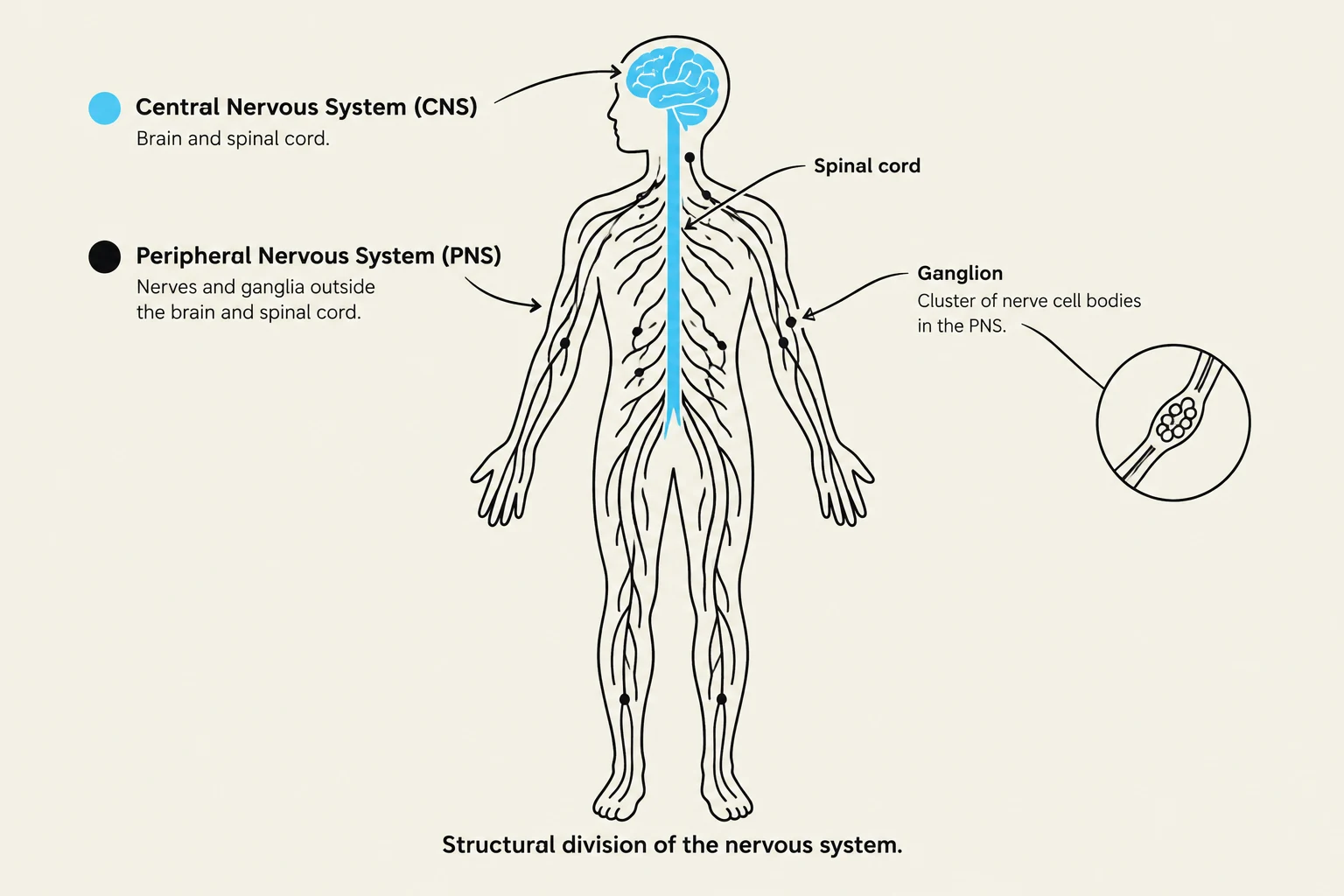
Diagram illustrating the structural division of the human nervous system, differentiating between the Central Nervous System (CNS) and the Peripheral Nervous System (PNS), with a magnified view of a ganglion.
The nervous system is structurally divided into two primary components: the Central Nervous System and the Peripheral Nervous System.
Central Nervous System (CNS)
The CNS is composed of the brain and spinal cord. It serves as the central integrating and command center for the entire body. All sensory information is sent here to be processed, and all motor commands originate here.
Peripheral Nervous System (PNS)
The PNS consists of all the nervous tissue located outside the CNS, including cranial nerves, spinal nerves, and ganglia. Ganglia are defined as clusters of neuronal cell bodies located outside the CNS. The primary role of the PNS is to act as a communication link, connecting all regions of the body to the central command center.
Functional Divisions: Sensory vs. Motor
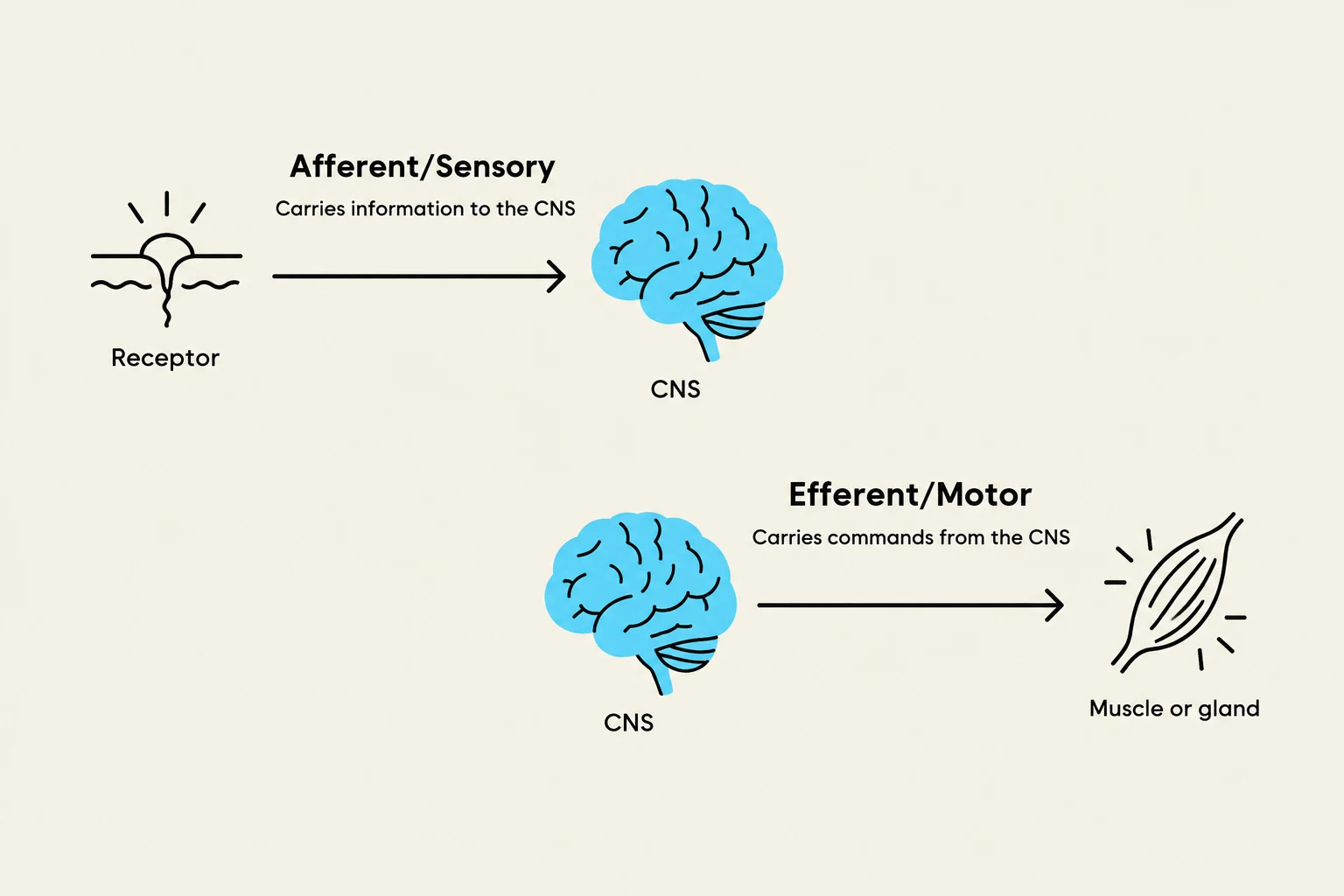
Diagram illustrating afferent (sensory) and efferent (motor) pathways in the nervous system, showing the flow of information from receptors to the CNS and commands from the CNS to muscles or glands.
While the structural division separates the "center" from the "lines," the functional division describes the direction in which electrical impulses travel.
Sensory (Afferent) Division
Sensory input involves afferent signals that travel from the sensory receptors through the nerve fibers of the PNS toward the CNS. This division is categorized by the type of region being monitored:
Somatic Sensory: This includes general senses such as touch, pain, vibration, pressure, and temperature. It also includes proprioception (the sense of body position and muscle stretch) and special senses like hearing, balance, vision, and smell.
Visceral Sensory: This involves monitoring the internal organs. It includes general visceral senses like stretch, pain, temperature, nausea, and hunger felt in the digestive, urinary, and reproductive tracts. It also includes special visceral senses like taste and smell.
Motor (Efferent) Division
Motor output involves efferent signals that carry instructions away from the CNS to the effector organs, such as muscles and glands. The motor division is further subdivided into two systems based on the type of control they exert:
1. Somatic Motor System
Often called the voluntary nervous system, the somatic motor system conducts impulses from the CNS to skeletal muscles. These movements are generally under our conscious control.
2. Visceral Motor System
Often called the autonomic nervous system, this system conducts involuntary impulses from the CNS to cardiac muscle, smooth muscle, and glands. The autonomic nervous system is responsible for maintaining homeostasis by mobilizing body systems during activity and conserving energy during rest.
System
Control Type
Target Organs
Somatic Motor
Voluntary
Skeletal Muscle
Visceral Motor (Autonomic)
Involuntary
Cardiac Muscle, Smooth Muscle, Glands
Summary of Nervous System Organization
To visualize how these components interact, consider the hierarchy of the system:
CNS (Brain & Spinal Cord)→ Integration & Command.
PNS (Nerves & Ganglia)→ Communication lines.
Sensory (Afferent)→ Receptors → PNS → CNS.
Motor (Efferent)→ CNS → PNS → Effectors (Muscles/Glands).
Exam Alert: If a question asks about the direction of an impulse, remember: Afferent signals Arrive at the CNS, while Efferent signals Exit the CNS.
Keep reading for free.
Create an account to finish this reading and make it part of your study routine.