Fundamentals of the Charge Description Master (CDM)
An in-depth explanation of the Charge Description Master (CDM), its essential data elements, capture methods (hardcoded vs. softcoded), maintenance strategies (the "three Cs"), and its strategic use in healthcare finance and practice management.
In the complex ecosystem of healthcare finance, the revenue cycle relies on a single, highly organized source of truth: the Charge Description Master (CDM). Often referred to simply as the "chargemaster," this comprehensive database serves as the central hub for every item, service, and supply that can generate a charge on a patient's account. Without an accurate CDM, a healthcare facility cannot effectively translate clinical care into financial reimbursement, making it a vital component for both regulatory compliance and financial stability.
The Core of the Database: Data Elements
Every billable service or supply within a hospital is entered into the CDM and assigned a unique internal charge code. This code acts as a bridge, linking the clinical activity to the specific data required for billing and tracking.
To ensure a complete picture of charges, the CDM must contain several key data elements:
Department or service number: Identifies where the service originated.
Charge code and description: The internal identifier and a human-readable explanation of the item or service.
Revenue codes: Used to categorize the type of service for insurance claims.
CPT or HCPCS codes: Standardized codes (Current Procedural Terminology or Healthcare Common Procedure Coding System) used for medical billing.
Modifiers: Additional codes that provide specificity to a procedure.
Price: The amount charged for the item or service.
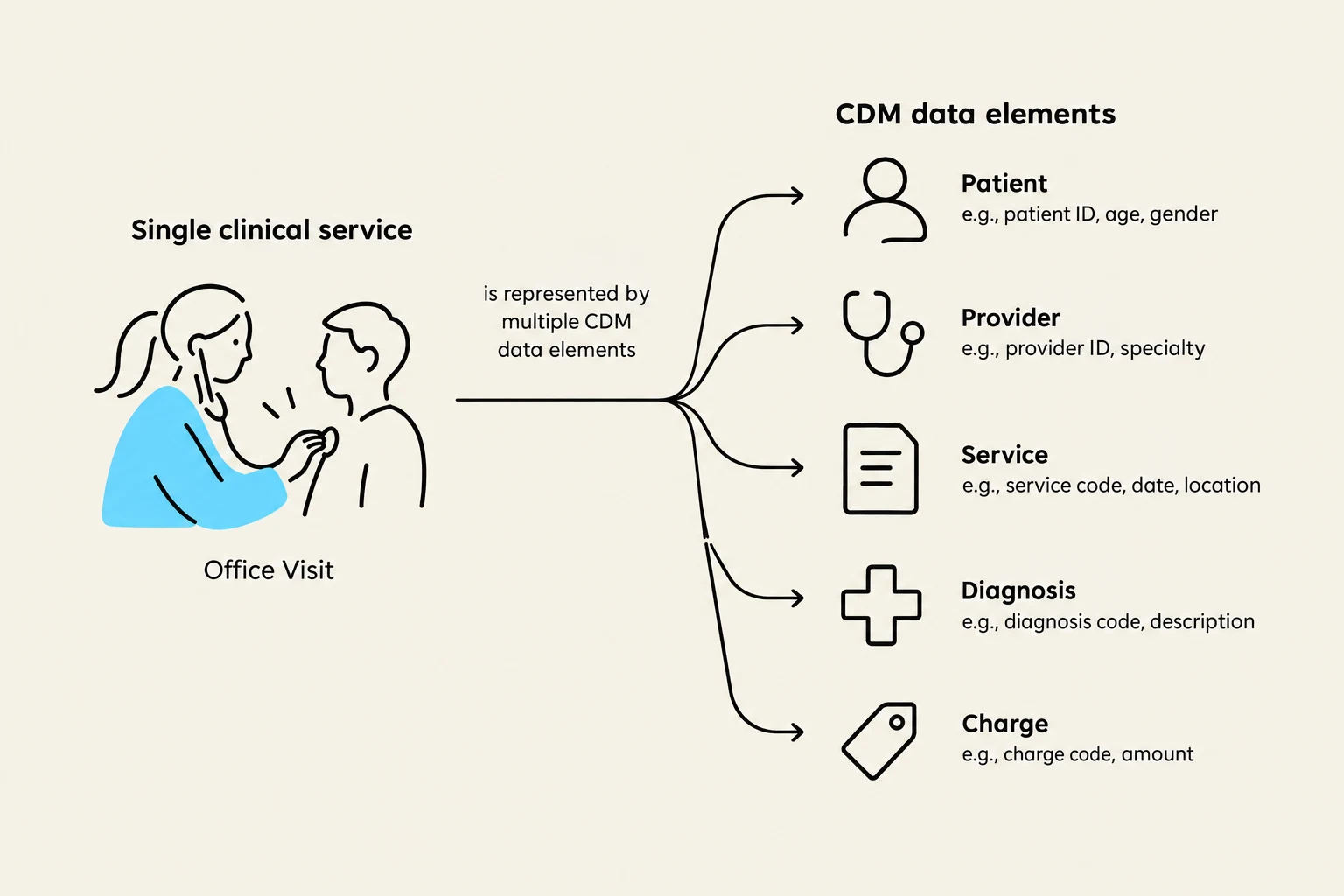
This diagram illustrates how a single clinical service, such as an office visit, is represented by multiple Clinical Data Model (CDM) data elements, including patient information, provider details, service specifics, diagnosis, and charge.
How Charges are Captured: Hardcoded vs. Softcoded
Once the CDM is established, the facility must "capture" charges as they occur. There are two primary methods for this, depending on the nature of the service:
Hardcoded Charges
Hardcoded charges are automated. When a patient receives a specific service, the charge code is entered into the computer system, which automatically links the service to the corresponding CPT or HCPCS code stored in the CDM. This is common for standardized items or routine procedures.
Softcoded Charges
Softcoded charges require human intervention. In this scenario, a medical coder manually applies the appropriate CPT procedure code using an encoder at the time of the patient's discharge. The code is then attached to the charge when the final bill is generated.
Streamlining with CPOE
To reduce errors and increase efficiency, many facilities integrate the CDM with Computerized Provider Order Entry (CPOE). Instead of using paper, faxes, or telephones, providers enter treatment instructions (such as medications, lab tests, or radiology orders) directly into a computer application. This system can automatically check for potential errors, such as drug interactions or allergies, and ensures that the orders are seamlessly integrated with patient data.
This diagram illustrates a healthcare billing process, showing how a provider's digital order is stored in a database and then sent to the financial system.
CDM Maintenance and the "Three Cs"
Because medical coding standards and supply costs are constantly shifting, the CDM requires continuous, vigilant maintenance. A comprehensive CDM can contain tens of thousands of items, making manual updates nearly impossible; therefore, providers rely on automated systems to stay proactive and catch errors before claims are submitted.
The American Academy of Professional Coders (AAPC) recommends that facilities follow the "three Cs" to ensure effective management:
Correct: Ensuring all coding and pricing is accurate.
Complete: Verifying that every billable item and service is included.
Compliant: Adhering to all regulatory updates and coding changes.
Exam Tip: Proper maintenance isn't just about getting paid; it's about risk management. A compliant CDM minimizes the risk of noncompliance and government audits.
Managing Change Requests
Changes to the CDM do not happen randomly. They are typically initiated via a CDM Change Request submitted by clinical department managers. Common reasons for these requests include:
Identification of an incorrect code.
Annual updates to CPT or HCPCS codes.
The introduction of new services or the discontinuation of old ones.
Price adjustments due to increased supply costs or new payer contract negotiations.
Oversight and Strategic Use
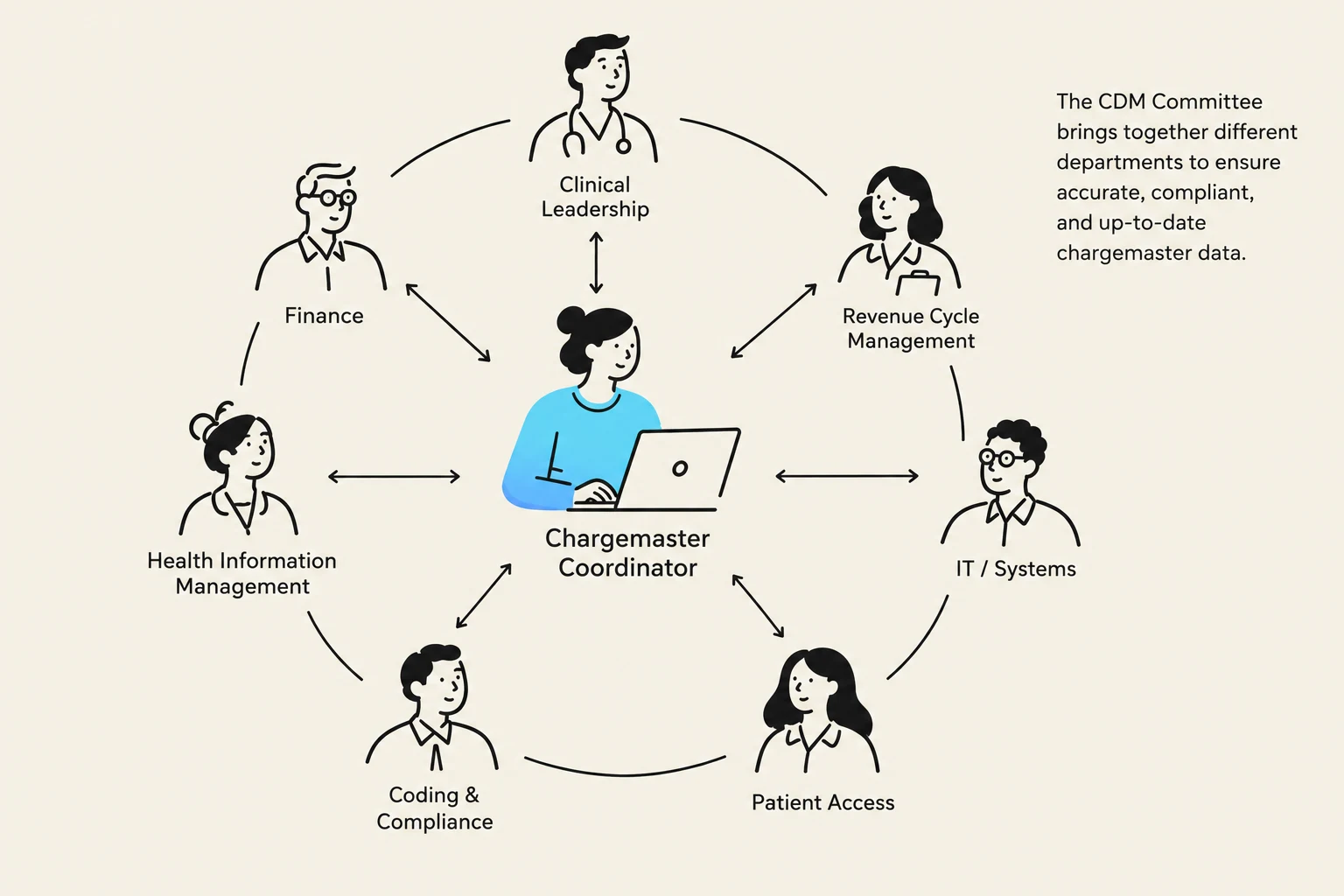
Managing a CDM is a multidisciplinary effort. Most hospitals centralize this oversight through a Chargemaster Coordinator (or Manager) who leads a CDM Committee. This committee includes representatives from various departments, such as Admissions, Compliance, Billing, IT, Health Information Management (HIM), and clinical areas like Pharmacy or Radiology.
Charge Capture Audits
To ensure the CDM remains effective, organizations perform regular charge capture audits. Best practices for these audits include:
Routine monitoring and auditing of clinical departments.
Root-cause investigations to identify why charge-capture variances occur.
Implementation of remediation processes to resolve current issues and prevent future ones.
Contract Negotiation and Practice Management
Beyond the daily billing cycle, the CDM is a powerful strategic tool. An organization's Advisory Board can use CDM data to analyze specific service lines and understand how they impact reimbursement structures. By understanding how clinical services correlate with claim reimbursement, the committee can negotiate more effectively with payers for better rates.
In smaller settings, such as physician offices, Practice Management Systems are used to manage this workflow. These systems help schedule appointments, capture charges, and perform audits to ensure no encounters are overlooked, ultimately leading to cleaner claims and faster payments.
This diagram illustrates the collaboration between various departments, coordinated by a Chargemaster Coordinator, to ensure accurate and up-to-date chargemaster data.
Keep reading for free.
Create an account to finish this reading and make it part of your study routine.