An introduction to the cell cycle, its phases (G1, S, G2, M, G0), DNA replication, cell division (mitosis and meiosis), and the regulation of the cycle through checkpoints and key proteins like P53.
The cell is the fundamental unit of life. To understand any organism—from a single-celled bacterium to a complex human being—one must first understand the metabolic processes and the life cycle of the individual cell. In humans, the body is composed of approximately 30 trillion eukaryotic cells, along with a vast microbiome of prokaryotic cells. These cells are not static; they are constantly undergoing a series of organized events known as the cell cycle to facilitate growth, development, and tissue regeneration.
The Phases of the Cell Cycle
The cell cycle is a continuous process that allows a single cell to replicate itself, resulting in the production of new daughter cells. While the cycle is often viewed as a single loop, it is composed of distinct stages: the Interphase (comprising G1, S, and G2) and the M phase (mitosis or meiosis).
G1 Phase: Growth and Decision Making
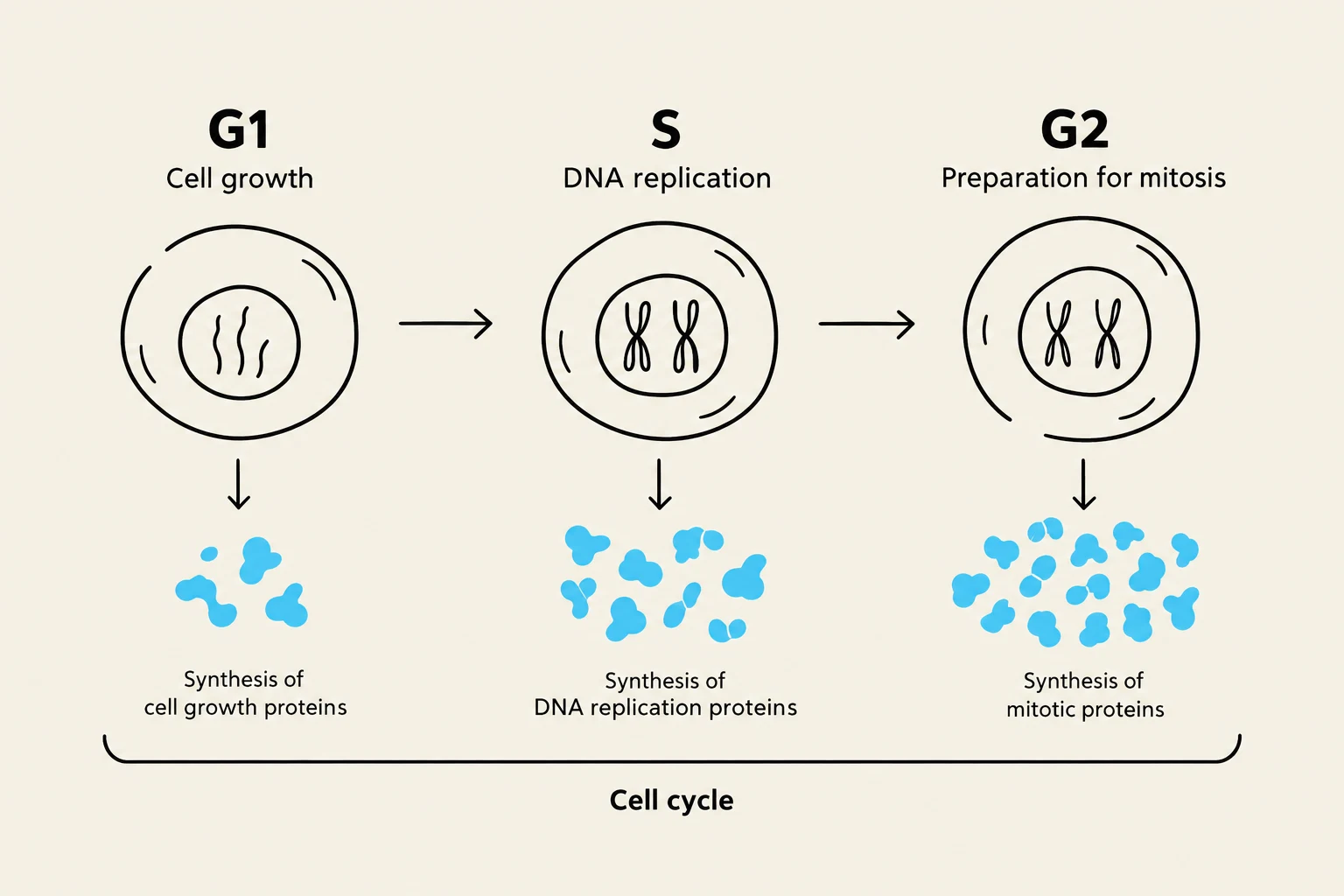
The G1 phase (Gap 1) is a preparatory stage where the cell grows and performs its specialized functions. During this time, the cell synthesizes proteins, produces RNA, and accumulates the necessary ATP to fuel the energy-demanding processes ahead. Crucially, G1 is also a period of "decision making" where cells undergo differentiation—the process of converting into specific cell types like heart, lung, or liver cells by activating specific genes.
S Phase: DNA Replication
The S phase (Synthesis) is the stage where the cell replicates its genetic material. Because the goal of the cycle is to produce two daughter cells with identical genetic information, the cell must synthesize a complete copy of its DNA. Without this step, the resulting daughter cells would not have the correct amount of DNA to function.
G2 Phase: Final Preparations
Following DNA replication, the cell enters the G2 phase (Gap 2). This is another preparatory gap where the cell ensures it is large enough to divide and synthesizes the specific proteins required for the intricate process of cell division.
The cell cycle illustrates the stages of cell growth, DNA replication, and preparation for mitosis, along with the synthesis of relevant proteins.
M Phase: Cell Division
The M phase is the actual process of division. This can occur via two different pathways:
Mitosis: Results in two genetically identical daughter cells, typically used for growth and tissue repair.
Meiosis: A specialized form of division that results in non-daughter cells (gametes) with different ploidy levels.
Ploidy and Chromosomal Changes
When studying the M phase, it is vital to focus on chromosomal-level changes rather than just the mechanical structures like spindles or microtubules. Students must track how the number of chromosomes and the number of chromatids change during division.
A key concept here is ploidy, which refers to the number of sets of chromosomes in a cell.
Euploidy: The state of having a normal number of chromosomes.
Aneuploidy: A condition where cells have an abnormal number of chromosomes (either more or less than the standard N).
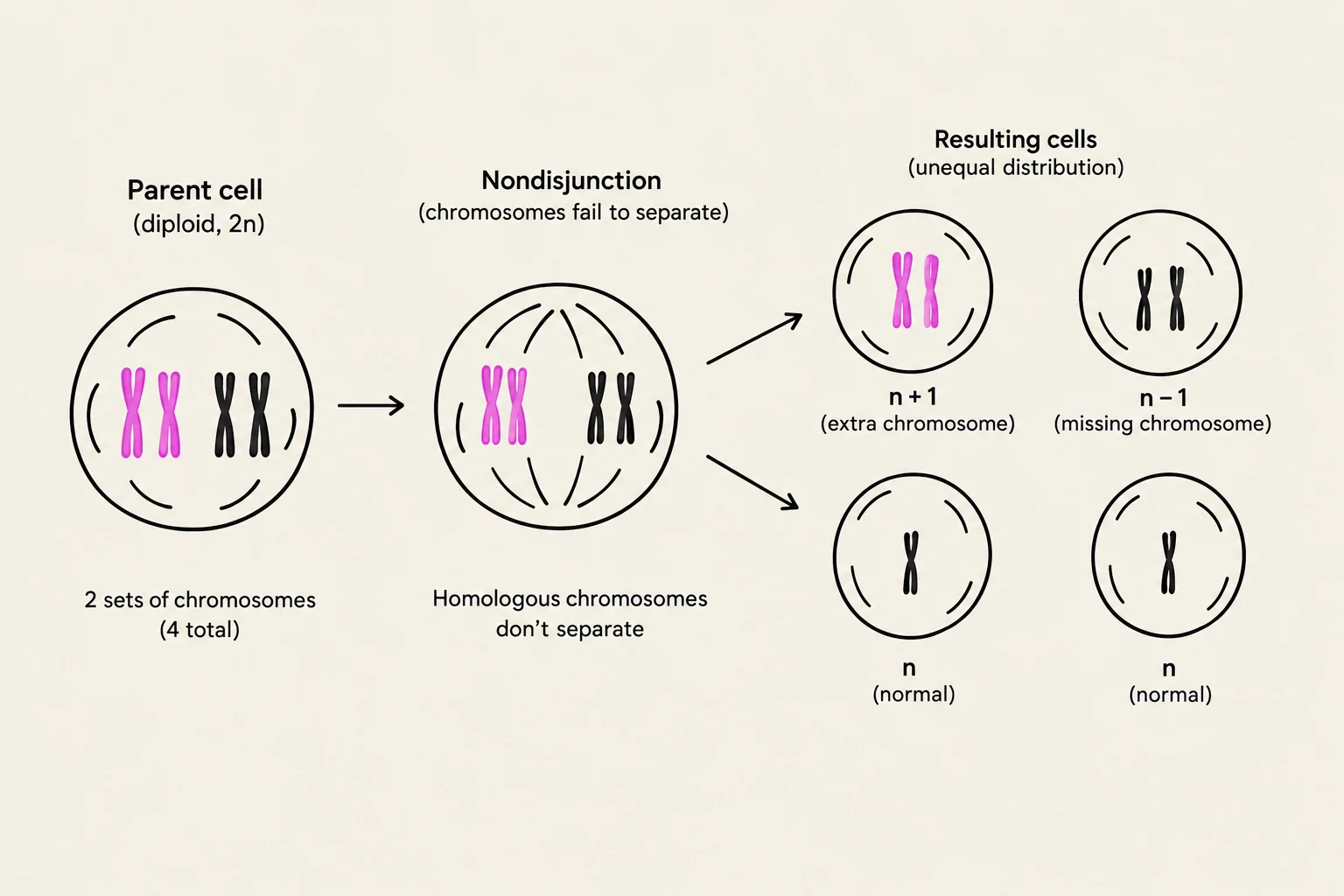
A common cause of aneuploidy is nondisjunction, which occurs when chromosomes or chromatids fail to separate properly during division. For example, Down syndrome is a result of aneuploidy caused by nondisjunction during meiosis.
Diagram illustrating nondisjunction during cell division, where homologous chromosomes fail to separate, leading to unequal distribution of chromosomes in the resulting cells.
The G0 Phase and Cell Turnover
Not all cells are constantly dividing. Many cells exit the active cell cycle and enter the G0 phase. This state can be reversible or irreversible depending on the cell type.
Reversible G0: Cells like lymphocytes (white blood cells) or liver cells may sit in G0 but can re-enter the cell cycle when they receive specific signals, such as the presence of a pathogen or tissue damage.
Irreversible G0: Highly specialized cells, such as neurons (brain cells) and cardiomyocytes (heart cells), are often permanently arrested in G0. This lack of regeneration is why neurodegenerative diseases and heart damage are so difficult to treat.
The rate at which cells are replaced is known as cell turnover. For instance, skin and blood cells have a very high turnover rate, whereas brain cells have almost none.
Regulation: Checkpoints and the "Guardian of the Genome"
To prevent uncontrolled division—which leads to cancer—the cell cycle is governed by strict checkpoints. These are stages where specific proteins ensure the cell is ready to proceed.
Positive and Negative Regulators
The cell communicates through a molecular "language" of proteins:
Positive Regulators: These act as the "green light," driving the cell forward. The primary players are Cyclins and Cyclin-Dependent Kinases (CDKs). When they combine and are activated by phosphorylation, they trigger the target proteins necessary for the next phase.
Negative Regulators: These act as the "red light" or stop signs.
The Role of P53
The most critical negative regulator is the protein P53, often called the "Guardian of the Genome". P53 is a transcription factor that monitors DNA integrity.
If DNA damage is detected, the following sequence occurs:
P53 is activated.
P53 binds to the promoter of the P21 gene, triggering its transcription.
The P21 protein is produced and binds to the active Cyclin-CDK complex, effectively turning the "green light" into a "red light" and arresting the cell cycle.
If the damage is repaired, the cell proceeds; if the damage is irreparable, P53 initiates apoptosis (programmed cell death) to prevent the mutation from being passed to daughter cells.
Exam Tip: In cancer cells, the P53 protein is frequently mutated or knocked out. Without this "guardian," the cell loses its ability to stop at checkpoints, allowing damaged DNA to be replicated uncontrollably, leading to tumor formation.
Summary Table: Cell Cycle Overview
Phase
Name
Primary Function
G1
Gap 1
Growth, protein synthesis, and differentiation decisions
S
Synthesis
DNA replication (doubling the genome)
G2
Gap 2
Final growth and preparation for division
M
Mitosis/Meiosis
Physical division of the cell and chromosomes
G0
Resting Phase
Exit from the cycle; can be permanent or reversible
Keep reading for free.
Create an account to finish this reading and make it part of your study routine.