Explores the biological processes of sensation and perception, including the haptic system (touch, temperature, pain) and the gustatory system (taste and flavor).
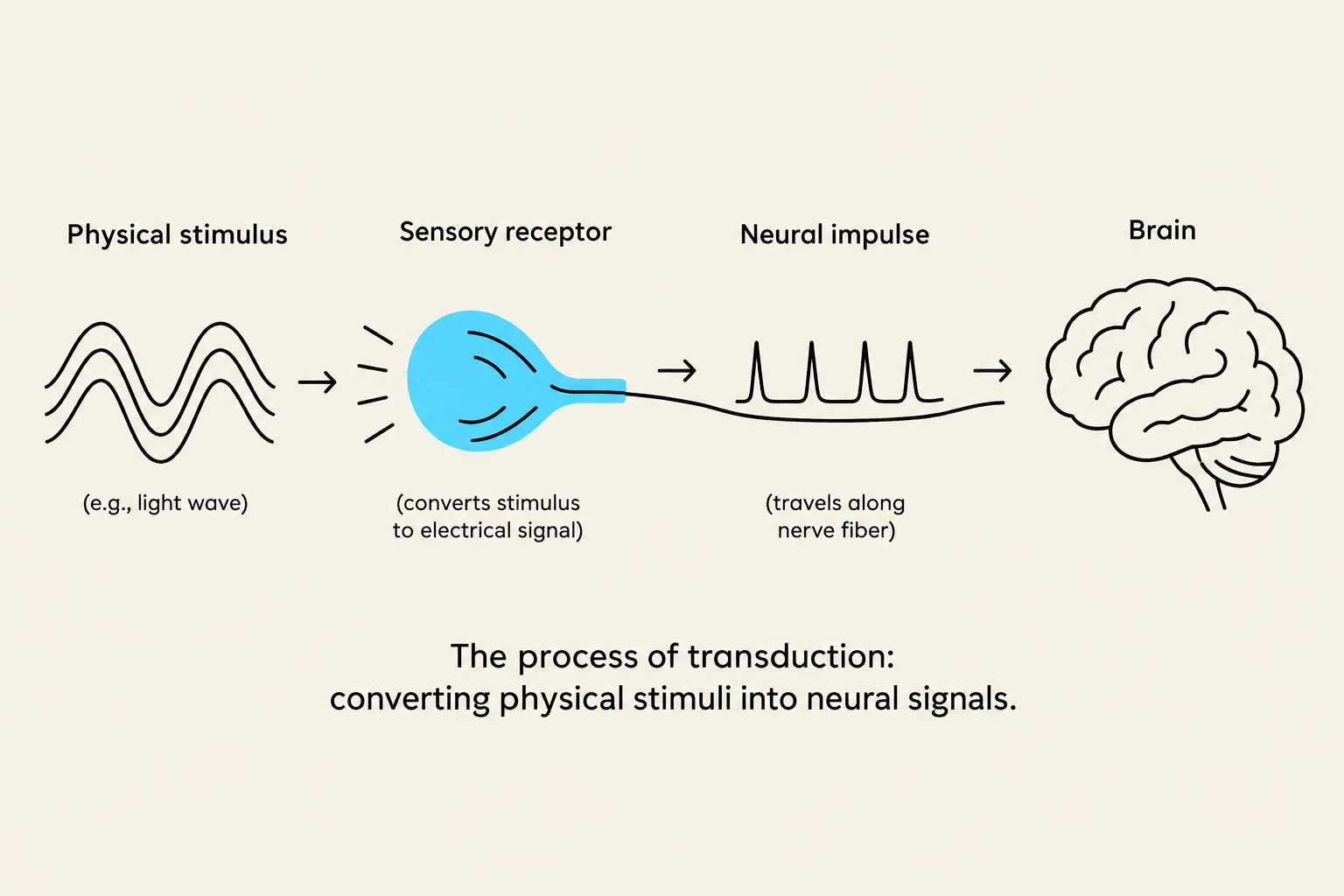
To understand how we interact with the world, we must first distinguish between two fundamental psychological processes: sensation and perception. Sensation is the biological process where sensory receptors detect physical stimuli from the environment—such as light, sound waves, or pressure—and convert them into neural signals. This conversion process is known as transduction. Perception, on the other hand, is the higher-level process where the brain organizes and interprets these raw neural signals to create a meaningful experience, such as recognizing a rose by its color and shape.
Diagram illustrating the process of transduction, where physical stimuli are converted into neural signals that travel to the brain.
While our senses provide a gateway to reality, they do not always provide an exact representation of it. Our perception is shaped by how our specific nervous system processes information, meaning different species can experience the exact same environment in vastly different ways.
The Haptic System: Touch and Somatosensation
The haptic system refers to the sensory system involved in touch and tactile perception. Our skin is equipped with various specialized receptors that respond to different mechanical and thermal stimuli.
Pressure and Mechanical Stimulation
Pressure receptors are responsible for detecting physical contact, indentation, and vibrations. These receptors allow us to perform everyday tasks, such as feeling the texture of a fabric, detecting the weight of a phone in our hand, or sensing a gentle touch on our arm.
Thermoreception: Warmth and Cold
Temperature perception is handled by thermoreceptors, which respond to changes in skin temperature.
Warmth receptors respond to temperatures perceived as warm.
Cold receptors respond to temperatures perceived as cool or cold.
Nociception and the Perception of Pain
Pain is a vital protective mechanism. It is mediated by specialized sensory neurons called nociceptors, which respond to potentially damaging stimuli. When you step on a sharp object or touch a hot pan, nociceptors send signals to the brain to warn of possible injury. While the physical stimulus is the trigger, the actual perception of pain is a complex process involving extensive processing within the brain.
Itching and the Perception of Wetness
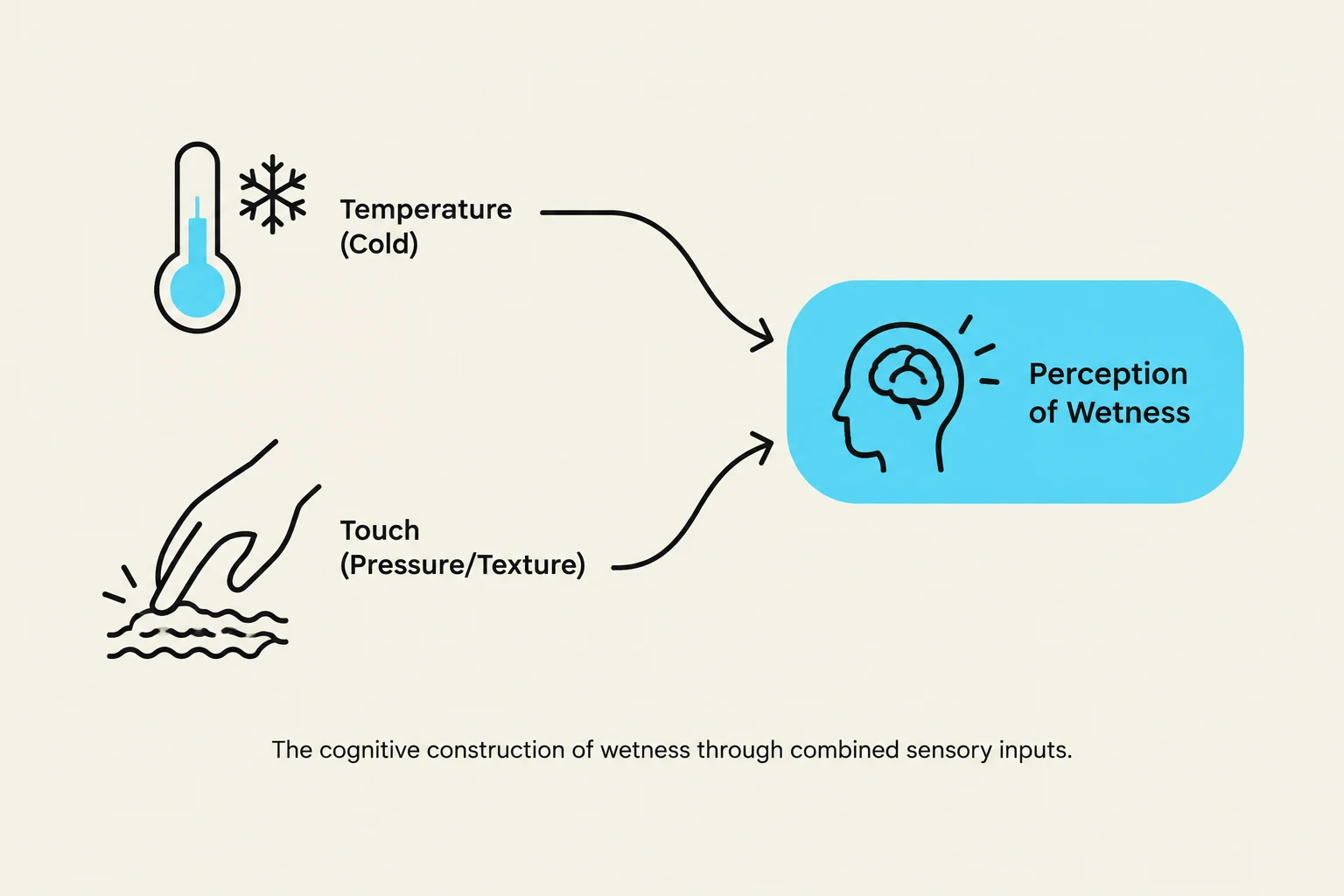
This diagram illustrates how the perception of wetness is a cognitive construction influenced by sensory inputs such as temperature and touch.
Some sensory experiences are not the result of a single receptor type but rather the interaction of multiple pathways:
Itching: This can be triggered by chemical signals. For instance, chemicals in mosquito saliva can activate specific itch-related nerve pathways.
Wetness: Interestingly, humans do not have a single dedicated "wetness receptor". Instead, our perception of wetness is a cognitive construction based on a combination of temperature (cold) and touch (pressure/texture) signals.
Exam Tip: The Thermal-Grill Illusion
Sensory experiences often depend on the interaction of multiple signals rather than one receptor operating alone. The thermal-grill illusion occurs when warm and cold stimuli are applied together, creating a sensation of intense burning heat even if the temperatures are not dangerous.
The Gustatory System: Taste and Flavor
The gustatory system is responsible for detecting chemicals dissolved in saliva.
The Five Basic Tastes
There are five widely recognized basic tastes detected by receptor cells in the taste buds:
Sweet: Often associated with energy-providing sugars.
Sour: Associated with acidity, such as in lemons.
Salty: Associated with dissolved salts like sodium chloride.
Bitter: Often serves as a warning signal for potentially harmful substances.
Umami: A savory, meaty taste associated with glutamate, commonly found in mushrooms, tomatoes, and aged cheeses.
Debunking the Tongue Map
A common misconception is the "tongue map," which suggests that different regions of the tongue are exclusively responsible for different tastes (e.g., sweet at the tip, bitter at the back). This is false. Most regions of the tongue that contain taste buds can detect multiple basic tastes, though sensitivity may vary slightly by location.
The Interaction of Taste and Smell
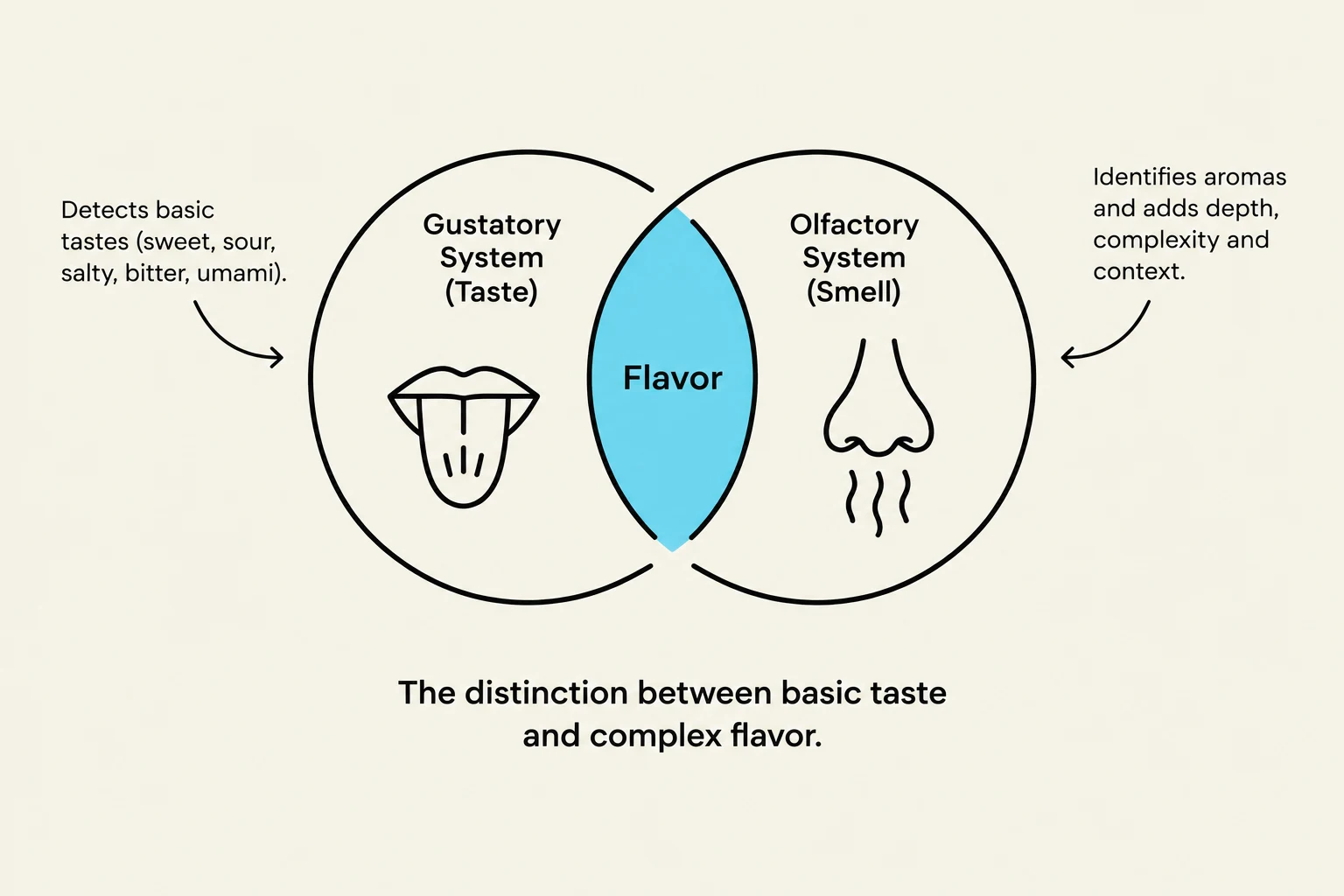
This diagram illustrates the distinction between basic taste, detected by the gustatory system, and complex flavor, which also incorporates olfactory input.
It is crucial to distinguish between taste and flavor. Taste refers to the basic sensations detected by the tongue, while flavor is a much more complex experience. Flavor is the result of the interaction between the gustatory system (taste) and the olfactory system (smell).
For example, when you eat chocolate, your taste receptors detect the basic chemical components, but your olfactory system detects the aromatic compounds that make chocolate smell distinctive. This explains why food often seems tasteless when you have a cold and your sense of smell is impaired.
Biological Note: Salivation
When you encounter acidic (sour) foods, your salivary glands increase production. This helps dilute the substance, dissolve chemicals for better receptor detection, and protect the tissues of the mouth.
Summary Table of Sensory Systems
System
Primary Stimulus
Key Function/Mechanism
Haptic
Pressure, Temp, Pain
Detects mechanical and thermal changes via skin receptors
Gustatory
Chemicals in saliva
Detects five basic tastes: sweet, sour, salty, bitter, umami
Olfactory
Airborne chemicals
Detects odors; strongly contributes to flavor perception
Keep reading for free.
Create an account to finish this reading and make it part of your study routine.