Fundamentals of Nutrition Assessment and Developmental Needs
An overview of nutritional status, its assessment methods, and how nutritional requirements change across the lifespan from infancy to aging adulthood.
Nutrition is more than just the food we eat; it is a complex balance between what the body receives and what it requires to function, grow, and repair itself. Understanding nutritional status is essential for healthcare providers to identify risks, prevent chronic disease, and support healthy development across the human lifespan.
Understanding Nutritional Status
Nutritional status is defined as the degree of balance between nutrient intake and the body's specific requirements. This status is influenced by a variety of factors, including physiological needs, psychosocial environment, developmental stage, culture, and economic status.
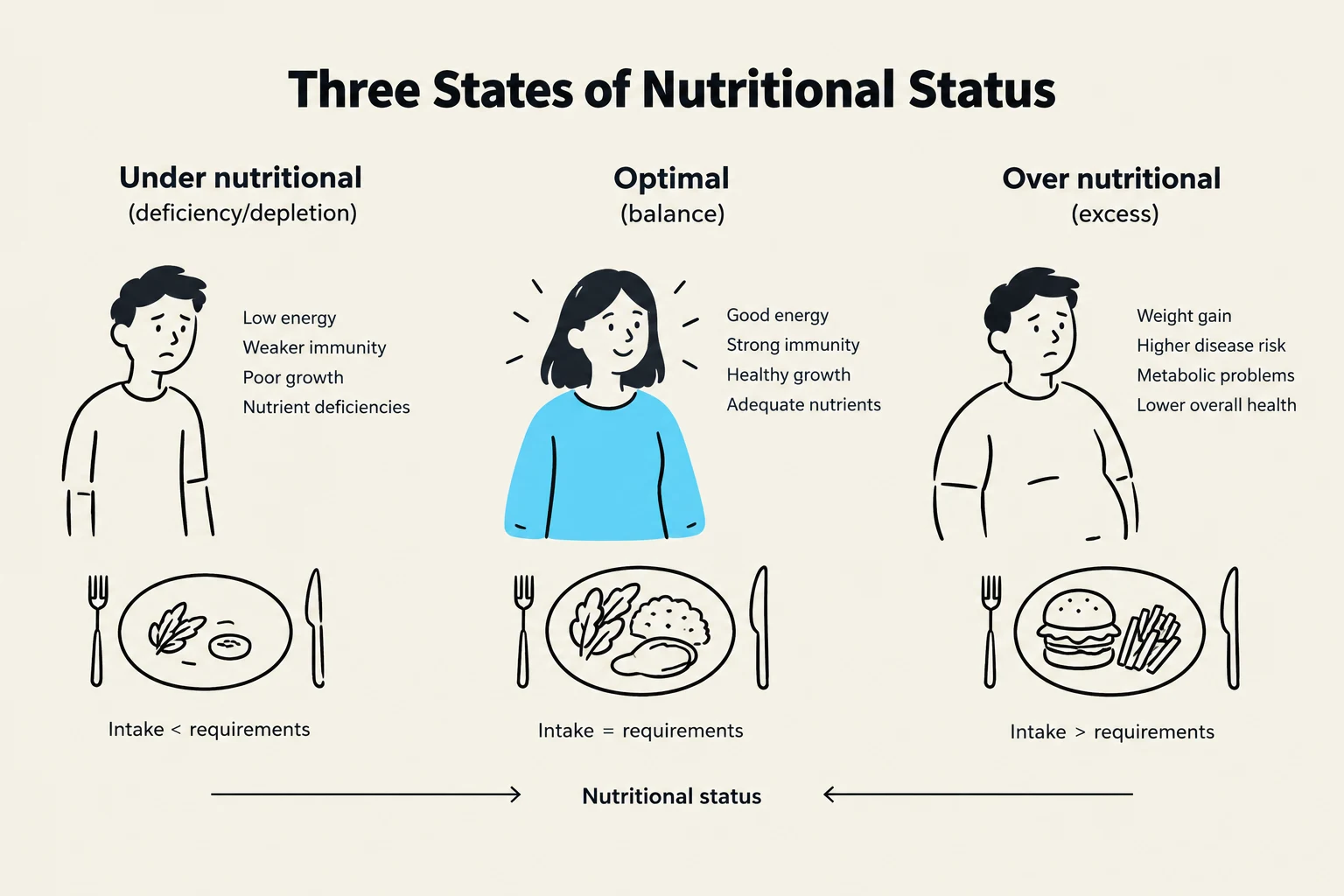
Clinicians generally categorize nutritional status into three distinct states:
Optimal Nutritional Status: This is achieved when sufficient nutrients are consumed to support day-to-day body needs and any increased metabolic demands caused by growth, pregnancy, or illness.
Under Nutritional Status: This occurs when nutritional reserves are depleted or when the intake of nutrients is inadequate to meet daily needs or added metabolic demands.
Over Nutritional Status: This is caused by the excessive consumption of nutrients, specifically calories, sodium, and fat, beyond what the body requires.
This diagram illustrates the three states of nutritional status: undernutrition (deficiency/depletion), optimal nutrition (balance), and overnutrition (excess), along with their associated characteristics and dietary intake relative to requirements.
Developmental Competence Across the Lifespan
Nutritional requirements are not static; they shift significantly as a person moves through different stages of life.
Infants and Children
The period from birth to 4 months represents the most rapid growth phase in the human life cycle. During this time, infants typically double their birth weight by 4 months and triple it by 1 year. To support this growth, breastfeeding is highly recommended. Breast milk is ideally formulated to promote normal development and provides natural immunity through IgA antibodies.
Adolescence
Adolescence is marked by rapid physical growth and significant endocrine and hormonal changes. Because of the demand for bone growth and increasing muscle mass, there is a heightened requirement for calories, protein, calcium, and iron. Because these needs are often too high to be met by just three meals a day, nutritious snacks become a vital component of an adolescent's diet.
Pregnancy and Lactation
During pregnancy, nutrient intake must increase to support the synthesis of both maternal and fetal tissues. The Centers for Disease Control (CDC) recommends specific weight gain ranges based on a woman's pre-pregnancy Body Mass Index (BMI):
Pre-pregnancy BMI
Recommended Weight Gain
Underweight
28–40 lbs
Normal weight
25–35 lbs
Overweight
15–25 lbs
Obese
11–20 lbs
Adulthood and Metabolic Syndrome
In adulthood, growth and nutrient needs generally stabilize. However, lifestyle factors—such as smoking, stress, lack of exercise, and diets high in saturated fats, salt, and sugar—can lead to chronic diseases. A major concern in adults is Metabolic Syndrome, which increases cardiac risk. A diagnosis is made if 3 of the following 5 biomarkers are present:
Increased blood pressure (Hypertension)
Increased fasting plasma glucose
Increased triglycerides
Increased waist circumference
Low HDL (High-density lipoprotein)
The Aging Adult
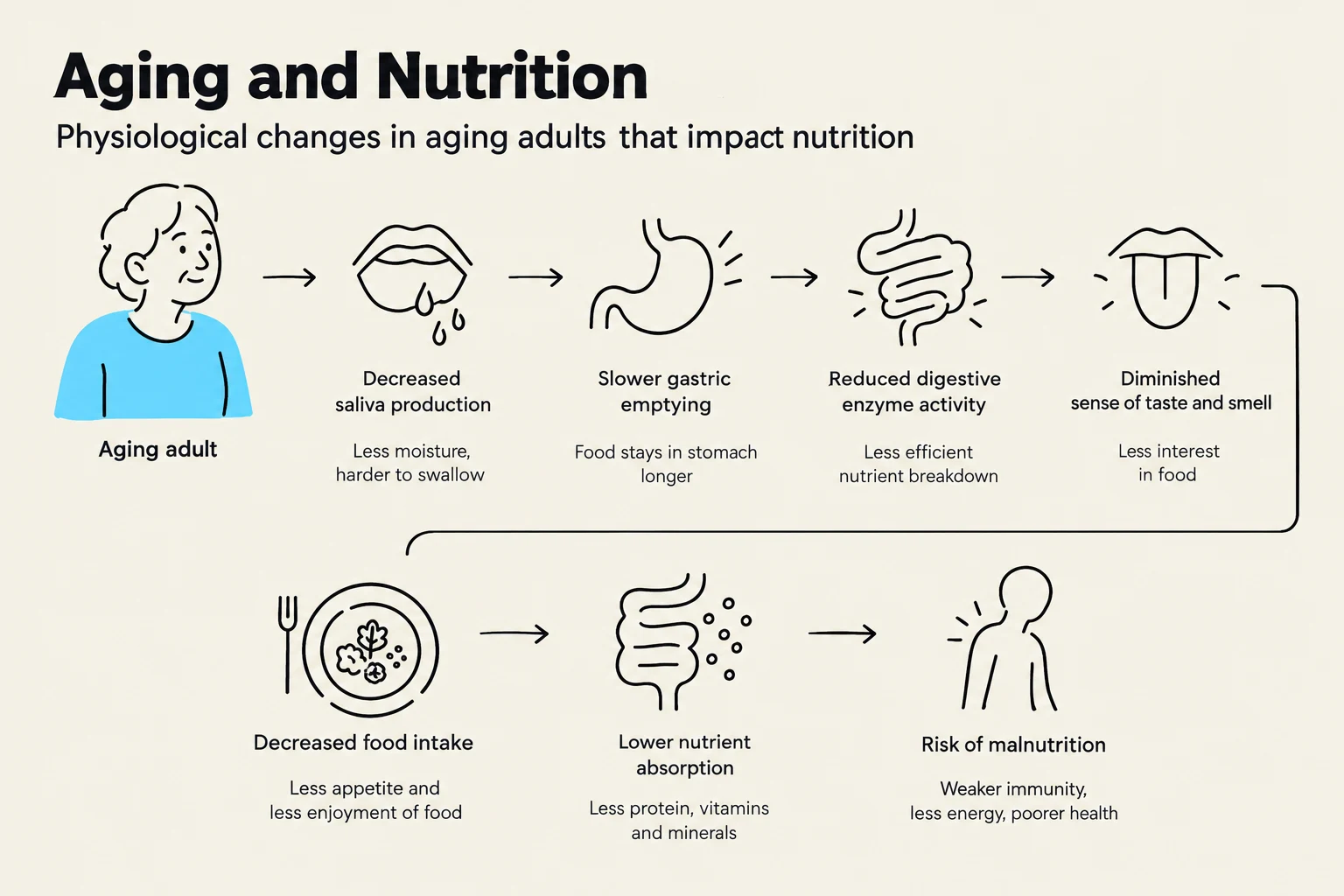
Older adults face a unique risk of both undernutrition and overnutrition. Risk factors for malnutrition include social isolation, poverty, and polypharmacy (the use of multiple medications). Furthermore, physiological changes such as decreased saliva production, poor dentition (teeth), and slowed gastrointestinal motility can directly impair nutritional status.
This diagram illustrates physiological changes in aging adults that impact nutrition, including decreased saliva production, slower gastric emptying, reduced digestive enzyme activity, diminished sense of taste and smell, decreased food intake, lower nutrient absorption, and increased risk of malnutrition.
Obesity: Genetics and Assessment
Obesity is a growing global health concern, with projections suggesting 1 in 5 adults worldwide may have obesity by 2025. It is categorized into two types:
Monogenic Obesity: Characterized by early-onset and severe symptoms.
Polygenic Obesity: Resulting from a complex interaction of genetic and environmental factors.
Measuring Body Mass Index (BMI)
BMI is a practical marker used to assess weight status relative to height. The formulas used are:
BMI=height (m)2weight (kg)
BMI=height (inches)weight (lbs)×703
The classification of weight status differs between adults and children:
Adults: Overweight is defined as a BMI≥25; Obesity is defined as a BMI≥30.
Children: Overweight is determined by being at or above the 85th percentile on age- and gender-specific BMI charts.
Clinical Assessment Methods
To accurately determine a patient's nutritional status, clinicians use a combination of screening, dietary history, and objective measurements.
Dietary Intake Methods
Several tools exist to collect data on what a patient is eating:
24-Hour Recall: The patient recalls everything eaten in the last 24 hours. It is specific but relies heavily on memory.
Food Frequency Questionnaire: Collects data on how often certain foods are eaten over weeks or months.
Food Diaries: The patient records food intake in real-time, usually for three days.
Exam Tip: When evaluating a food diary, remember that the most accurate results come from patients who record information immediately after eating to avoid inaccuracies.
Anthropometric and Laboratory Data
Anthropometric measures include weight, BMI, waist-to-hip ratio, and arm span. Laboratory tests provide the "objective" evidence needed for a clinical diagnosis. Key labs include:
Albumin: To assess protein status.
HbA1c: To reflect average blood glucose levels over the prior 2–3 months.
Hematocrit (Hct) and Hemoglobin (Hb): To assess for anemia.
Lipid Panel: Including total cholesterol, HDL, LDL, and triglycerides.
Keep reading for free.
Create an account to finish this reading and make it part of your study routine.