An overview of the biological processes of nutrition and digestion, including energy balance, the digestive pathway, nutritional status assessment (BMI), and nursing interventions for therapeutic diets and feeding methods.
Nutrition and digestion are fundamental biological processes that convert food into the energy and essential substances required for bodily function, growth, and healing. For healthcare professionals, understanding these processes is vital because nutritional status directly impacts a client's ability to recover from illness and maintain a high quality of life. This article explores the mechanics of how the body processes food, the delicate balance of energy, and the critical role of nursing interventions in managing nutritional needs.
Energy Balance: Caloric Intake and Expenditure
This diagram illustrates the relationship between caloric intake and energy expenditure, showing three scenarios: balanced intake and expenditure, excess intake, and excess expenditure.
At the core of nutritional health is the relationship between caloric intake (the energy consumed through food) and energy expenditure (the energy the body uses for processes like breathing, walking, and running).
Weight Management: A balance between these two factors determines weight stability. An excess of intake relative to expenditure leads to weight gain, while an intake lower than expenditure leads to weight loss.
Clinical Significance: Nurses must monitor for unintentional changes in weight. Unintentional weight loss may indicate an undiagnosed health issue, while unintentional weight gain can also signal underlying medical problems.
Nutrient Density: To maintain a healthy weight, clients should focus on "nutrient-rich" foods rather than "empty calories" (foods high in energy but low in vitamins and minerals, such as processed snacks).
Clinical Tip: Even a modest weight loss of 5% to 10% of total body weight can significantly improve clinical markers such as blood pressure, blood glucose, and cholesterol levels.
The Physiology of Digestion
Diagram of the human digestive system, illustrating the path of food from the mouth through the esophagus, stomach, small intestine, and large intestine to the rectum, with associated organs like the liver, gallbladder, and pancreas.
Digestion is the physiological process of breaking down food into simple substances that can be absorbed into the bloodstream as nutrients or eliminated as waste. This process is driven by peristalsis, which refers to the involuntary muscular contractions that propel food through the digestive tract.
The Digestive Pathway
The process involves a specialized sequence of organs working in coordination:
Mouth: The process begins here, where saliva initiates the decomposition of food.
Esophagus: A hollow tube that uses muscular contractions to move food from the mouth to the stomach.
Stomach: An organ that holds food and continues the breakdown process using acids and enzymes.
Small Intestine: The primary site for further breakdown and the location where the majority of nutrient absorption into the bloodstream occurs.
Large Intestine: This organ removes water and electrolytes from the remaining food particles and utilizes beneficial bacteria to convert the residue into feces.
Rectum and Anus: The rectum serves as the storage area for feces, which is eventually expelled through the anus.
Supporting Organs
Several organs facilitate chemical digestion and metabolism without food passing directly through them:
Liver: Filters toxins from the blood and produces bile, which is essential for breaking down carbohydrates, proteins, and fats.
Gallbladder: Acts as a storage sac that releases bile into the digestive tract when needed.
Pancreas: Plays a critical role in sugar metabolism by producing insulin, a hormone that regulates blood glucose.
Assessing Nutritional Status
A client's nutritional status can be determined by their physical appearance, weight, and clinical measurements.
Body Mass Index (BMI)
Nurses often use BMI to categorize a client's weight relative to their height. The formula for calculating BMI is:
BMI=(height in inches2weight in pounds)×703
Example Calculation:
A client is 5 feet 4 inches (64 inches) tall and weighs 170 lbs.
Calculate height squared: $64 \times 64 = 4096$
Divide weight by height squared: 4096170≈0.0415
Multiply by the conversion factor: 0.0415×703=29.17
BMI Categories:
Underweight: < 18.5
Normal weight: 18.5 – 24.9
Overweight: 25 – 29.9
Obesity:≥ 30
Note: BMI may not be accurate for athletes, as muscle weighs more than fat, potentially overestimating their body fatness.
Signs of Inadequate Nutrition
Nurses should assess for clinical manifestations of malnutrition, which include:
Low body weight and decreased muscle/fat stores.
Physical signs: Dry skin, brittle hair, hair loss, and edema (swelling) in the face or abdomen.
Systemic signs: Weakness, fatigue, irritability, and frequent infections.
Nursing Interventions and Clinical Care
Nurses play a pivotal role in ensuring clients meet their nutritional requirements through monitoring, education, and direct intervention.
Therapeutic Diets and Feeding Methods
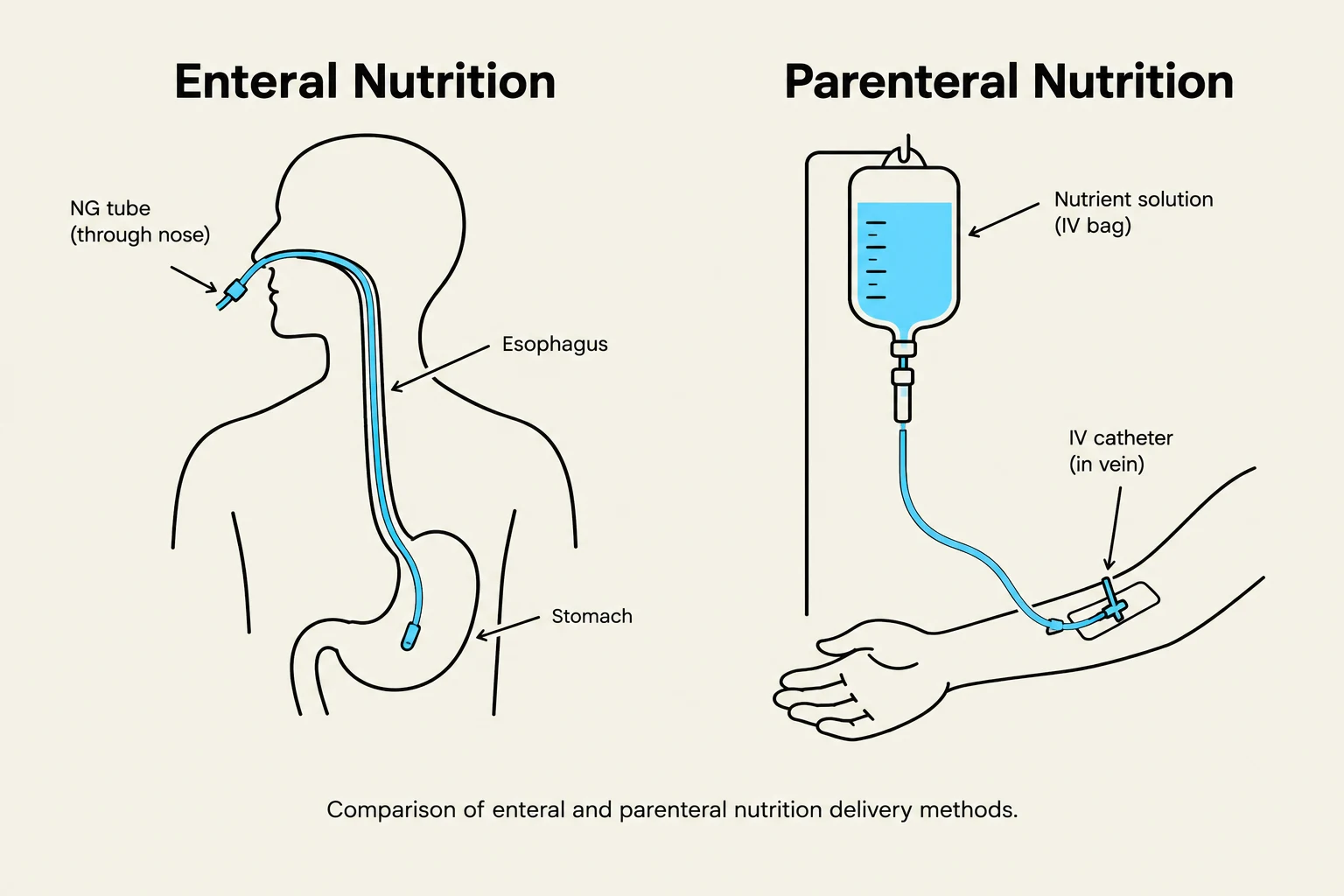
Comparison of enteral and parenteral nutrition delivery methods.
When oral intake is insufficient or unsafe, nurses may manage different types of nutrition:
Therapeutic Diets: Prescribed diets to manage specific health issues (e.g., low-sodium diets for hypertension).
Enteral Nutrition: Delivery of nutrients via a tube into the GI tract (e.g., Nasogastric (NG) tubes, Gastrostomy (G-tubes), or Nasojejunal (NJ) tubes). This is the preferred method if the GI tract is functional.
Parenteral Nutrition: Intravenous (IV) administration of nutrients for clients whose GI systems cannot function or absorb nutrients.
Safety and Monitoring
Aspiration Precautions: For clients with dysphagia (difficulty swallowing), nurses must implement precautions to prevent food or liquid from entering the lungs, which can cause pneumonia or death. This includes proper client positioning and the use of thickened liquids.
Glucose Monitoring: For clients receiving parenteral nutrition or those with diabetes, frequent blood glucose checks are essential to prevent hypoglycemia (low blood sugar) or hyperglycemia (high blood sugar).
Assisting with Eating: Nurses should tailor assistance to promote as much independence as possible while ensuring the client receives adequate calories.
Exam Tip: If a client is experiencing hypoglycemia (blood glucose < 70 mg/dL), the immediate goal is to provide approximately 15g of carbohydrates (e.g., 4 oz of juice or glucose tablets) and recheck the level in 15 minutes.
Keep reading for free.
Create an account to finish this reading and make it part of your study routine.