


Understanding the mechanics of explosives and the classification of military ordinance is a foundational requirement for explosive ordnance disposal (EOD) and safety professionals. Whether dealing with standardized military munitions or unpredictable improvised devices, the ability to categorize threats based on their delivery method, chemical sensitivity, and reaction speed is critical for life-saving decision-making.
Military Ordinance Categories
Military ordinance is primarily classified by its method of delivery. Identifying these categories helps technicians predict how a device might be triggered or how it might behave upon impact.
- Dropped: Aerial bombs and sub-munitions, such as cluster bomblets. These often feature fin stabilization, suspension lugs, or parachutes.
- Projected: Artillery, mortars, missiles, and rifle-propelled grenades. These are typically tear-drop shaped (resembling bullets) and feature rotating bands designed to engage rifling, or venturies/rocket motors for guidance.
- Thrown: Hand grenades. These are small, light enough to be thrown, and usually follow an egg, ball, or stick configuration.
- Placed: Landmines and Claymores. These are typically hand-to-dish sized and are often pressure-activated.
Identification also relies on physical measurements—specifically length and diameter—and color coding. While color codes provide general guidance, they should never be relied upon exclusively due to potential environmental degradation or unauthorized modifications.
| Color Code | Indication |
|---|---|
| Yellow | High Explosive |
| Brown | Low Explosive |
| Blue | Practice (Note: Not necessarily inert) |
| Light Green | White Phosphorous |
The Physics of an Explosion
An explosion is defined as a chemical reaction occurring in an exceedingly short period of time, producing high temperatures and a large quantity of gas. The primary differentiator between various types of combustion (burning vs. detonation) is the rate of combustion.
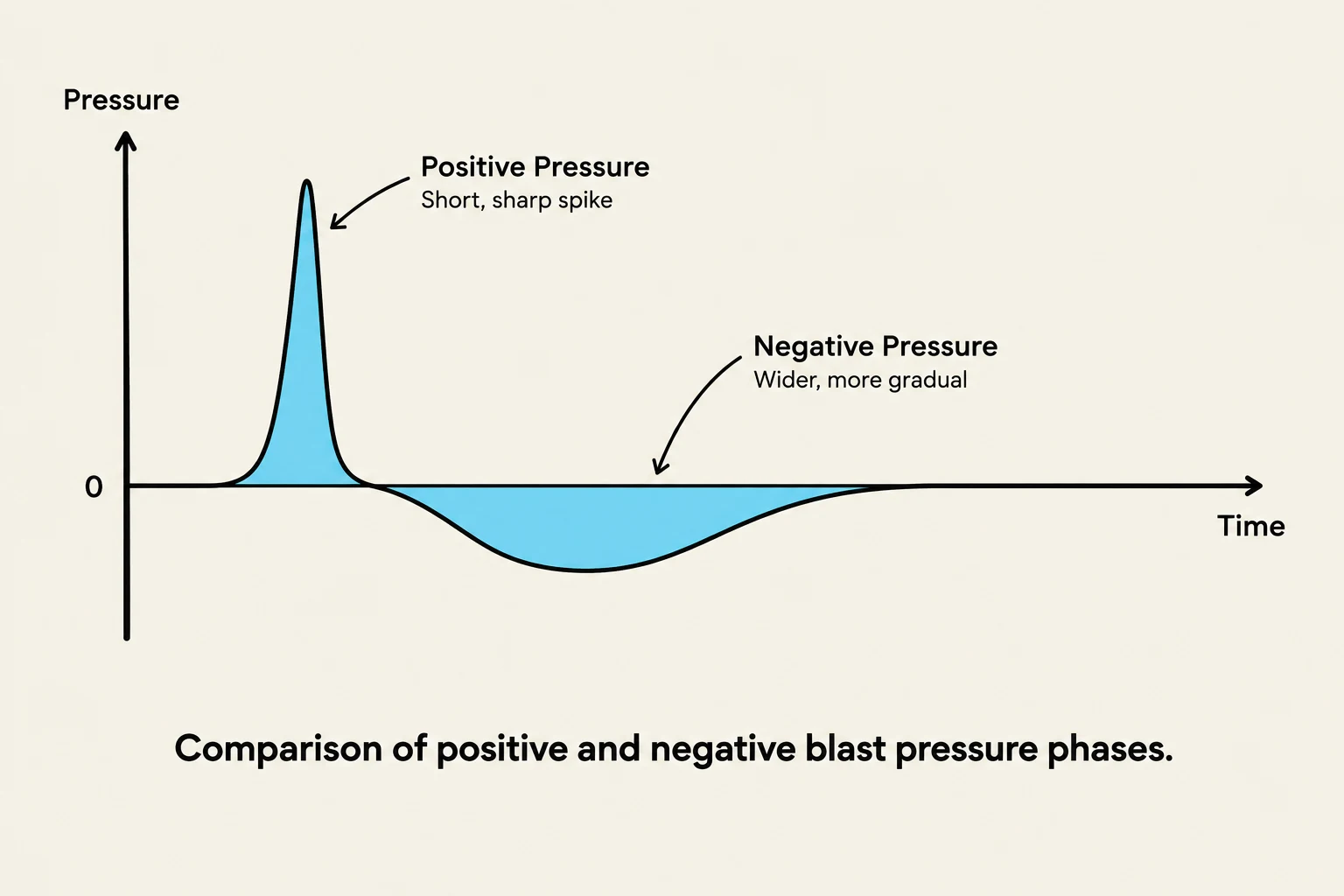
Blast Pressure and Effects
Keep reading for free.
Create an account to finish this reading and make it part of your study routine.
Continue reading freeAlready have an account? Log in
Updated