


Understanding health requires moving beyond the simple idea that being "healthy" just means you aren't sick. In modern healthcare, health is viewed as a dynamic state of being that involves multiple dimensions of a person's life. To improve population health, initiatives like Healthy People provide evidence-based, 10-year national objectives designed to focus on health promotion and disease prevention rather than just treating illness.
Defining Health and Its Models
The World Health Organization (WHO) defines health as a state of complete physical, mental, and social well-being, not merely the absence of disease or infirmity. Because health is such a complex concept, healthcare professionals use various models to understand the relationship between a patient's attitudes and their actual health behaviors.
Key Models of Health and Illness
- Health Belief Model: This model examines the relationship between a person's beliefs and their behaviors. For example, a person's perception of their susceptibility to a specific illness often dictates whether they will take preventive action.
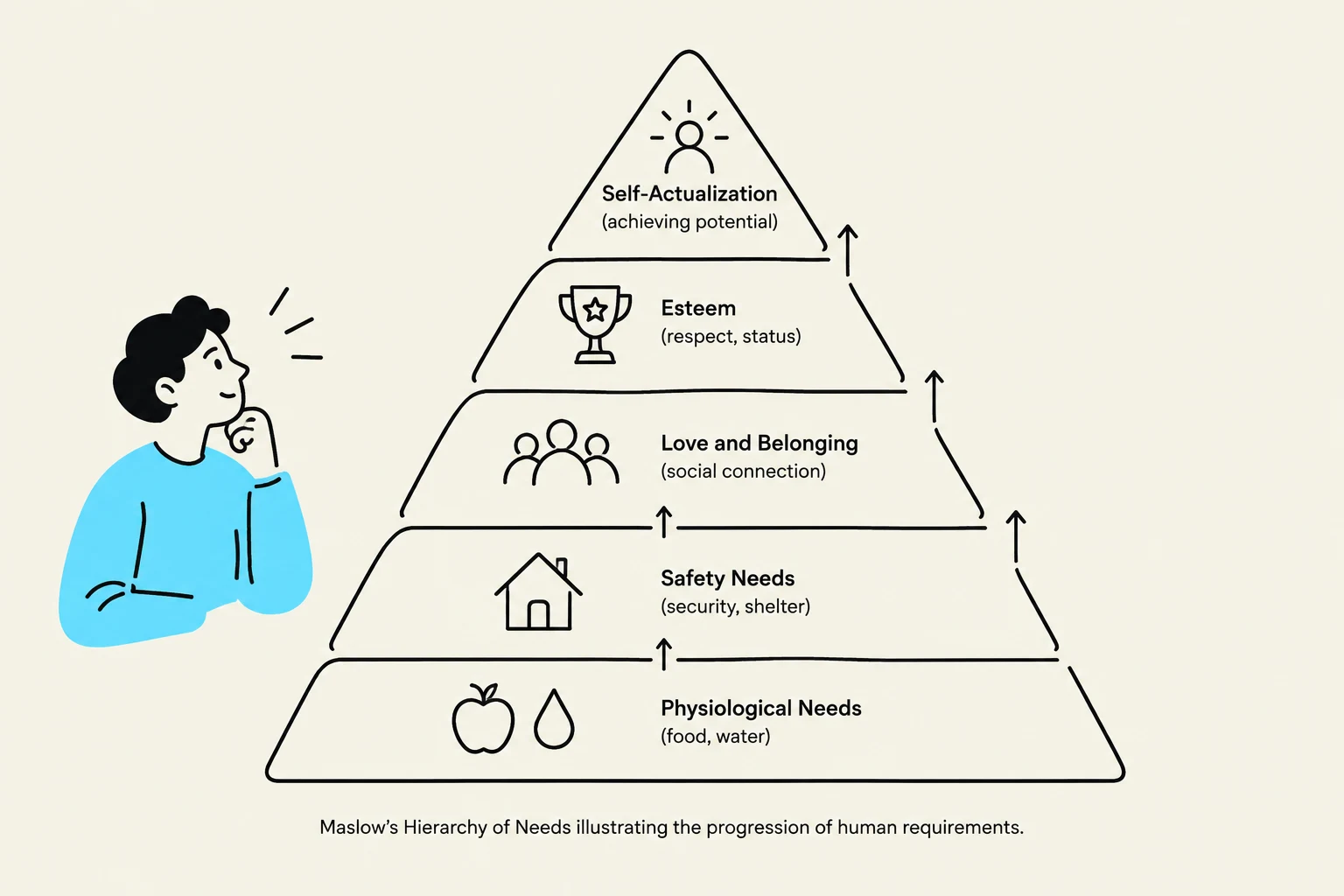
- Maslow’s Hierarchy of Needs: This framework is used to understand the interrelationships of basic human needs, helping providers prioritize care based on what a patient requires to function.
- Holistic Health Model: Rather than focusing on a single symptom, this model attempts to create conditions that promote optimal health across all dimensions of a person's life.
Strategies for Managing Health
To manage wellness effectively, healthcare is categorized into three distinct approaches: Health Promotion, Health Education, and Illness Prevention.
- Health Promotion: These are activities designed to help individuals maintain or enhance their current state of health.
- Health Education: This involves increasing a person's understanding of their health, empowering them to better manage their own risks.
- Illness Prevention: These activities are specifically aimed at protecting people from actual or potential threats to their health.

Keep reading for free.
Create an account to finish this reading and make it part of your study routine.
Continue reading freeAlready have an account? Log in
Updated