Explore the intricate mechanisms of gene expression regulation in both prokaryotic and eukaryotic cells. This guide covers operon models, transcriptional and epigenetic control, and post-transcriptional and translational modifications.
To understand how life functions, one must understand how cells control their instructions. A gene is the fundamental physical and functional unit of heredity, consisting of an ordered sequence of nucleotides that encodes a specific functional product, such as a protein or an RNA molecule. Gene expression is the multi-step process by which this coded information is converted into functional structures within the cell. This can involve transcribing DNA into mRNA and then translating that mRNA into protein, or simply transcribing DNA into functional RNA molecules like tRNA or rRNA.
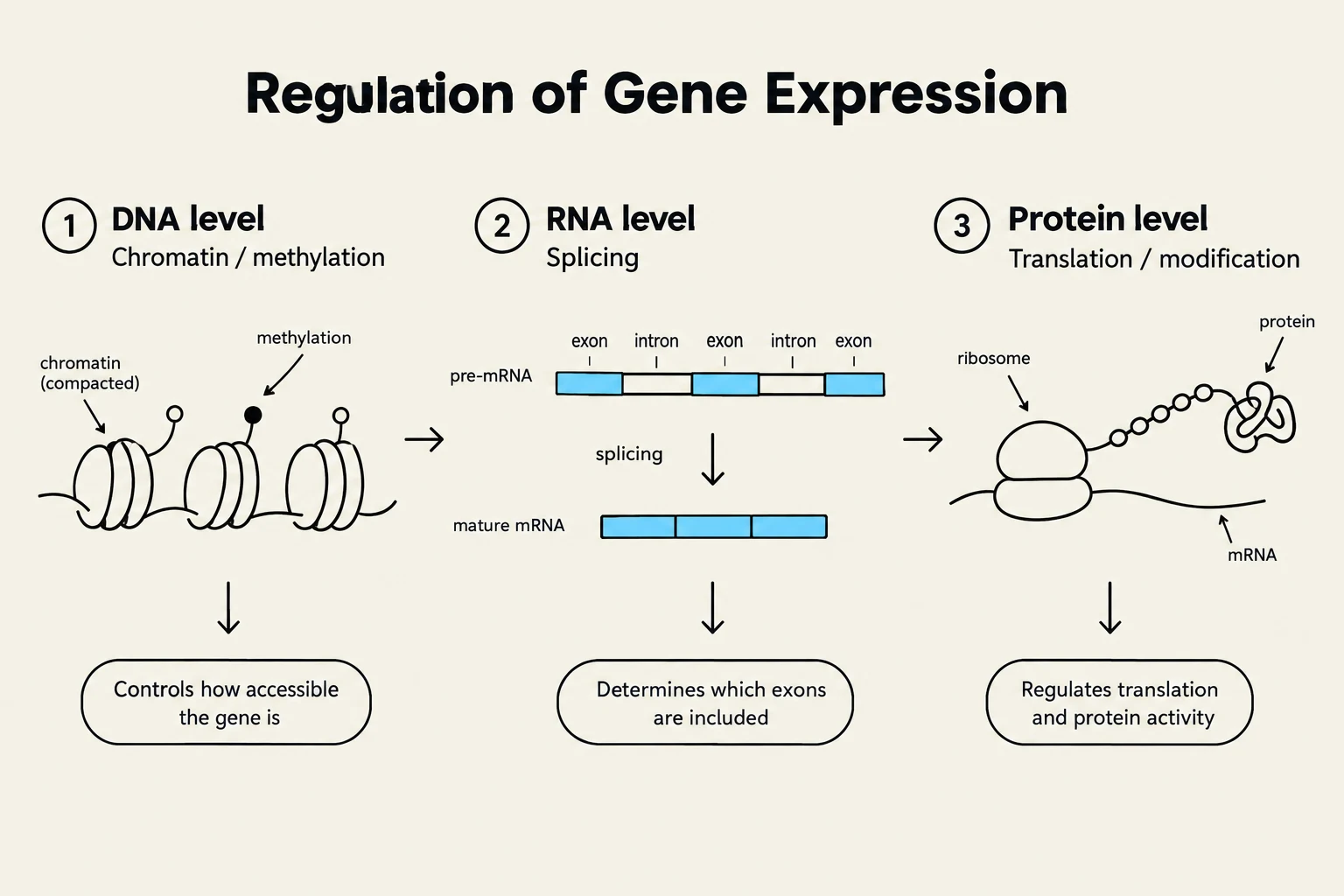
Because cells must respond to changing environments and maintain specific identities, they do not express all genes at once. Instead, they use sophisticated regulatory mechanisms that operate at various levels: DNA, RNA, and protein.
Prokaryotic Regulation: The Operon Model
In prokaryotes (bacteria), genes are often organized into functional groups called operons. An operon consists of a group of genes located on the same chromosome, controlled by a single set of regulatory elements. This allows the bacteria to produce a "polycistronic" mRNA—a single mRNA molecule that carries the code for several different proteins.
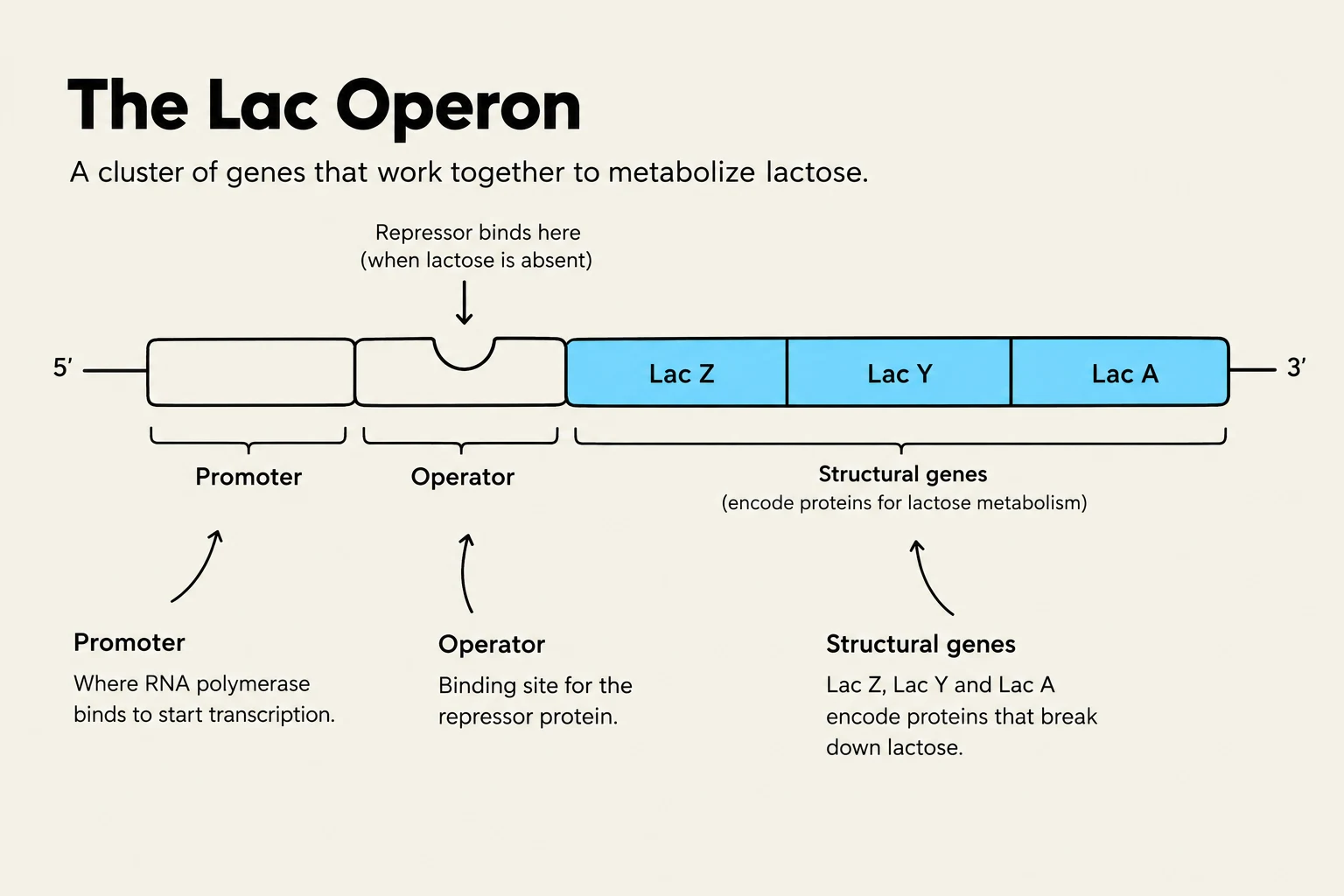
The Lac Operon Example
A classic model of prokaryotic regulation is the lac operon, which manages the catabolism of lactose. Bacteria prefer glucose as an energy source; therefore, they only activate the genes required to digest lactose when glucose is absent and lactose is present.
The regulation involves two key components:
Cis-acting elements: Regulatory DNA sequences on the same chromosome that control nearby genes, such as promoters, enhancers, or operators.
Trans-acting molecules: Proteins, such as transcription factors (coactivators or corepressors), that can move to bind to DNA and promote or inhibit expression.
In the lac operon, the "OFF" state occurs when a repressor protein binds to the operator site, blocking transcription. The "ON" state is achieved when the operator is vacant and the CAP binding site is occupied by the Catabolite Activator Protein (CAP) complex, which is triggered by high levels of cAMP (which increases when glucose is low).
Diagram illustrating the Lac Operon, a cluster of genes in bacteria that work together to metabolize lactose. It shows the promoter, operator, and structural genes (Lac Z, Lac Y, and Lac A), along with explanations of their functions and the binding of a repressor protein when lactose is absent.
Exam Tip: Remember the distinction between cis and trans. Cis-elements are the "tracks" on the DNA itself (like the promoter), while trans-acting factors are the "trains" (proteins) that travel to those tracks to exert control.
Eukaryotic Regulation: Complexity Across Levels
Eukaryotic regulation is significantly more complex than prokaryotic regulation, occurring at multiple stages of the central dogma.
1. Transcriptional and Epigenetic Regulation (DNA Level)
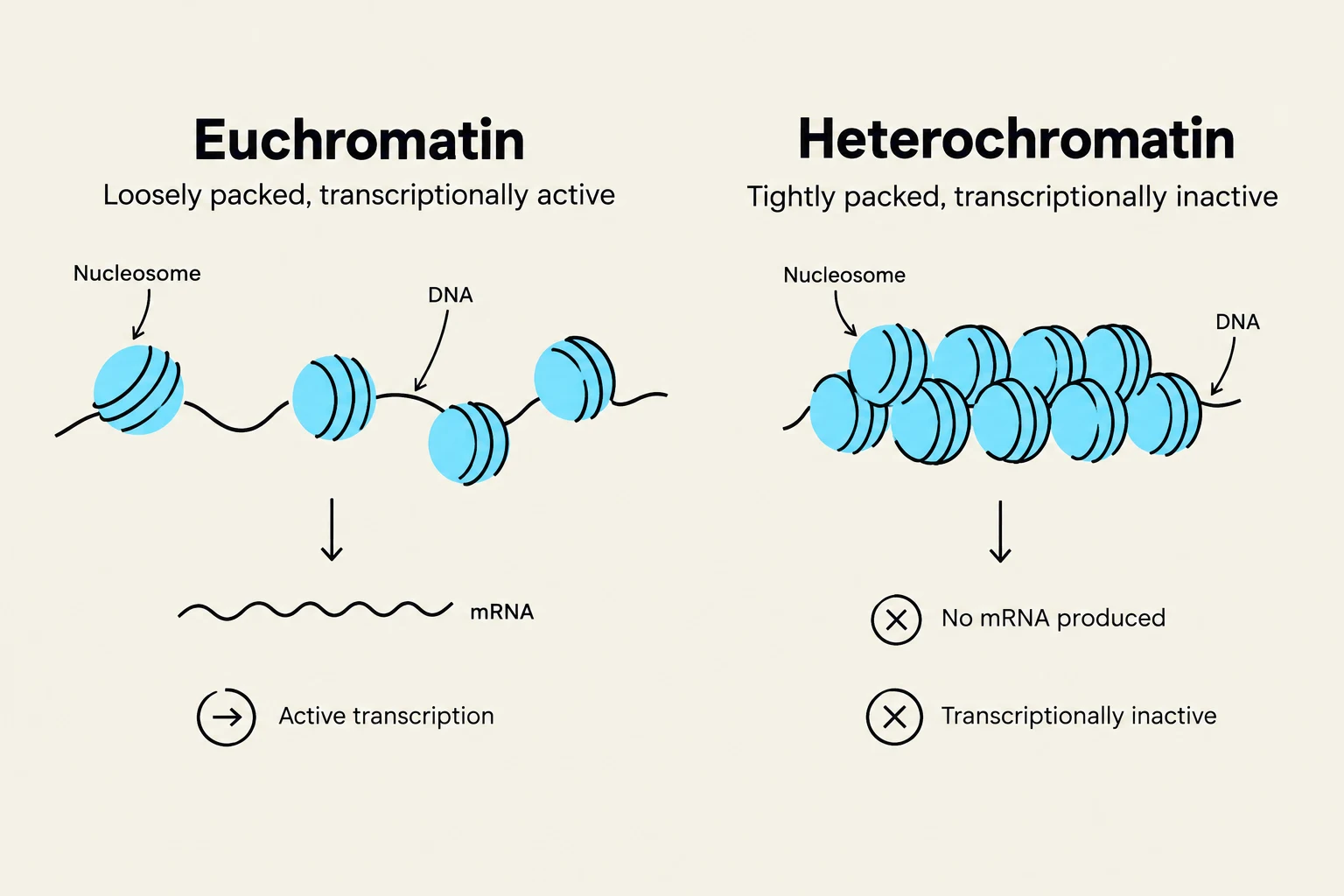
Eukaryotes can regulate genes by altering the physical structure of DNA through chromatin remodeling (epigenetic modifications). These changes alter gene expression without changing the underlying DNA sequence.
Histone Modifications:
Acetylation: Histone Acetyl Transferase (HAT) adds acetyl groups to lysine residues, neutralizing their positive charge. This reduces the attraction between histones and negatively charged DNA, "opening" the chromatin and turning ON gene expression.
Deacetylation: Histone Deacetylase (HDAC) removes these groups, restoring the positive charge and causing DNA to wrap tightly, turning OFF gene expression.
Methylation: Histone methyltransferase (HMT) adds methyl groups, which can either activate or repress transcription depending on the context.
DNA Modification:
Cytosine Methylation: DNA methyltransferase (DNMT) adds methyl groups to cytosine at CpG sites. Hypermethylation typically "turns off" genes (gene silencing), while hypomethylation "turns on" genes.
Beyond chemical modifications, eukaryotes also regulate expression through the amount of DNA (e.g., gene amplification), the arrangement of DNA (e.g., immunoglobulin synthesis in B cells), and mobile DNA elements (transposons or "jumping genes") that can move within the genome.
This diagram illustrates the difference between euchromatin and heterochromatin, two forms of chromatin in eukaryotic cells. Euchromatin is loosely packed and transcriptionally active, leading to mRNA production. Heterochromatin is tightly packed and transcriptionally inactive, resulting in no mRNA production.
2. Post-Transcriptional Regulation (RNA Level)
Once mRNA is produced, it can still be modified or regulated before it reaches the ribosome:
Alternative Splicing: This allows a single gene to produce multiple different mRNA transcripts and proteins by selectively including or excluding exons. This explains why humans have ~20,000 genes but can produce over 100,000 different proteins.
mRNA Editing: A specific base in the mRNA is chemically altered after transcription. An example is the synthesis of different versions of Apolipoprotein B (Apo B-100 in the liver vs. Apo B-48 in the intestine).
miRNA and RNA Interference (RNAi): MicroRNAs (miRNA) are short, non-coding RNAs that regulate mRNA stability. They guide a protein complex called the RISC (RNA-induced silencing complex) to a complementary target mRNA, leading to either the degradation of that mRNA or the repression of its translation.
3. Translation and Protein Level Regulation
The final stages of control occur during and after the synthesis of the protein:
Translation Level: Regulation can occur through the phosphorylation of the eukaryotic translation initiation factor eIF-2. When kinases are activated by environmental stress (like amino acid starvation), they phosphorylate eIF-2, preventing it from functioning and thereby inhibiting protein synthesis.
Protein Level: Once a protein is made, its activity can be toggled via covalent modification, most commonly through phosphorylation and dephosphorylation catalyzed by kinases and phosphatases.
This diagram illustrates the regulation of gene expression at three levels: DNA, RNA, and protein. At the DNA level, chromatin structure and methylation influence gene accessibility. At the RNA level, splicing determines which exons are included in the mature mRNA. At the protein level, translation and modification by ribosomes regulate protein activity.
Clinical Connection: Many diseases are linked to these regulatory failures. For example, mutations in DNA methylation processes can lead to Fragile X syndrome, and dysregulation of miRNA can contribute to the development of tumors.
Keep reading for free.
Create an account to finish this reading and make it part of your study routine.