This material provides a comprehensive overview of depressive and bipolar disorders, distinguishing between unipolar depression and bipolar disorder. It details symptoms, DSM-5 classifications (Major Depressive Disorder, Persistent Depressive Disorder, Bipolar I, Bipolar II, Cyclothymic Disorder), and discusses their e
Mood disorders represent a significant category of mental health conditions characterized by disturbances in emotional states. While many people experience sadness or excitement as part of normal life, clinical depressive and bipolar disorders involve intense, persistent, and often debilitating shifts in mood, energy, and cognition. Understanding these disorders requires a clear distinction between two primary categories: unipolar depression and bipolar disorder.
The Core Distinction: Unipolar vs. Bipolar
The fundamental way clinicians categorize these disorders is based on the presence or absence of mania.
Mania is a state of euphoria or frenzied activity where an individual may experience an exaggerated belief that the world is "theirs for the taking". During a manic episode, a person typically displays an abnormally inflated, unrestrained, or irritable mood, accompanied by heightened energy.
Unipolar Depression: Refers to depressive disorders that occur without any history of mania. The "pole" of the mood is always on the low end.
Bipolar Disorder: Involves alternating or intermixed periods of mania and depression. The mood swings between the "high" of mania and the "low" of depression.
This diagram illustrates the mood spectrum, differentiating between unipolar depression and bipolar disorder. Unipolar depression is characterized by a persistent low mood, while bipolar disorder involves oscillations between high and low mood states.
Unipolar Depression: Symptoms and Classifications
Unipolar depression is highly prevalent; approximately 8% of U.S. adults suffer from severe unipolar depression in any given year. Because depression affects various aspects of human functioning, symptoms are often categorized into five distinct clusters:
Emotional Symptoms: Feelings of misery, emptiness, or humiliation, and anhedonia (the inability to experience pleasure).
Motivational Symptoms: A profound lack of drive, initiative, and spontaneity.
Behavioral Symptoms: Reduced activity levels and decreased productivity.
Cognitive Symptoms: Pessimism, negative views of oneself, and a tendency to blame oneself for unfortunate events.
Physical Symptoms: Somatic complaints such as headaches, dizziness, or general physical pain.
DSM-5 Classifications of Unipolar Disorders
The Diagnostic and Statistical Manual of Mental Disorders, 5th Edition (DSM-5) identifies several specific types of unipolar disorders:
Major Depressive Disorder (MDD)
MDD is defined by the occurrence of a major depressive episode. For a diagnosis, an individual must experience a two-week period of increased depressed mood or decreased interest in activities for the majority of each day. Additionally, they must exhibit at least 3–4 of the following symptoms:
Significant weight or appetite changes.
Insomnia or hypersomnia (excessive sleeping).
Daily fatigue or lethargy.
Feelings of worthlessness or excessive guilt.
Diminished concentration or decisiveness.
Repeated thoughts of death or suicidal ideation.
A diagnosis also requires that these symptoms cause significant distress or impairment and that there is no history of mania or hypomania.
Persistent Depressive Disorder
This is a more chronic form of depression where symptoms of major or mild depression last for at least two years. During this two-year period, the symptoms are not absent for more than two months at a time.
Premenstrual Dysphoric Disorder
This is a specific subtype of depressive disorder that is directly related to the menstrual cycle.
Exam Tip: When distinguishing between MDD and Persistent Depressive Disorder, look at the duration. MDD focuses on the intensity of a specific episode (minimum 2 weeks), while Persistent Depressive Disorder focuses on the chronicity (minimum 2 years).
Bipolar Disorders: The Spectrum of Mania
Bipolar disorders are characterized by the presence of manic or hypomanic episodes. Unlike the single-direction mood of unipolar depression, bipolar disorder involves shifts in energy and mood intensity.
Types of Bipolar Disorder
The DSM-5 recognizes three main types of bipolar disorder:
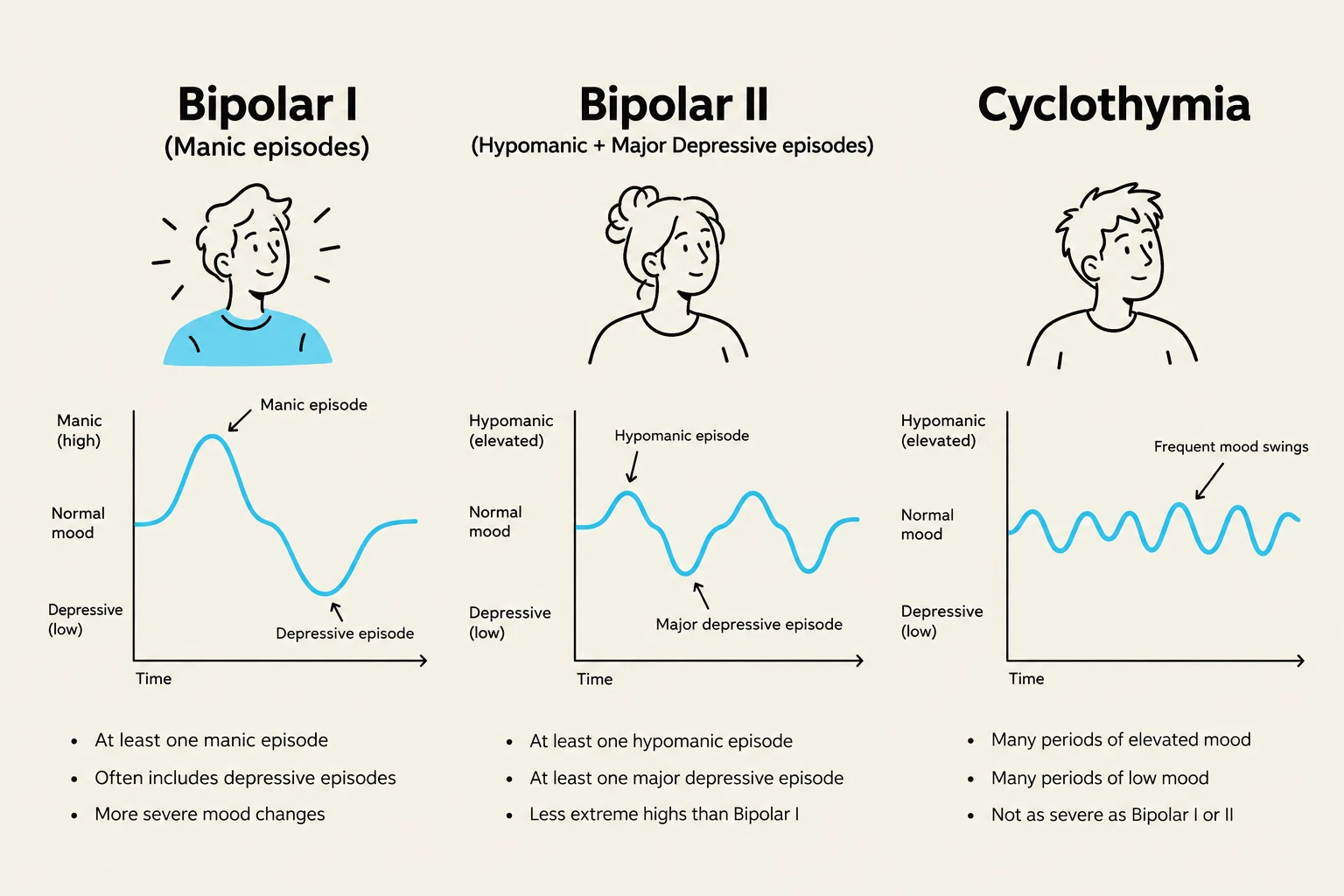
Bipolar I Disorder: Defined by the occurrence of at least one manic episode. While major depressive or hypomanic episodes may precede or follow mania, the manic episode is the defining feature.
Bipolar II Disorder: Characterized by a history of at least one major depressive episode and at least one hypomanic episode, but notably, there is no history of a full manic episode.
Cyclothymic Disorder: A more chronic but less severe form involving numerous periods of hypomanic symptoms and mild depression symptoms lasting for at least two years.
This illustration compares Bipolar I, Bipolar II, and Cyclothymia, detailing their characteristic mood episodes and criteria.
Comparing the Disorders
To understand the clinical landscape, it is helpful to compare the prevalence and onset of these disorders:
Feature
Major Depressive Disorder
Bipolar Disorders (I, II, Cyclothymic)
One-Year Prevalence
~8.0%
~0.4% to 1.6%
Sex Ratio (F:M)
2:1
1:1
Typical Age of Onset
18–29 years
15–44 years
Genetic Component
Elevated prevalence in first-degree relatives
Elevated prevalence in first-degree relatives
While MDD is more common and more frequently diagnosed in women, bipolar disorders tend to appear earlier in life and affect men and women equally.
Etiology and Treatment Overview
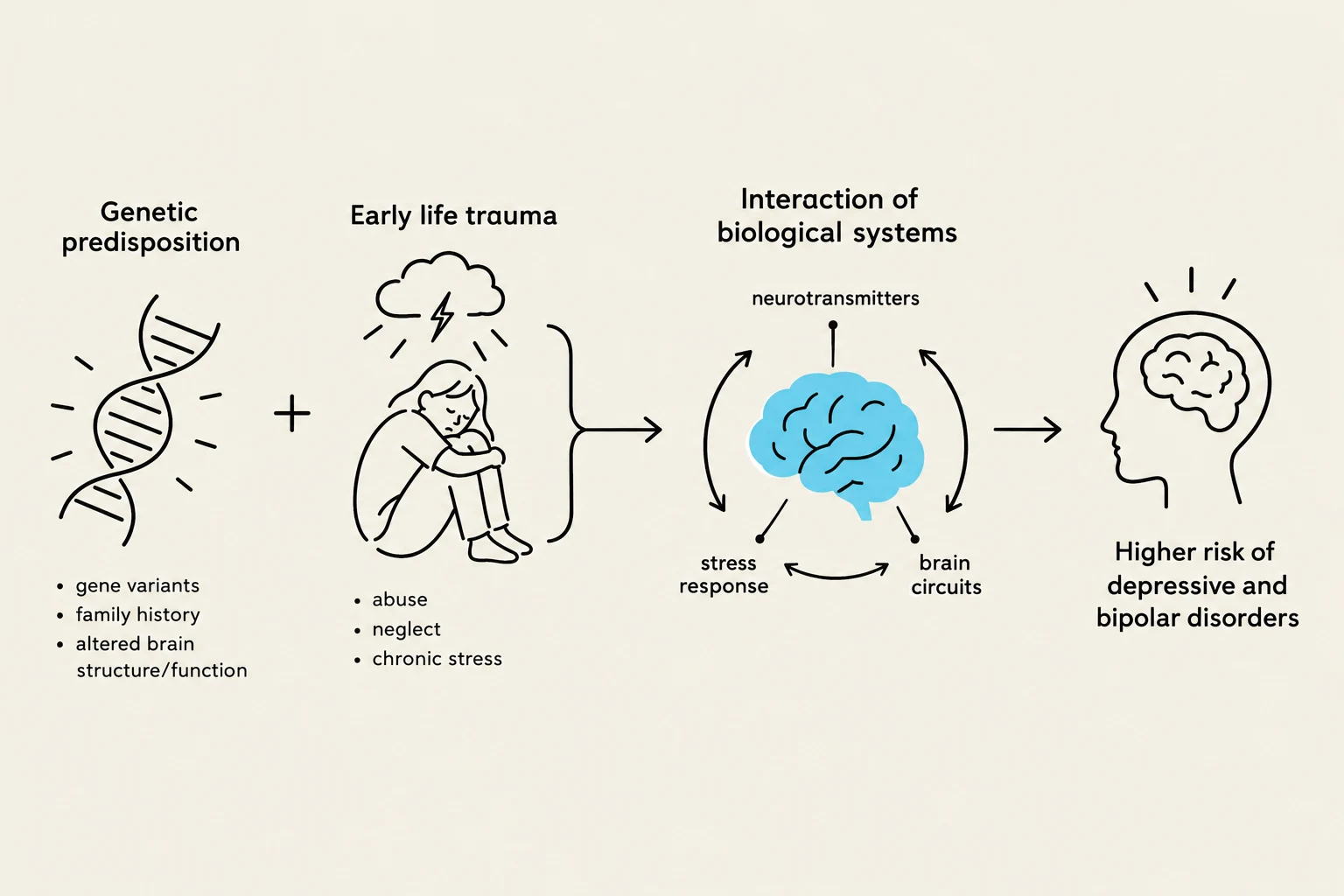
The causes of these disorders are complex and involve an interplay of biological, psychological, and sociocultural factors.
Biological Factors
Research suggests strong biological underpinnings for both unipolar and bipolar disorders:
Neurotransmitters: Low activity of serotonin and norepinephrine is linked to unipolar depression, while mania may relate to high norepinephrine and low serotonin.
Genetics: Both disorder types show an elevated prevalence among first-degree relatives, suggesting a hereditary component.
Brain Structure: Abnormalities in the basal ganglia and cerebellum have been noted in bipolar disorder.
Treatment Approaches
Treatment often requires a combination of biological and psychological interventions:
Pharmacology: Antidepressants (like SSRIs) are used for unipolar depression, while mood stabilizers (such as Lithium) are the gold standard for treating bipolar disorder and mania.
Brain Stimulation: For severe cases, techniques like Electroconvulsive therapy (ECT), Transcranial magnetic stimulation (TMS), or Vagus nerve stimulation may be employed.
Psychotherapy: Cognitive-behavioral therapy (CBT) is highly effective for unipolar depression, while psychotherapy is often used as an "adjunct" (supplement) to medication in bipolar disorder to improve client behavior.
This diagram illustrates how genetic predisposition and early life trauma interact with biological systems, such as neurotransmitters, stress response, and brain circuits, to increase the risk of depressive and bipolar disorders.
Keep reading for free.
Create an account to finish this reading and make it part of your study routine.