This guide explains the fundamental concepts of cash, including its definition, movement, recording in the General Ledger, and the process of bank reconciliation. It also covers petty cash management and internal controls.
In the world of accounting, cash is the most liquid asset a company possesses. It is the lifeblood of business operations, used to settle debts, pay employees, and invest in growth. However, because cash is so easily moved and used, it is also one of the most vulnerable assets to errors and theft. Understanding how to track, record, and reconcile cash is a fundamental skill for any business professional.
Defining Cash and Its Movement
In a formal accounting context, cash refers to paper money, coins, cheques, and money orders—essentially any items that are acceptable for immediate deposit in a bank. It also includes funds that are already on deposit with a financial institution. It is important to note that modern digital assets, such as cryptocurrencies, are generally excluded from the definition of "cash" in traditional accounting frameworks.
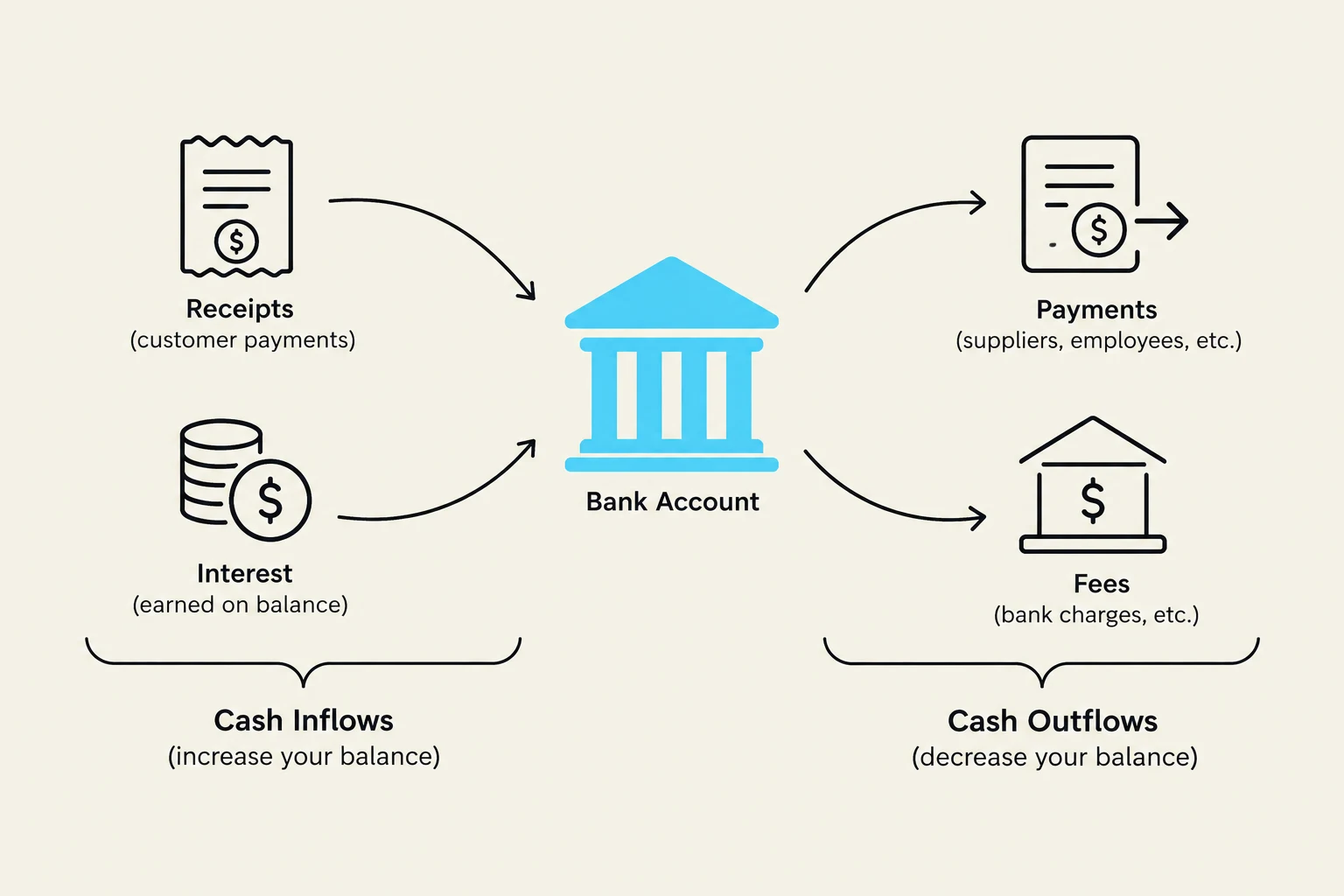
Businesses experience cash through two primary channels:
Cash Inflows: These are the sources of cash, such as receipts from customers or interest earned on bank accounts.
Cash Outflows: These are the disbursements of cash, such as paying suppliers, settling service fees, or purchasing supplies.
When a firm receives money from customers but has not yet taken it to the bank, this is referred to as cash on hand.
This diagram illustrates the cash inflows and outflows of a bank account, showing how receipts and interest increase the balance, while payments and fees decrease it.
Recording Cash and Petty Cash
All cash transactions must be recorded in the firm's General Ledger (G/L). The General Ledger serves as the official internal record of how much cash the company believes it has available at any given time.
While most transactions are handled through formal bank transfers or cheques, businesses often need to make very small, immediate purchases (like postage or office snacks). To avoid the clerical burden of writing a formal cheque for every tiny expense, firms use petty cash. Petty cash is a small amount of currency kept on hand to facilitate these minor disbursements, thereby saving time and reducing bank charges.
The Bank Reconciliation Process
A common point of confusion for new accountants is why the balance shown on a bank statement rarely matches the balance shown in the firm's General Ledger. This discrepancy is usually not due to an error, but rather due to timing differences.
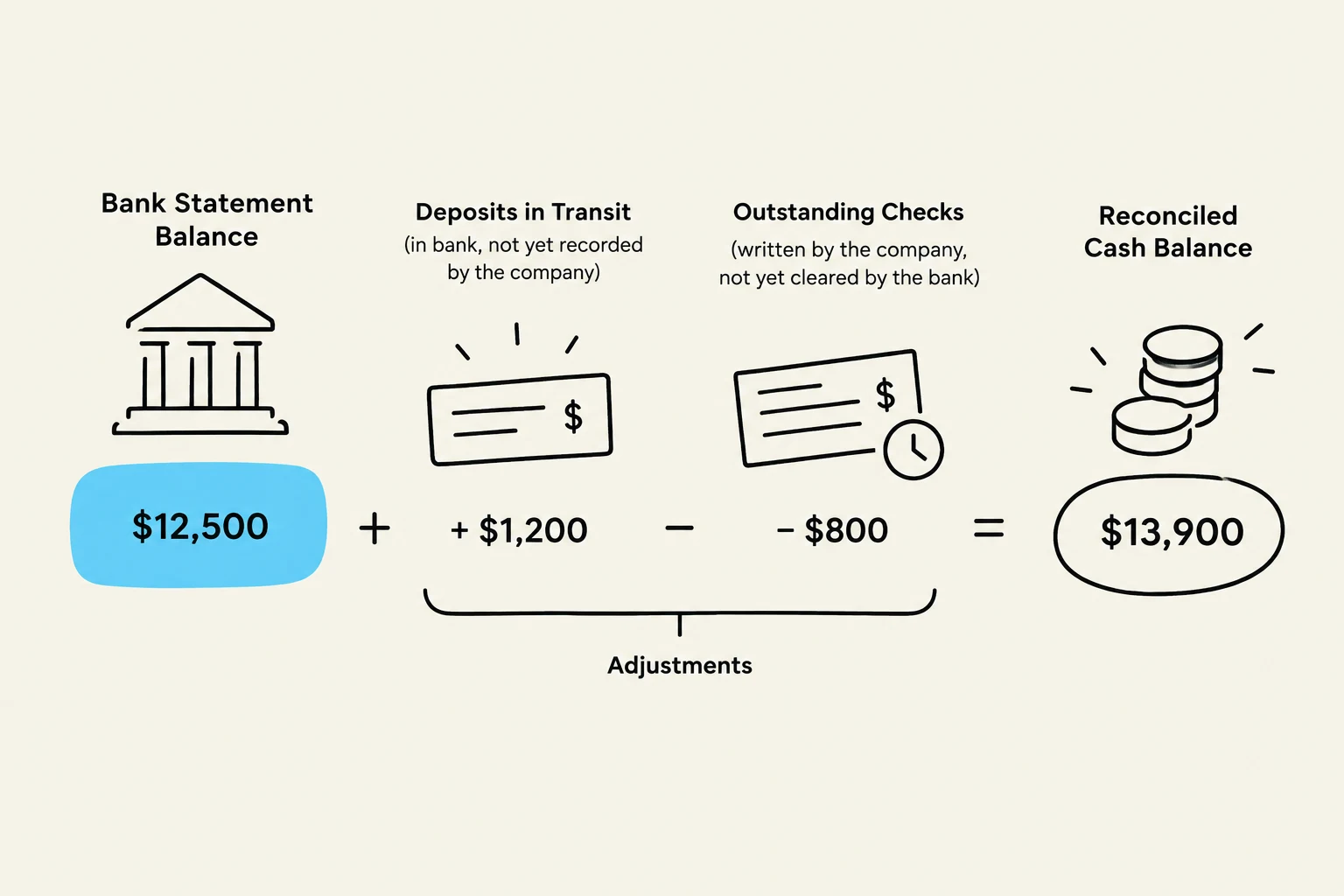
A bank reconciliation is the formal process of reconciling these two balances to ensure they are both accurate. To perform a successful reconciliation, you must adjust both the bank side and the book side until they reach an identical "Adjusted Balance."
1. Bank-Side Adjustments
These are transactions the firm has already recorded in its books, but the bank has not yet processed or reflected on the statement.
Deposits in Transit: Money the firm has received and recorded, but which hasn't appeared on the bank statement yet.
Outstanding Cheques: Cheques written by the firm that have been recorded in the G/L but have not yet been cashed by the recipient.
2. Book-Side Adjustments
These are transactions the bank has processed, but the firm has not yet recorded in its General Ledger.
Bank Service Charges: Fees charged by the bank for maintaining the account.
Interest Earned: Money added to the account by the bank.
Notes Collected: When a bank collects a payment on behalf of the firm (e.g., a Note Receivable).
This diagram illustrates how to reconcile a bank statement balance by accounting for deposits in transit and outstanding checks to arrive at the reconciled cash balance.
Exam Tip: The ultimate goal of a bank reconciliation is to ensure that:
Adjusted Balance per BANK Statement=Adjusted Balance per BOOKS
If these two numbers do not match, your reconciliation is incomplete.
Recording Adjustments via Journal Entries
A critical rule in the reconciliation process is knowing when to record a journal entry. You only record journal entries for adjustments made to the BOOKS.
Adjustments made to the bank statement side (like outstanding cheques) are simply timing differences that will resolve themselves; they do not require an entry in the firm's ledger. However, once the bank informs you of a service fee or a collected note, you must update your General Ledger to reflect reality.
Common Patterns:
To increase Book Cash (e.g., Bank collects a Note Receivable):
If the bank collects a payment for a note on your behalf, you must increase your cash and decrease the receivable:
DrCr Cash Notes Receivable
To decrease Book Cash (e.g., Bank charges a Service Fee):
If the bank deducts a fee, you must record the expense and decrease your cash:
DrCr Service Charge Expense Cash
Cash Management and Internal Control
Because cash is highly liquid, it is a primary target for theft or misappropriation. Therefore, effective cash management requires robust internal controls.
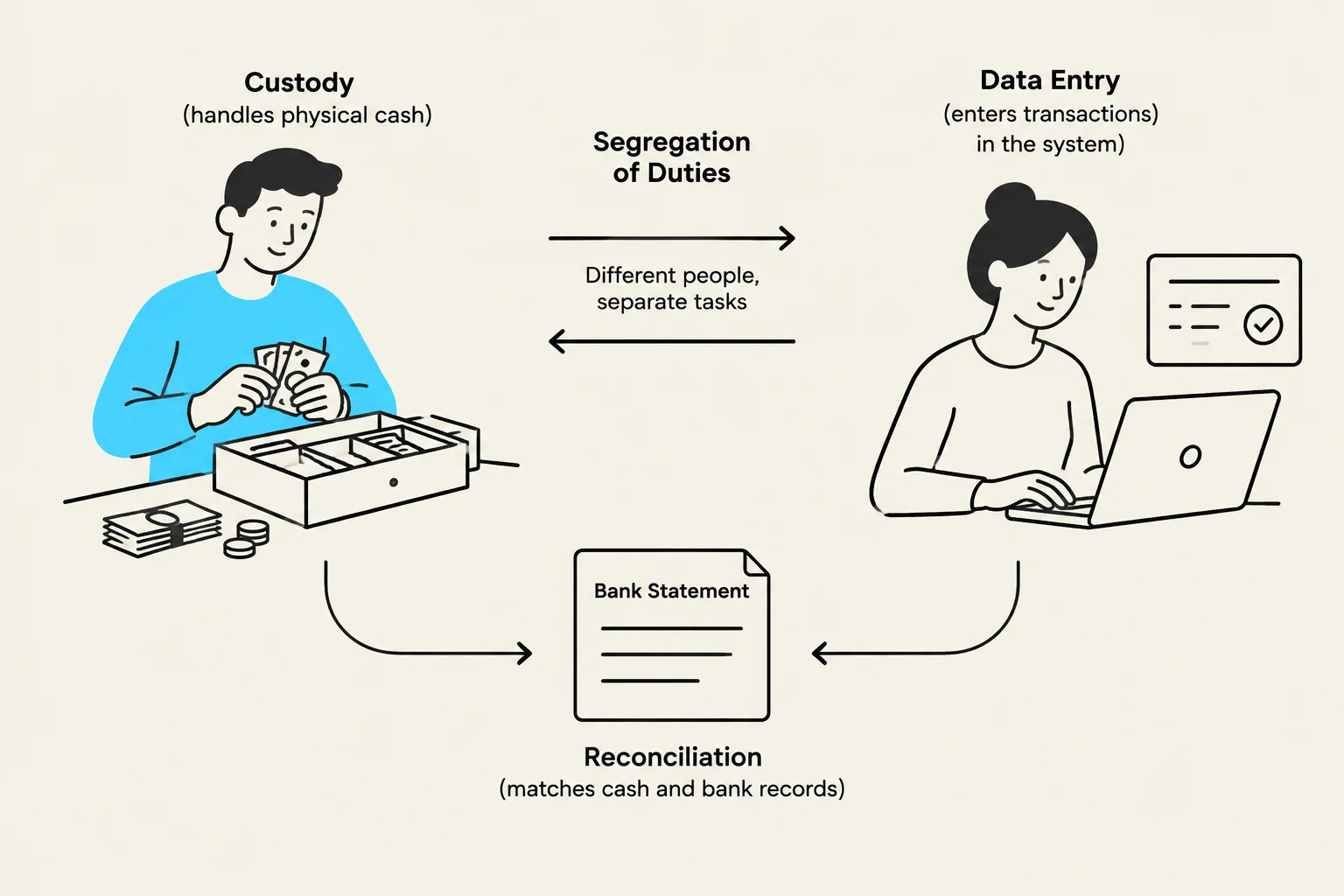
The most vital internal control is the segregation of duties. This principle requires that the person who has physical custody of the cash (e.g., the person receiving payments or managing the petty cash box) must be a different person from the one responsible for recording those transactions in the accounting records. By separating these two functions, a firm makes it much more difficult for an individual to steal money and then hide the theft by altering the books.
This diagram illustrates the concept of segregation of duties in financial management, showing separate roles for custody of cash, data entry, and reconciliation to prevent fraud and errors.
Keep reading for free.
Create an account to finish this reading and make it part of your study routine.