


Ethics is often defined as the science of morals in human conduct, encompassing the study of principles of human duty and the rules that govern how we interact with one another. While the concepts of "right" and "wrong" are deeply influenced by our history, religion, culture, and personal development, business ethics provides a structured way to examine these principles within a commercial context. In the modern business world, ethical decision-making is not merely about following laws; it is about navigating the complex relationships between various parties and understanding the philosophical frameworks that justify our actions.
Philosophical Frameworks: Consequentialism and Utilitarianism
When faced with a difficult business decision, managers often look to philosophical theories to guide their choices. One of the most prominent frameworks is consequentialism. In this view, the morality of an action is determined solely by its outcome; the "end justifies the means". Unlike deontological ethics—which focuses on following specific duties or rules regardless of the outcome—consequentialism argues that an action is right if it produces the best possible results.
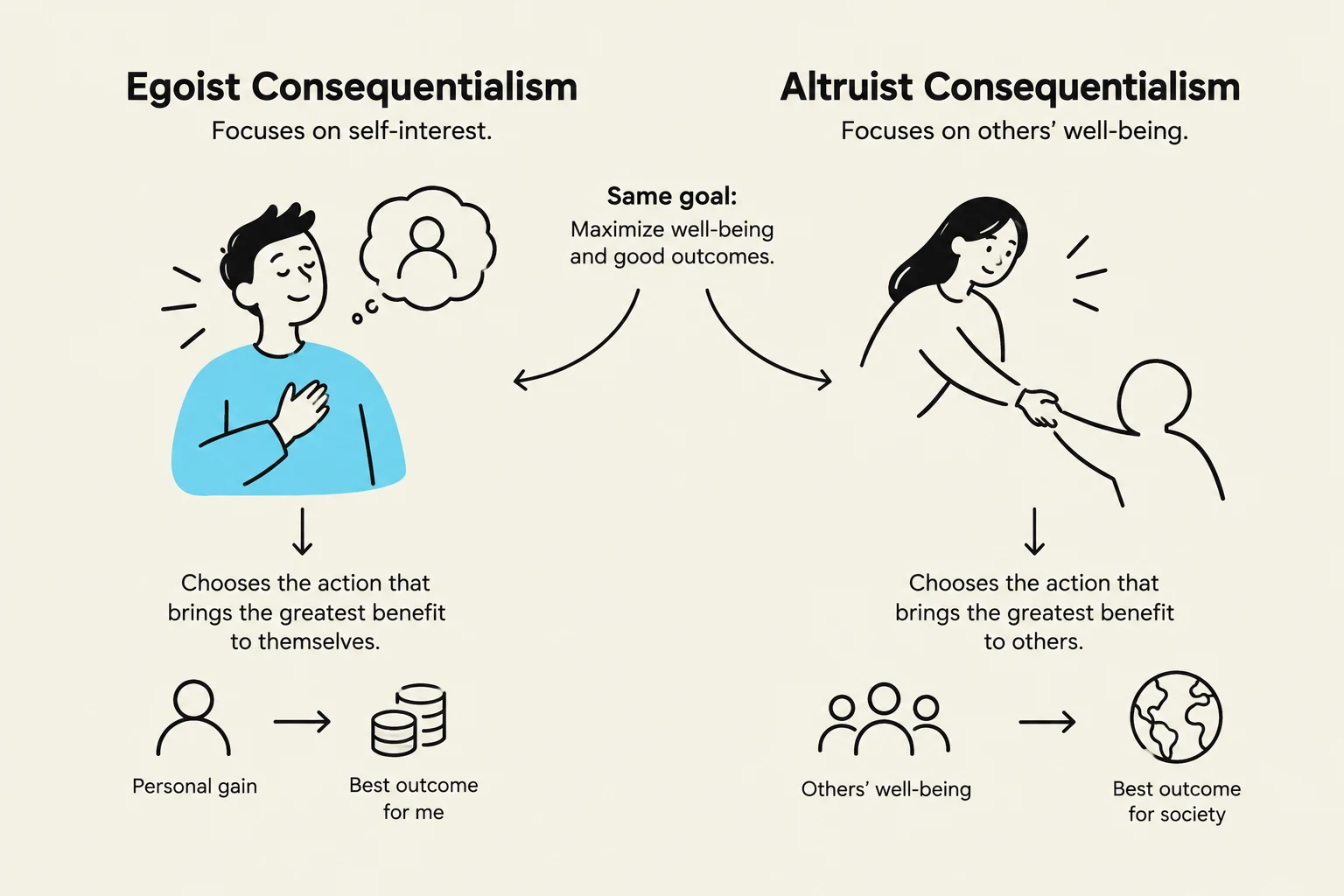
A specific branch of consequentialism is utilitarian ethics. For a utilitarian, the goal is to act in a way that realizes the best possible consequences for the collective. However, this raises a critical question: whose interests should be prioritized? To answer this, we look at two competing theses:
- The Egoist Thesis: This perspective suggests that the best action is the one that generates the most favorable consequences for the individual making the decision.
- The Altruist Thesis: This perspective argues that the best consequences are those that provide the greatest benefit or pleasure to the largest number of people affected by the action.

Keep reading for free.
Create an account to finish this reading and make it part of your study routine.
Continue reading freeAlready have an account? Log in
Updated